
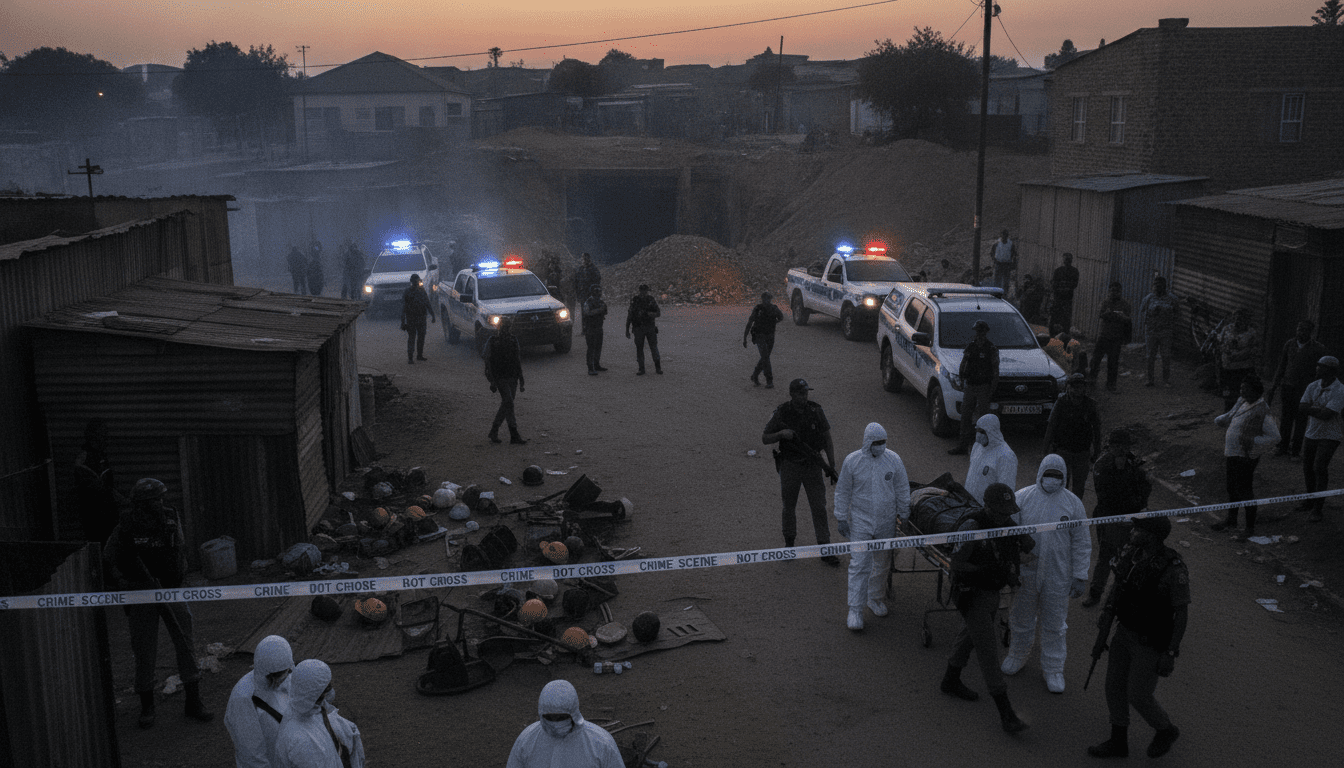
Johannesburg mass shooting kills 12 overnight, police probe possible link to illegal mining
Twelve killed in a Johannesburg mass shooting overnight into June 10, 2026; police investigate possible ties to illegal mining as forensics teams probe scene.
The Johannesburg mass shooting that left twelve people dead struck an informal settlement overnight into Wednesday, June 10, 2026, and has prompted a major criminal inquiry by Gauteng police. Authorities say more than ten armed assailants entered the settlement shortly before midnight, opening fire at multiple locations before fleeing in a minibus. The police chief in Gauteng described the attack as “barbaric, heartless and insane” as forensic teams moved in to secure evidence and canvass survivors.
Casualties and victims
Local authorities reported eight men and three women were killed at the scene, and a twelfth victim died later in hospital, bringing the confirmed death toll to twelve. At least nine other residents were transported to different hospitals with gunshot wounds, and an additional injured person was found by emergency teams on Wednesday morning. Police have yet to release the identities of the deceased pending notification of next of kin and forensic confirmation.
Sequence of the attack
Investigators say CCTV footage and witness statements indicate the attackers arrived in a minibus after being dropped off at a nearby petrol station. The gunmen allegedly split into groups and gained access to the informal settlement via two separate entrances, carrying rifles and other firearms. After the shootings, the assailants reportedly fled the area in the same minibus, leaving a trail of casualties and stunned residents.
Police response and ongoing investigation
Gauteng police have deployed a special unit that includes forensic experts to examine ballistics, video recordings and scenes where bodies were found. The force has recovered shell casings and is analyzing CCTV and cellphone footage to identify the vehicle and any accomplices. Authorities say arrests are a priority and that detectives are coordinating with hospitals and forensic teams to build a forensic timeline of the attack.
Possible connection to illegal mining activities
Officials have not confirmed a motive but said investigators are exploring whether the massacre is linked to illegal mining operations near the settlement. Local media reported that illegal miners known as “Zama Zamas” work in abandoned shafts around Johannesburg, often under direction of organized criminal syndicates seeking residual gold. Police sources said the area has seen tensions between criminal networks and communities over access to mine shafts, but investigators caution that a definitive link has not yet been established.
Community warnings and local reaction
Residents of the settlement said they had repeatedly warned authorities about escalating crime and violent incidents in recent months, describing a climate of fear and vulnerability. Community leaders demanded increased patrols and protections for informal settlements that sit close to derelict mine workings and remote areas. Officials responded that while recent operations had seized weapons and led to arrests, this scale of coordinated violence was unexpected and would be fully investigated.
Challenges in policing illegal mining
South Africa’s efforts to clamp down on illicit mining have been hampered by the clandestine nature of operations and the depth of criminal networks involved. Illegal miners sometimes spend extended periods underground, using complex supply arrangements that are difficult for police to disrupt without risking lives. Previous large-scale interventions have at times produced unintended consequences, underscoring the operational challenges of policing remote shafts and informal sites where livelihoods and criminality intertwine.
The police have appealed to anyone with information about the minibus, the petrol station drop-off or the identities of the gunmen to contact investigators, as the probe seeks to establish motive and bring perpetrators to justice. Forensic and tactical teams continue to sift the scene, while medical facilities treat the wounded and local authorities work to support affected families.
