
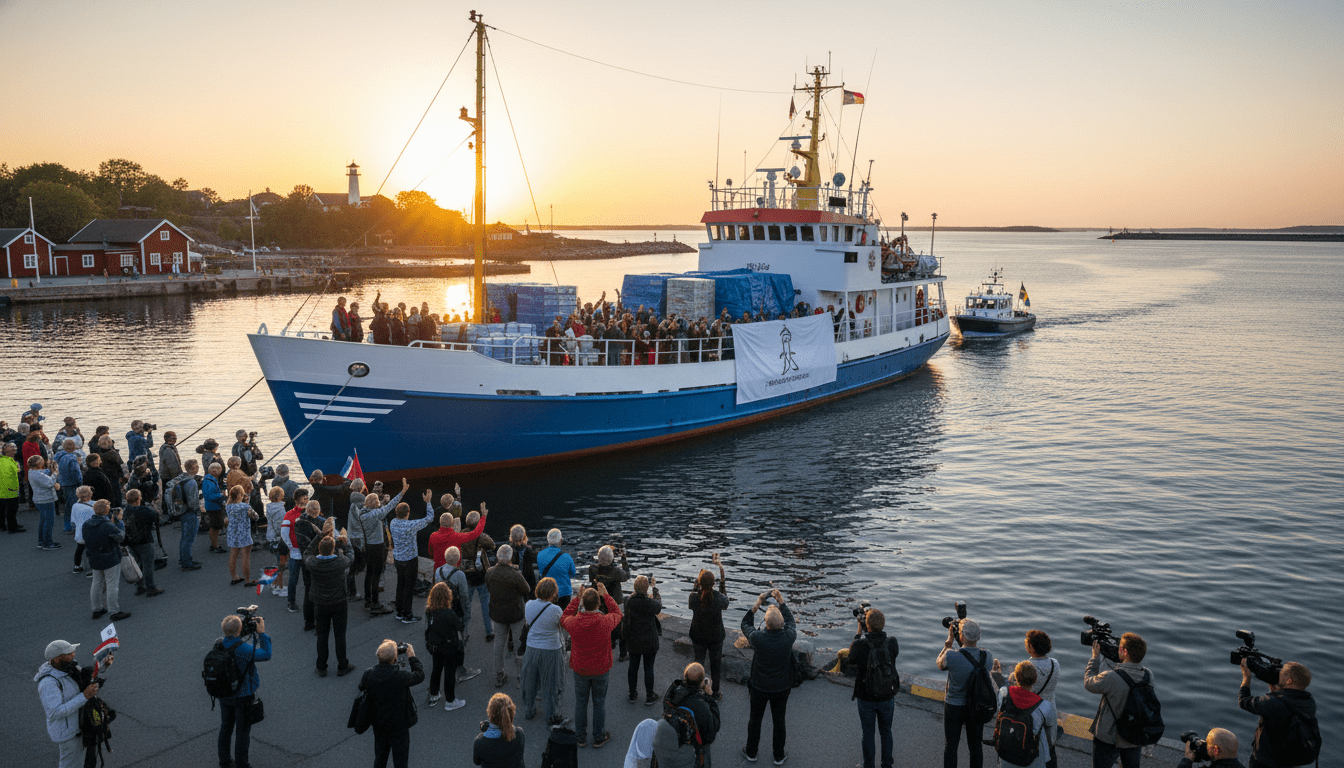
Handala II Gaza Aid Ship Departs Sweden on June 1, 2026
Handala II, a Gaza-bound aid ship, departed Sweden on June 1, 2026 with humanitarian supplies, sailing amid tensions following a recent interception at sea.
The Gaza-bound vessel Handala II began its voyage from a Swedish port on June 1, 2026, its organizers said, carrying humanitarian supplies intended for Palestinians in the Gaza Strip. The departure comes weeks after Israeli forces intercepted and detained activists involved with a similar mission in international waters, a confrontation that drew international attention. Organizers described the voyage as an effort to deliver relief and challenge the Israeli naval restrictions on Gaza, while officials in the region warned of potential confrontations at sea.
Handala II Departs Swedish Port
The Handala II left port under clear weather and a visible escort of support vessels, according to statements from the campaign that organized the mission. Organizers said the ship’s manifest contains medical supplies, food packages and other non-lethal humanitarian goods intended for distribution in Gaza. The group framed the departure as a legal humanitarian initiative aimed at addressing an escalating humanitarian situation in the enclave.
Cargo Details and Crew Composition
Campaign spokespeople said the vessel carries volunteers and aid workers from several European countries and a measured quantity of essential supplies. They emphasized that all cargo is civilian and humanitarian in nature and underscored compliance with international maritime regulations. The exact tonnage and inventory were not disclosed publicly, with organizers citing logistical and security reasons for withholding detailed lists.
Context of the Earlier Interception
The voyage follows a separate incident in which Israeli naval forces intercepted a comparable aid mission on the high seas and detained activists aboard that vessel. That interception sparked diplomatic protests from some European groups and drew criticism from international aid organizations, who described the action as an impediment to humanitarian relief. Israeli authorities have previously stated that maritime enforcement measures are intended to prevent arms smuggling into Gaza and to preserve regional security.
Legal and Diplomatic Stakes at Sea
Maritime law and diplomatic relations will shape the route and reception of Handala II if it approaches Gaza’s coastal waters, legal analysts caution. Under international law, disputes over the enforcement of blockades and rights to deliver humanitarian aid can be complex and contested in international forums. Governments and campaign organizers alike may seek to negotiate passages or call on third-party mediators to avoid escalation, while naval rules of engagement remain a decisive factor for any encounter at sea.
Reactions from Aid Groups and Governments
Humanitarian organizations voiced cautious support for cross-border aid deliveries while urging deconfliction to ensure relief reaches civilians without endangering volunteers. Several European civil society groups backed the Handala II mission as a peaceful attempt to draw attention to Gaza’s humanitarian needs. Conversely, statements from Israeli officials reiterated concerns about security and the enforcement of maritime controls, framing such voyages as politically charged and potentially destabilizing.
Planned Route and Contingency Measures
Organizers said Handala II intends to navigate international waters and seeks to coordinate with maritime authorities where possible to minimize risks. The ship may attempt to approach Gaza’s coastline or transfer supplies to smaller craft depending on operational conditions and negotiations. Contingency plans, according to the organizers, include alternatives for offloading cargo at partner ports and routing aid through established humanitarian channels if direct delivery proves untenable.
International monitors and naval observers will likely track Handala II’s progress closely, given the diplomatic sensitivity and the recent interception that heightened scrutiny of similar missions. The voyage could prompt renewed discussions at the United Nations and among European capitals about humanitarian access and maritime enforcement in the eastern Mediterranean.
The departure of Handala II underscores the continuing clash between humanitarian advocacy groups seeking direct aid delivery to Gaza and authorities prioritizing maritime security controls, setting the stage for a potentially tense period at sea.
