
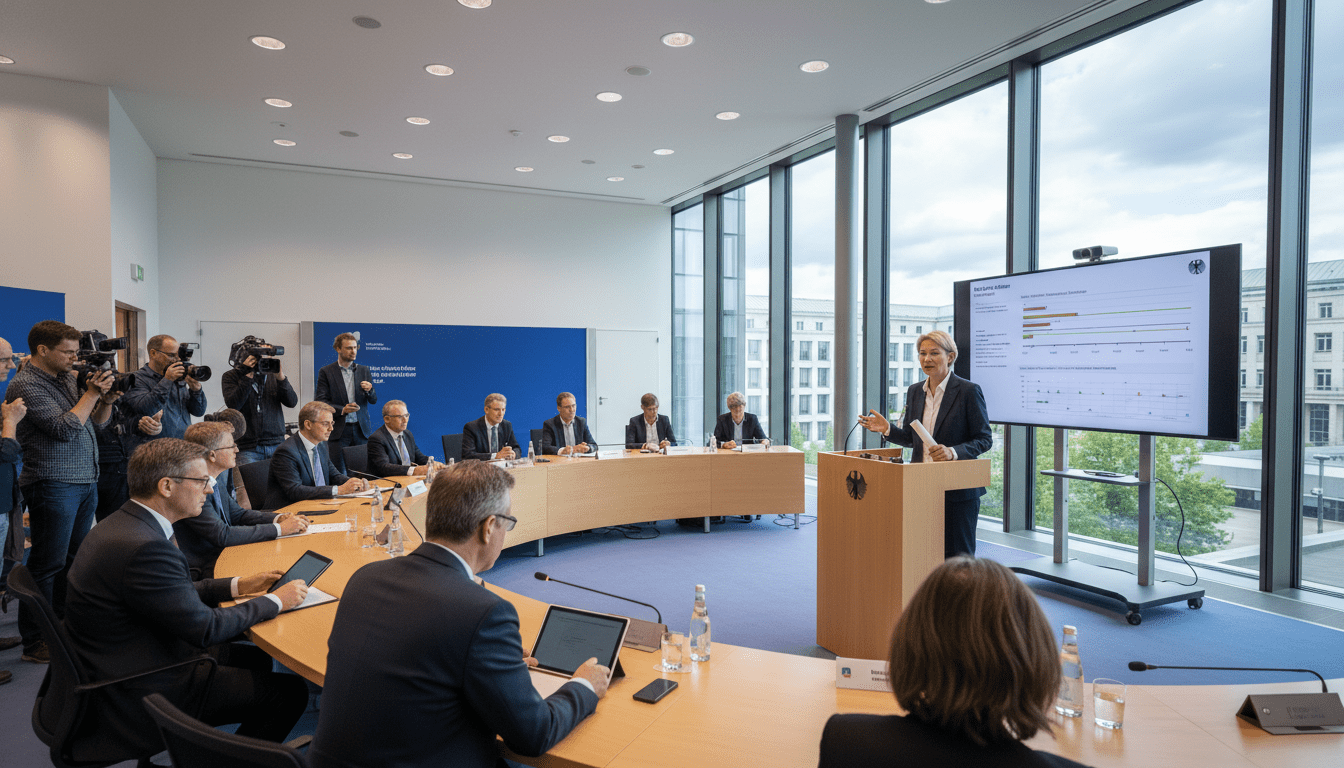
Germany reaffirms BAföG reform timetable despite minister’s doubts
Research ministry says BAföG reform will go to cabinet end of July to take effect Winter semester 2026/27 amid ministerial doubts and coalition tensions.
The Federal Ministry of Education and Research has reiterated that the BAföG reform is scheduled to be presented to the cabinet at the end of July, with the aim that the changes come into force for the Winter semester 2026/27. The ministry made the statement on the social platform X and provided no further operational details. The reaffirmation came after public comments from a cabinet colleague that raised questions about the reform’s near-term prospects.
Ministry restates end-of-July cabinet deadline
The ministry’s post on X confirmed work is underway to ensure the BAföG reform is adopted by the cabinet at the end of July and implemented in time for Winter semester 2026/27. Officials did not elaborate on timelines for parliamentary approval or administrative roll-out. The brief announcement framed the schedule as a government objective rather than a completed legal step.
Dorothee Bär expresses scepticism over pace of implementation
Shortly before the ministry’s message, Federal Research Minister Dorothee Bär (CSU) told the Funke media group she no longer expected a rapid passage of the reform, citing resistance within the governing factions. Bär said she understood political caution when other social programs face cuts or realignment, and suggested that students holding part-time jobs are not necessarily disadvantaged. Her remarks signalled internal disagreement over priorities and timing within the coalition.
SPD pushes back and reiterates coalition commitments
The SPD parliamentary group responded sharply, with deputy leader Wiebke Esdar saying Bär’s assessment was inaccurate and that the SPD stands united behind the coalition’s BAföG commitments. The coalition agreement foresees an initial rise in the monthly housing allowance from €380 to €440 starting in Winter semester 2026/27. Further planned adjustments aim to align the basic living allowance for students with standard social assistance levels in two stages during Winter semester 2027/28 and 2028/29.
Budget negotiations and earlier financing assurances
At the end of April the research ministry indicated that coalition partners had reached an understanding on financing the reform amid broader budget talks. That message was followed by comments from CDU parliamentary leader Jens Spahn suggesting that benefits such as BAföG may be constrained by fiscal realities, a position that contributed to friction between the CDU/CSU and the SPD. The clash over messaging highlights the challenge of reconciling program expansions with competing demands in the federal budget.
What the proposed changes would mean for students
If implemented as planned, the immediate increase in the housing allowance would raise monthly support for many recipients, easing the costs of accommodation in cities with high rents. The staged adjustments to the basic need calculation would represent a more systemic increase in student support over the next two academic years. However, the ultimate impact depends on the exact legal text, administrative timelines and whether parliament proceeds without significant alteration.
The coming weeks will be decisive: cabinet approval at the end of July would move the package into the parliamentary process, but parliamentary committees and budgetary scrutiny could alter the timetable or scope. Students, university administrations and financial aid offices will closely watch for formal publication of the draft and guidance on implementation steps.
Final decisions on the BAföG reform will shape student support for the 2026/27 academic cycle and beyond, and the debate between ministers and coalition partners underlines the political trade-offs at play as Germany balances social spending priorities and fiscal constraints.
