
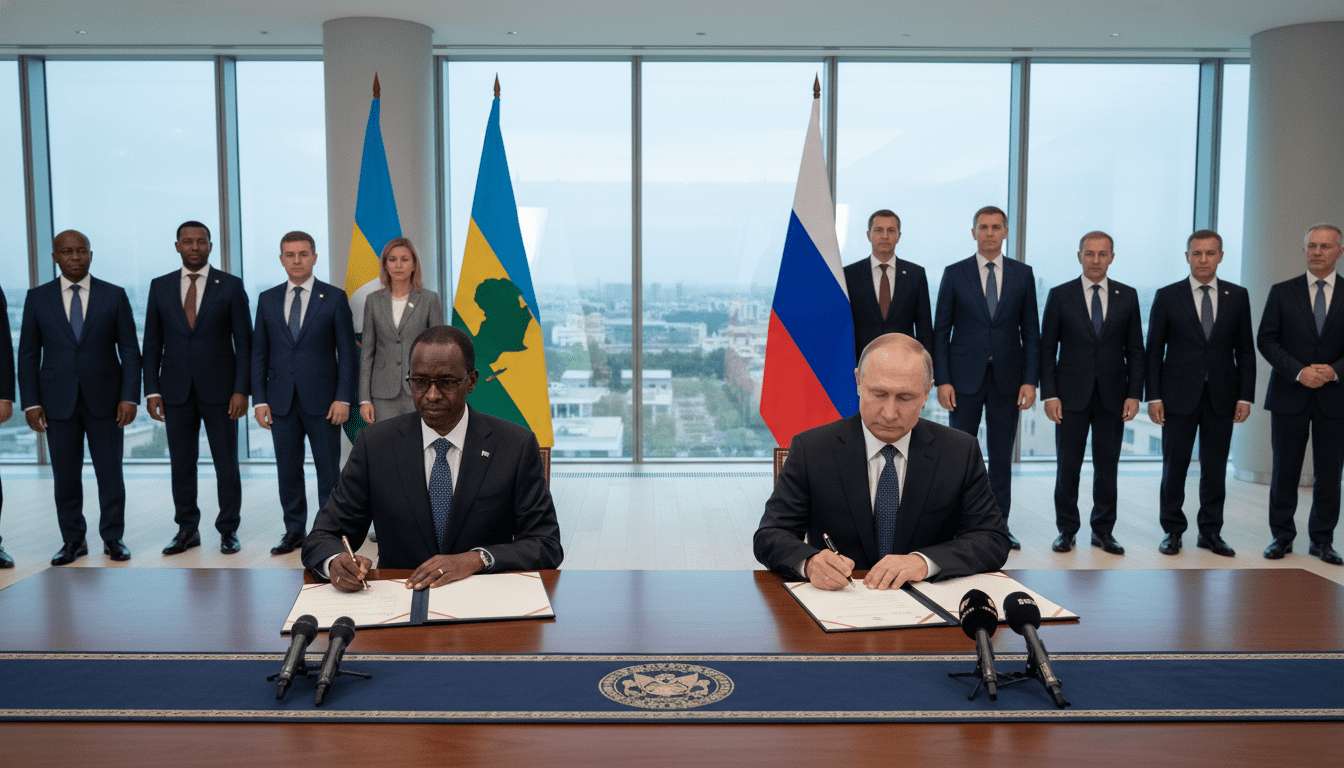
Rwanda nuclear agreement with Russia signals strategic shift at Kigali summit
Rwanda nuclear agreement with Russia, signed at the Kigali summit May 19, aims to build nuclear medicine, research and training and reshape African influence.
Rwanda formalizes nuclear cooperation with Russia
Rwanda and Russia signed a memorandum of understanding on nuclear cooperation at the Nuclear Energy Innovation Summit in Kigali, formalizing a partnership that Kigali says is centred on science, medicine and capacity building. The agreement, announced by Rwandan officials, frames cooperation around nuclear medicine, research reactors, training programmes and broader scientific exchange. Rwandan government spokesperson Yolande Makolo said feasibility studies are under way for a small modular reactor (SMR)-based facility and a proposed Centre for Nuclear Science and Technology. The deal is one component of Rwanda’s stated ambition to become a regional hub for technology and advanced healthcare.
Terms of the MoU and technical goals
The MoU covers collaboration on nuclear medicine, laboratory facilities, human capital development and exploratory work on research reactors and SMRs. Kigali has said the immediate focus is not grid-scale power generation but building regulatory frameworks, training engineers and establishing medical isotope capacity. Rwanda is already sending students to Russia for nuclear engineering programmes to develop domestic expertise ahead of any construction. Officials emphasise the incremental nature of the plan: feasibility studies and regulatory work will determine whether and when physical infrastructure moves forward.
Geopolitical ripple across Africa
Analysts say the agreement is as much geopolitical as technical, reflecting shifting influence across the continent as Moscow expands ties in Africa. Russia’s state nuclear agency, Rosatom, has secured multiple cooperation deals across the region, and experts argue those agreements serve both strategic and symbolic aims. Professor Macharia Munene, a specialist in diplomacy and international relations, described Russia’s policy of noninterference and transactional investment as attractive to governments seeking predictable partners without political preconditions. The Kigali MoU follows similar arrangements in countries pursuing long-term nuclear and scientific capacity.
Kigali’s multi-partner engagement
Rwanda has framed the Russia deal as one strand of a wider strategy to engage multiple partners, not a pivot to any single state. Makolo noted that Rwanda also signed civil nuclear cooperation understandings with the United States and agreements with firms from South Africa and Austria at the same summit. Analysts observe that President Paul Kagame’s government is compartmentalising relationships, keeping economic, defence and scientific ties diversified across the US, China, Europe, the Gulf and Russia. Beverly Ochieng, a senior analyst at Control Risks, said Kigali aims to extract technical benefits while avoiding overdependence on one external actor.
Costs, safeguards and long-term risks
Experts caution that nuclear programmes carry steep financial, technical and regulatory demands that can take decades to satisfy. Establishing a research reactor or SMR facility requires sustained investment in safety infrastructure, independent regulatory oversight, and adherence to international safeguards. There are also ongoing questions about financing, supply chains for isotopes and the capacity to operate and maintain complex systems locally. Critics warn that heavy reliance on foreign technology and training can create dependencies that are difficult to unwind if geopolitical dynamics change.
Domestic priorities and regional ambitions
For Rwanda, proponents say the immediate gains would be in healthcare and scientific training rather than energy production. Nuclear medicine—production and application of medical isotopes—could enhance diagnosis and treatment capacity for cancer and other conditions across the region. Kigali’s proposed centre would host laboratories, training facilities and, potentially, a research reactor that could serve neighbouring countries. The government positions the initiative as part of a broader economic plan to transform Rwanda into a tech-driven economy that attracts talent and investment.
Rwanda’s nuclear outreach also intersects with domestic and regional politics. The country has faced criticism over human rights and strained ties with some Western governments, notably tensions with the United States over allegations related to regional armed groups. Those diplomatic frictions have contributed to Kigali’s emphasis on diversifying partnerships and pursuing agreements that advance technical capacity without overtly political strings.
Feasibility work and student training are expected to occupy the near term, with operational facilities remaining a long-term prospect. Officials say a phased approach will test technical viability, build regulatory institutions and expand human capital before any construction decision. Observers note that, even if immediate power goals are limited, the symbolic value of such partnerships can bolster national prestige and provide leverage in broader diplomatic and investment negotiations.
The immediate next steps will focus on completing feasibility studies, strengthening regulatory frameworks and scaling training programmes for Rwandan engineers and technicians. International safeguards, transparent procurement and clear financing plans will be essential if the project moves beyond planning. Kigali’s handling of these technical and political details will determine whether the MoU delivers practical benefits in healthcare and research or remains primarily a statement of strategic intent.
