
Chinese Investment in Germany Surges as Berlin Faces Tough Choices
Chinese investment in Germany rises as Beijing redirects capital; Berlin weighs security reviews, corporate deals and EU limits amid tech-transfer concerns.
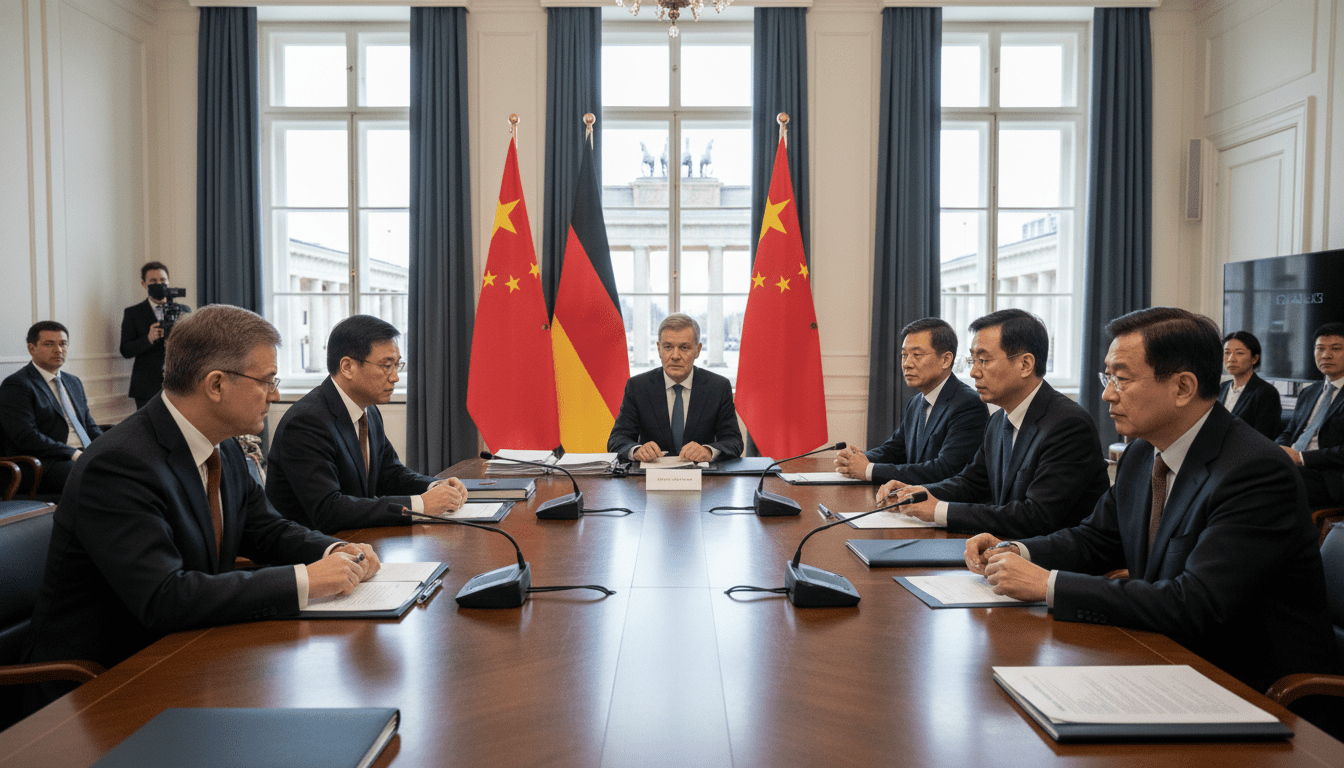
The German economy minister visited Guangzhou this week to court investors as Chinese investment in Germany accelerates, drawing broad interest from automotive, energy and tech companies. Katherina Reiche presented Germany as a stable, skilled and investment-friendly destination while meeting senior executives from XPeng, Ming Yang and other large Chinese groups. The tours and bilateral meetings underline a broader shift: Chinese capital is moving into Europe and Germany has become a prime target, forcing policymakers to reconcile market openings with national security concerns.
German Minister Markets Country in Guangzhou
Reiche used the Guangzhou visit to pitch Germany’s regulatory stability, workforce training and high credit ratings to Chinese investors. Provincial officials received delegations from a string of Chinese firms, signaling official interest on both sides in expanding commercial ties. The visible enthusiasm at the investor conference contrasted with unease among some German lawmakers who worry about strategic dependencies.
Reiche also declined to prejudge sensitive takeover cases, stressing that investment reviews are ongoing while reiterating Germany’s commitment to transparent procedures. Her public diplomacy underlined the federal government’s intent to attract foreign capital even as it tightens screening for critical sectors. The dual message—welcome investment, but expect scrutiny—set the tone for subsequent negotiations.
Chinese Firms Target Autos, Energy and Digital Infrastructure
Executives from XPeng discussed potential cooperation that would pair German engineering and manufacturing with Chinese software and battery know‑how. Ming Yang’s German arm already sources roughly €2 billion of goods annually from Germany and has opened a presence in Hamburg, highlighting energy and renewable links. Meanwhile JD.com’s earlier bid for Ceconomy and ongoing interest by Chinese automakers signal appetite across retail, mobility and clean energy.
Those corporate moves imply a changing division of labor: Chinese firms increasingly bring core technology and scale, while German partners contribute production expertise and engineering. For German consumers and companies this can mean access to lower‑cost technology and rapid innovation cycles. For policymakers, it raises questions about who retains control of critical technologies and long‑term value chains.
Think Tank Data Shows a Rising Share for Germany
Recent analyses from European think tanks indicate that Germany’s share of Chinese direct investment in Europe has climbed significantly over the past few years. According to a prominent China research institute, Germany’s portion of Beijing’s European investment rose from roughly 10 percent to about 15 percent, with total flows reaching multi‑year highs. The pattern reflects both Chinese strategic redirection and growing commercial interest in German industry.
Sectors drawing the most capital include automotive, entertainment and renewables, the report found, with deal activity concentrated in acquisitions and joint ventures. Observers say this reallocation is partly driven by deteriorating U.S.–China ties, which have nudged Chinese investors to look to Europe as an alternative market for technology and market access.
Research Warns of Post‑Acquisition Profit and Patent Shifts
An extensive working paper from a major U.S. economic research institution examined tens of thousands of firms worldwide and found a consistent pattern after acquisitions by Chinese parents. The study reports that acquired subsidiaries often show declines in profitability and in domestic patenting activity, while the parent companies increase their patent filings. Authors interpret this as evidence of targeted technology consolidation into China’s domestic innovation system.
Those empirical findings have hardened the positions of some German lawmakers and analysts who argue that certain purchases are less about operational synergies and more about acquiring strategic know‑how. Critics call for closer scrutiny of deals that could erode Germany’s long‑term industrial edge.
Berlin Tightens Screening and Cites Security Concerns
Since adopting a revised China strategy in 2023, Berlin has strengthened its foreign investment review mechanisms for transactions with security implications. High‑profile interventions include the 2024 decision to block the sale of a gas turbine division amid concerns over ties to activities related to naval vessels. Current cases under review include a possible majority acquisition of a Hamburg logistics operator by a major Chinese shipping group after an earlier minority stake was permitted.
Officials stress that reviews are based on concrete security assessments rather than blanket protectionism, but the threshold for intervention has lowered. Government spokespeople emphasize that investment approvals will continue when they can be reconciled with national security and supply‑chain resilience.
EU Deliberations Could Lead to New Investment Limits
The investment surge has also prompted debate in Brussels, where the European Commission has placed China policy on the agenda and proposed measures intended to shield strategic industries. Officials are discussing an “Industrial Accelerator” framework and whether certain investment caps or conditionalities should be introduced across the single market. Member states are expected to debate proposals in the coming months, and agreement could take time.
Some analysts recommend tying market access to local value creation, arguing that restricting unfettered exports to Europe would change the incentives for Chinese firms to invest substantively. Others warn that hastily imposed barriers could provoke retaliation or push investment into jurisdictions with weaker standards.
Vodafone’s decision to replace selected equipment from a major Chinese vendor illustrates how corporations are already adapting, even as Huawei and others emphasize joint tech labs and partnerships with German firms. Lawmakers from across the spectrum have called for calibrated responses that preserve openness while protecting strategic capabilities.
Germany now faces a multifaceted choice: encourage capital inflows that support jobs and competitiveness, or raise protective barriers to safeguard technological independence. The coming months will test Berlin’s ability to craft policies that attract productive foreign investment without surrendering control of critical technologies.
