
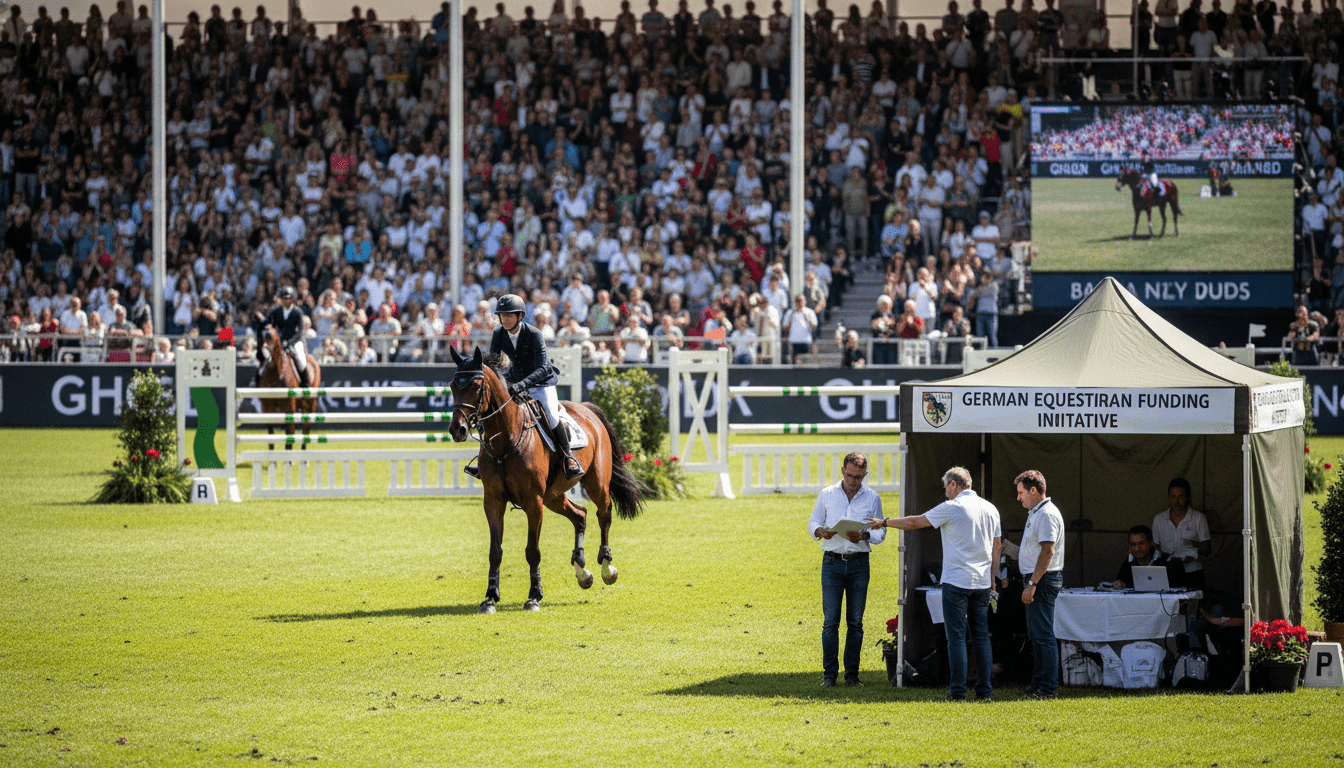
CHIO Aachen draws 100,000 fans as Richard Vogel wins Grand Prix and Rolex Grand Slam bonus
Aachen’s CHIO Aachen drew more than 100,000 spectators over Pentecost as Richard Vogel took the Grand Prix and secured a half‑million euro Rolex Grand Slam bonus ahead of the World Championships.
Vogel secures Grand Prix and Rolex Grand Slam bonus
Richard Vogel captured the prestigious Grand Prix at CHIO Aachen, sealing a €450,000 first prize and triggering a €500,000 Rolex Grand Slam bonus for the second consecutive time. His 29‑year‑old mount, United Touch, delivered a powerful, time‑clearing round that left finalist Sophie Hinners and Argentina’s José Maria Larocca trailing in speed. Vogel’s victory, achieved after intense preparation, marked a defining moment for the rider and added a rare financial windfall to an already high‑profile season.
The jump‑off included only three of 40 starters who produced two clean rounds, underscoring the difficulty of the Aachen course. Vogel finished fastest among them, with Hinners posting a confident fast time on Singclair and Larocca narrowly missing Vogel’s mark by less than two seconds. The result reinforced Vogel’s status as a top contender as attention turns to the World Championships in August.
Record crowds and an elite start list in the Soers
Across three days of competition and show, CHIO Aachen reported attendance exceeding 100,000, with sold‑out sessions for the “Pferd & Sinfonie” concert and the Grand Prix. Organizers assembled an almost complete elite field, with 24 of the world’s top 25 ranked riders present, giving the shortened event a world‑class competitive cast. The atmosphere in the Soers combined sport and spectacle, delivering the kind of weekend many riders and fans describe as ideal.
Spectator enthusiasm contrasted with the narrower program, which this year focused on showjumping and entertainment because of the venue’s forthcoming role as World Championships host. Still, the turnout underscored Aachen’s standing as a marquee stop on the international equestrian calendar and a reliable draw for audiences and media attention alike.
Aachen upgrades facilities ahead of the World Championships
The Aachen‑Laurensberger Rennverein is using the momentum of CHIO Aachen to expand and modernize the venue ahead of the World Championships in August. Planned upgrades include a new stable facility to accommodate more horses and an additional stadium intended to boost capacity for para‑sport and youth competitions. Those investments aim to broaden the event’s program while enhancing operational capacity for a larger global championship.
Organizers have highlighted the long‑term nature of recent commercial partnerships as a foundation for the upgrades, citing a multi‑year agreement with Allianz and a renewed collaboration with Rolex. The improvements are designed to leave a lasting legacy at the site and to position Aachen as a central hub for high‑performance equestrian sport.
Five‑star events shrink as other German venues struggle
While Aachen enjoyed success, several other German tournaments faced acute financial strain, leaving gaps in the national calendar. The Stuttgart German Masters lost three principal sponsors, and Donaueschingen saw its planned competition collapse days before it was due to start due to funding shortfalls. Those failures removed key alternatives for hosting top‑level fixtures usually scheduled around CHIO Aachen.
The shortage of five‑star showjumping Nations Cups has been particularly evident. Mannheim’s Maimarkt tournament stepped in but fell €1 million short of the budget needed to stage a five‑star Nations Cup, ultimately hosting a three‑star contest with a much smaller prize purse. The disparity in prize money and status highlights how only a limited number of organizers can sustain the highest tier of international events.
Olympic success contrasts with declining riding association membership
Germany’s elite riders continue to dominate at the highest level, with the country sweeping individual medals at the Paris 2024 Olympics in three classical disciplines. Despite that global success, domestic indicators tell a more mixed story, as the national equestrian federation reports falling membership even while many other sports associations post gains. The discrepancy suggests that elite performance does not automatically translate into grassroots growth for the sport.
Riders and officials point to multiple factors, including economic pressure on potential sponsors and broader structural challenges in event financing. Observers note that spectator interest at major events remains robust, but converting that engagement into sustained club membership and widespread investment has proved difficult.
Coaches and riders weigh industry trends ahead of the World Championships
Bundestrainer Otto Becker said he took encouragement from the Aachen results and the concentration of the German Olympic squad, which fielded two pairs among the top three and saw André Thieme finish sixth. Becker emphasized that the public’s appetite for top tournaments remains healthy even as commercial partners reassess budgets. His comments framed Aachen as both a sporting success and a rehearsal for the pressure of the World Championships.
Olympic champion Christian Kukuk, who spends winters in Florida, described a booming equestrian market in the United States that Germany currently does not mirror. Riders pointed to differing commercial ecosystems and investment appetites as reasons why international stars often chase lucrative circuits abroad, even while representing Germany at the very highest events.
The German equestrian calendar now heads into a tense summer: Aachen will host the World Championships in August under the shadow of other domestic tournaments that have faltered. Organizers, national coaches and sponsors must balance the momentum from a sold‑out CHIO Aachen with the structural and financial questions facing the sport outside the Soers.
The event in Aachen underlined the sport’s enduring public appeal while exposing fragile funding conditions across other German venues, leaving stakeholders to reconcile the country’s top‑level achievements with a pressing need to secure the future of national competitions.
