
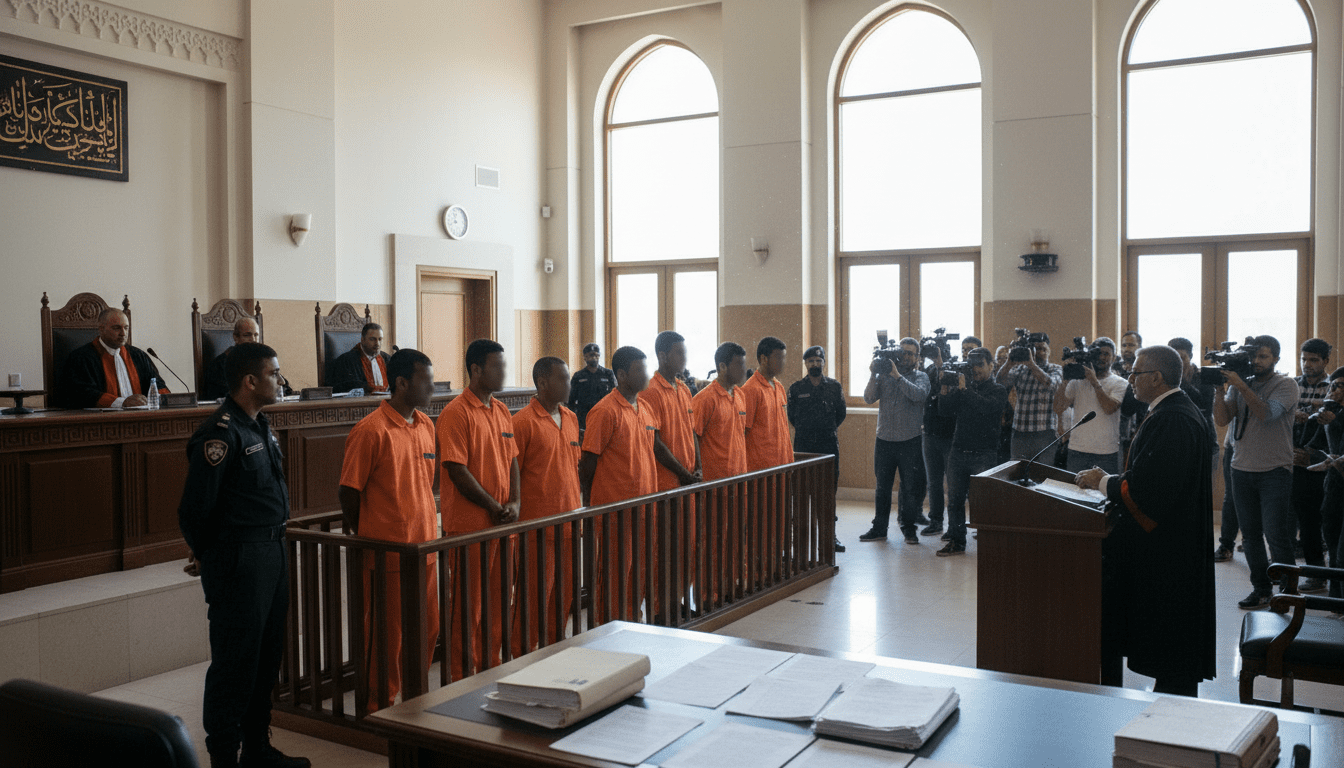
Bahrain sentences nine to life over alleged ties to Iran’s Revolutionary Guard
Bahrain sentences nine to life after a court found defendants colluded with Iran’s Revolutionary Guard Corps to carry out espionage, financing and ‘hostile and terrorist acts’.
A Bahraini court on May 24, 2026 sentenced nine defendants to life imprisonment and handed three-year terms to two others after finding them guilty of collaborating with Iran’s Revolutionary Guard Corps, the Bahraini state news agency said. The court said the group gathered intelligence on sensitive sites and facilitated financial transfers tied to what it described as “hostile and terrorist acts.” The verdict marks one of the most severe sentences in recent years linked to alleged Iranian involvement in internal Bahraini security matters.
Court ruling and sentences delivered
A panel of judges delivered the sentences after trial proceedings that the state news agency summarized on Sunday. Nine defendants received life terms, while two others were convicted and sentenced to three years each on related charges. The court statement did not provide full details of the evidence presented but emphasized the defendants’ roles in information gathering and moving funds.
The judiciary framed the convictions as responses to coordinated activity aimed at undermining national security. Authorities said the actions met statutory thresholds for terrorism-related offenses under Bahraini law, a classification that carries the most severe penalties available to the courts.
Charges detailed by state prosecutors
Prosecutors accused the defendants of collecting intelligence on installations the government deems sensitive, including security and infrastructure sites. The court also cited a network of financial transfers that allegedly supported those efforts and facilitated operations described as “hostile and terrorist acts.” Officials characterized the transfers as part of a broader support mechanism for external coordination.
Legal documents conveyed to the court reportedly included digital records and financial transaction traces, although the state summary released publicly did not list specific exhibits. Defense teams were described in the statement as having the opportunity to present counterarguments during the proceedings.
Alleged links to Iran’s Revolutionary Guard Corps
The court linked the activities to Iran’s Revolutionary Guard Corps, saying the defendants collaborated with the paramilitary force to carry out the acts under review. Bahrain has in recent years increasingly pointed to Tehran as a source of regional interference, especially in nations with significant Shia communities. The Revolutionary Guard Corps, often referred to by its English acronym IRGC, has been implicated by Gulf states in past accusations of assistance to groups they view as proxies.
Bahraini authorities framed the case as part of a wider security challenge posed by transnational actors seeking influence in the Gulf. The state news agency’s account placed the alleged coordination squarely within that strategic contest.
Domestic security context and previous prosecutions
Bahrain, a small Gulf kingdom ruled by a Sunni royal family, has a history of confronting domestic dissent and security threats that it ties to foreign interference. The state has periodically conducted sweeps and trials against individuals accused of plotting against the monarchy or cooperating with external actors. Human rights groups and some international observers have previously criticized prosecutions in Bahrain for heavy-handed tactics, while the government says such measures are necessary to protect stability.
Security services in Bahrain maintain a prominent role in monitoring and countering activities they classify as espionage or terrorism. The recent sentences show the judiciary continuing to apply strict penalties in cases the state frames as national security matters.
Regional and diplomatic implications
The court’s explicit reference to the Revolutionary Guard Corps is likely to reverberate beyond Bahrain’s borders, contributing to already tense relations between Gulf Arab states and Iran. Bahrain’s allies have historically supported its stance against perceived Iranian influence, while Tehran denies many such accusations and contests Gulf narratives. The verdict could prompt diplomatic responses or be cited by each side to bolster competing regional narratives.
Analysts say such cases also affect security cooperation inside the Gulf Cooperation Council, where member states cite shared concerns about external meddling. The sentences may therefore influence both bilateral ties and broader regional security dialogues.
Next steps in the legal process and potential appeals
Under Bahrain law, defendants have a right to appeal criminal convictions, and the legal teams involved may seek higher-court review of the sentences. Appeals could focus on procedural questions, the handling of evidence, or the legal characterization of the alleged acts. The timeline for any appellate process was not indicated in the state summary.
Observers will watch whether international organizations raise concerns about trial fairness or due process, as has occurred in past high-profile Bahraini cases. For now, the convictions stand as a decisive judicial outcome that the government presents as a safeguard of national security.
The verdict underscores the Bahraini state’s determination to pursue and penalize activities it deems coordinated with foreign entities, particularly those it alleges are directed by Iran’s Revolutionary Guard Corps, and sets the stage for potential legal appeals and diplomatic responses.
