
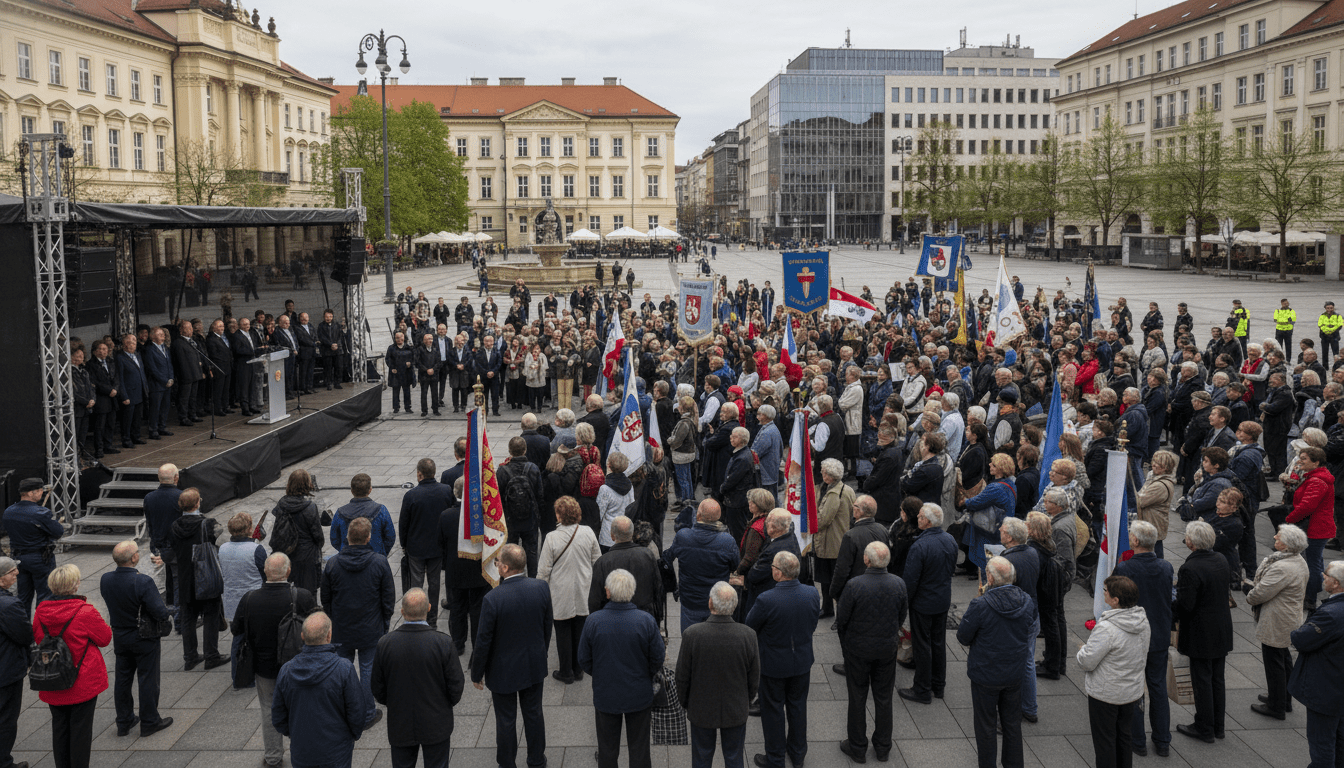
Sudetendeutsche Landsmannschaft meeting in Czech Republic held in Brno, sparking protests and debate
Sudetendeutsche Landsmannschaft meeting in Czech Republic in Brno on May 22, 2026 provoked protests and renewed debate over postwar expulsions and reconciliation.
Pentecost gathering opens in Brno
The Sudetendeutsche Landsmannschaft meeting in Czech Republic convened for the first time on Czech soil, opening a four-day Pentecost gathering in Brno on May 22, 2026. Organizers presented the event as a symbolic step toward reconciliation between Germans and Czechs after decades of fraught memory politics. Cultural performances, including an appearance by the Böhmerland dance group from Brazil, accompanied speeches and commemorative moments throughout the opening day.
The meeting was described by supporters as a chance for dialogue, while opponents in the Czech Republic framed it as ill-timed and politically sensitive. The presence of high-profile German figures and representatives of Sudeten German organizations heightened media attention and public scrutiny.
Czech parliament issues criticism ahead of the rally
In the days leading up to the Brno gathering, the Czech parliament debated and criticized the event, warning against any rhetoric that could relativize Nazi-era crimes. A motion expressing those concerns was introduced by the far-right SPD party and received backing from the ANO party aligned with then-Prime Minister Andrej Babiš. Lawmakers’ statements underscored how memory of World War II and its aftermath remains a politically charged subject in Prague.
Opponents in parliament argued the meeting could reopen old grievances and complicate bilateral ties, while supporters portrayed the criticism as politically motivated. The parliamentary debate reflected broader domestic divisions in the Czech Republic over how to balance historical accountability with gestures of reconciliation.
Expected speakers and symbolic attendance
Organizers had announced that Bavaria’s Minister-President Markus Söder and the Sudeten German spokesman Bernd Posselt were expected to attend the main rally, signaling strong representation from German regional and expellee communities. Their planned presence was framed by hosts as an expression of official engagement with the Sudeten German diaspora and the event’s commemorative purpose. Local and regional officials in both countries noted the symbolic weight of such appearances.
Attendance included a mix of older expellees, younger descendants, cultural associations and international guests, reflecting the movement’s transnational reach. The diversity of participants underscored how memories of the 20th century continue to shape contemporary identity politics across generations.
Historical backdrop of the expulsions
The meeting’s controversy is rooted in the postwar expulsion of an estimated three million ethnic Germans from the former Czechoslovakia after World War II. Those expulsions, carried out in the chaotic aftermath of the conflict, displaced large populations who often resettled in West and East Germany. For many descendants, the gatherings serve to commemorate family histories and to press for recognition of suffering experienced during and after the war.
Historians caution that remembrance must be balanced with clear condemnation of Nazi crimes and an accurate account of wartime atrocities. The competing narratives—victimhood, guilt and responsibility—continue to inform public debate in both countries.
Public reactions on the ground in Brno
Local reactions in Brno were mixed, with some residents viewing the event as an important step toward dialogue and others expressing unease about public ceremonies that revive contested histories. Small demonstrations and counter-events took place nearby, where critics called for careful phrasing around wartime responsibility and for sensitivity to Czech historical experience. Municipal authorities said they monitored the situation closely to prevent clashes and ensure freedom of assembly.
Organizers emphasized nonconfrontational programming and invited cultural exchanges, while opposition groups demanded that commemoration not obscure the broader context of Nazi aggression. The competing events in the city reflected how memory politics can mobilize civic groups on both sides of the border.
Diplomatic and regional implications
Hosting the Sudetendeutsche Landsmannschaft meeting in the Czech Republic marks a notable shift in how expellee organizations and successor states interact publicly. For German regional politicians and expellee representatives, the Brno gathering signaled a willingness to engage across national lines and to seek symbolic closure. For Czech officials and many citizens, however, the move raised questions about timing, terminology and the framing of historical narratives.
Analysts say the episode will likely prompt renewed diplomatic conversation about how to discuss painful episodes of the 20th century without reopening old wounds. Memory diplomacy, whether through joint historical commissions or cultural exchanges, may become more central as both countries manage the political fallout.
The Brno meeting illustrated the enduring sensitivity of Central European history and the challenge of reconciling competing memories. While organizers framed the Pentecost gathering as a step toward mutual understanding, the strong criticisms and public demonstrations demonstrated that national narratives remain deeply contested. Without agreed frameworks for truth-telling and acknowledgment, such events risk reinforcing divisions even as they aim to heal them.
