
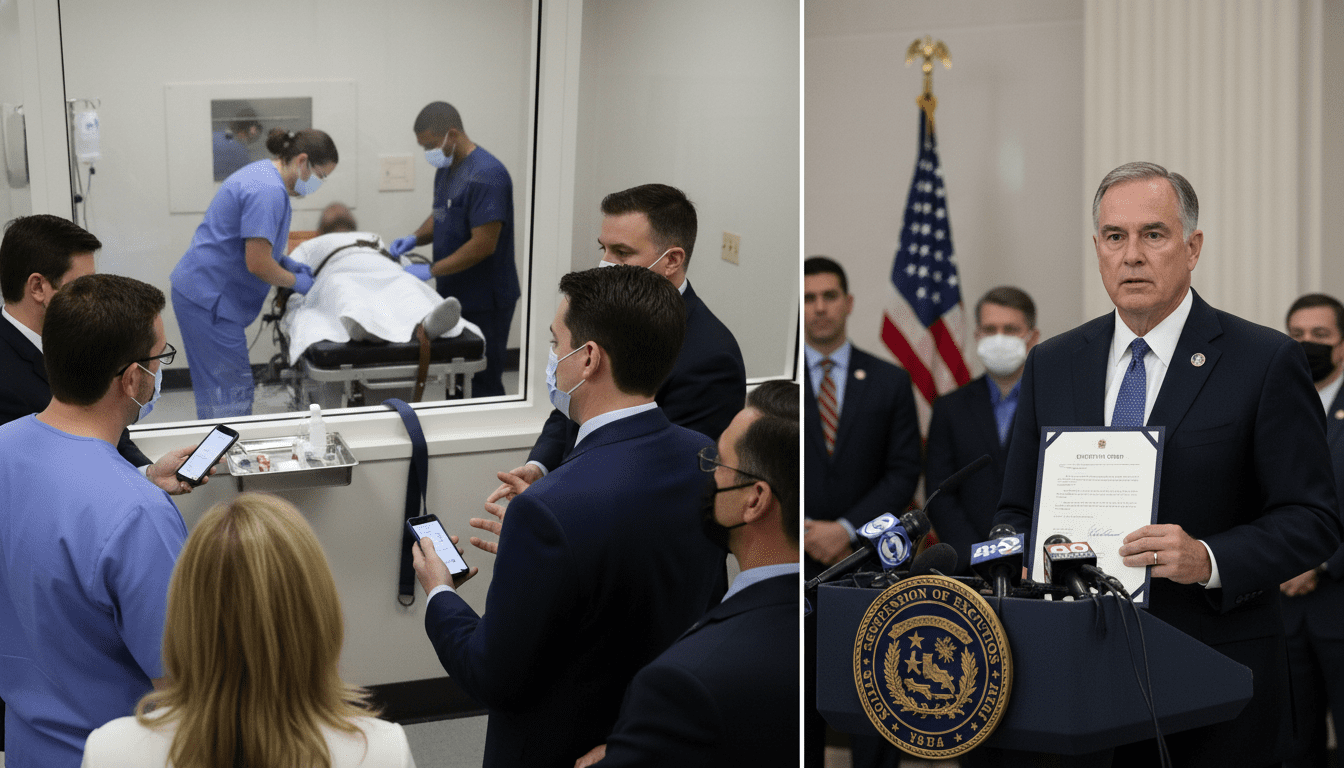
Tennessee execution halted after medical staff fail to secure second IV, governor orders one-year pause
A last-minute Tennessee execution was halted after medical personnel could not find a second suitable vein for the lethal injection, prompting Governor Bill Lee to suspend executions in the state for one year.
Execution halted after failed IV attempts
Prison officials in Tennessee called off a scheduled execution at a correctional facility in Nashville when medical staff were unable to establish the legally required second intravenous access for the administration of lethal drugs. Authorities said one line had been placed but repeated attempts to find a second suitable vein failed, forcing the state to stop the procedure shortly before it was to proceed.
The incident drew immediate attention from legal advocates and civil liberties groups, who described the stoppage as further evidence of ongoing problems with lethal-injection protocols. Media organizations reported details of the aborted execution and quoted state officials and defense lawyers about the circumstances that led to the cancellation.
Convicted inmate had sought DNA testing and clemency
The man scheduled for execution was convicted in 1994 of three counts of murder and had spent more than three decades in custody. His lawyers filed emergency motions to delay the execution and sought DNA testing that they argued could undermine the case against him.
Defense attorneys also submitted a clemency petition alleging that their client suffers from serious mental illness that impairs his understanding of his legal situation and the impending execution. Those claims formed part of a last-minute effort to secure relief from the state’s highest officials and the courts.
Civil liberties groups highlight self-representation claim
The American Civil Liberties Union noted that, if carried out, this execution would have been the first in more than a century of a defendant who had represented himself at trial. The organization and other advocates raised concerns about fairness when a person who defended himself is later put to death.
Legal observers emphasized that the intersection of self-representation, questions about mental fitness, and post-conviction DNA efforts raises constitutional and humanitarian questions that have been debated in courts and legislatures for years.
State’s lethal-injection protocol under scrutiny
Tennessee has faced criticism in recent years over the reliability and testing of its lethal-injection procedures. State authorities previously paused executions for three years after revelations that the department did not properly verify the effectiveness of the chemicals used in lethal injections.
Experts and opponents of capital punishment have repeatedly pointed to difficulties finding medical personnel willing to participate and to the technical challenges of establishing secure intravenous access, especially in older inmates or those with compromised veins.
Governor Bill Lee orders yearlong pause
Following the halted execution, Governor Bill Lee announced an immediate suspension of executions in Tennessee for one year and said the state would review procedures. The halt came shortly after Lee had declined a clemency petition filed by the condemned man, a decision that had been made public days earlier.
State officials indicated the delay would allow for a review of protocols and medical procedures used during executions, though they did not release a detailed plan or timetable for that review at the time of the announcement.
Broader national context of death-penalty debate
Capital punishment remains a deeply divisive issue across the United States, where 23 states have abolished the practice and several others have not carried out executions in years. Lethal injection is the most commonly authorized method nationwide, but its use has prompted legal challenges and policy reviews in multiple jurisdictions.
Advocates for abolition point to botched executions, concerns about wrongful convictions, and unequal application across demographic lines, while proponents argue the death penalty serves as a necessary punishment for the most heinous crimes. The Tennessee episode adds to a string of recent incidents intensifying scrutiny at both state and federal levels.
Legal scholars say the inability to secure a second IV raises immediate procedural questions, but they also expect renewed litigation over whether the state’s practices meet constitutional standards against cruel and unusual punishment.
Tennessee’s one-year moratorium will likely trigger reviews by lawmakers, medical advisers, and corrections officials, and may prompt renewed calls from advocates for a permanent end to executions in the state.
