
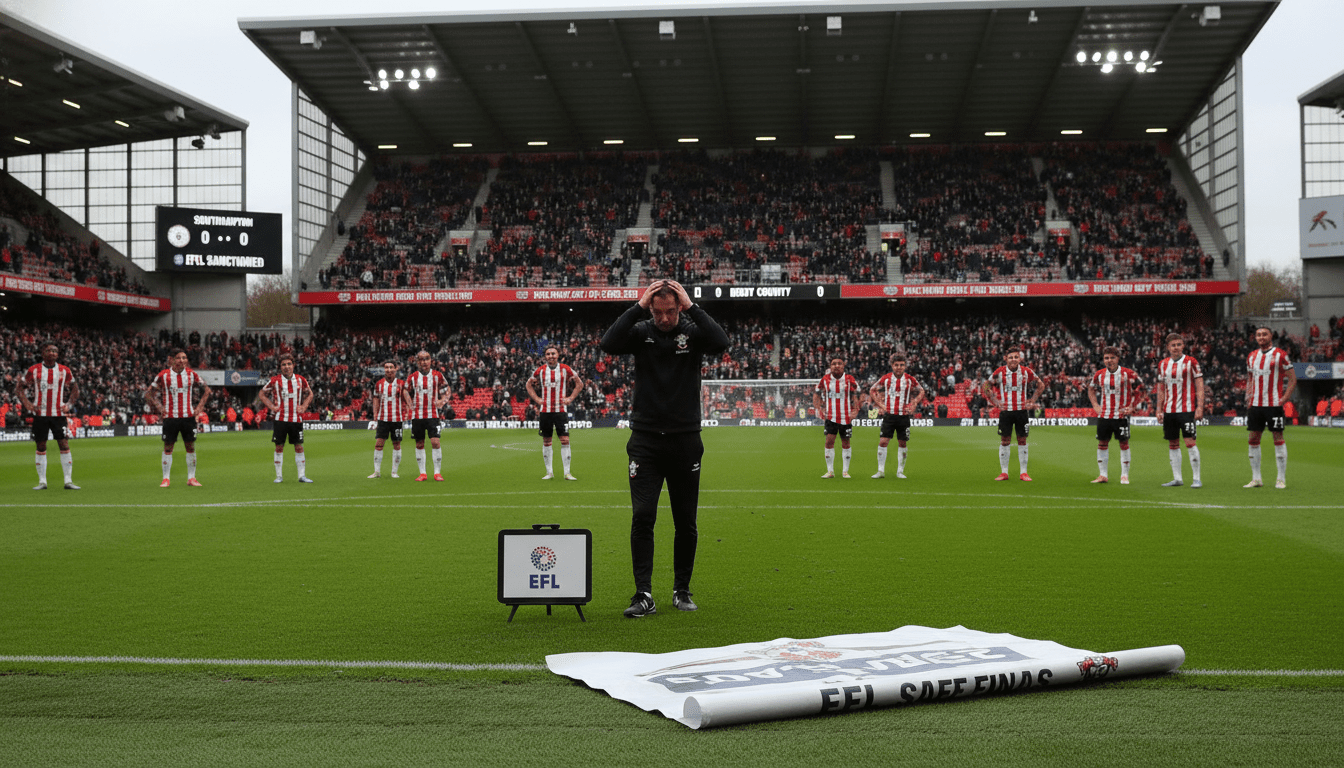
Southampton appeal dismissed by EFL, club excluded from Championship play-off final
EFL rejects Southampton appeal over “Spygate”, barring the club from the 2026 Championship play-off final and imposing a four-point deduction for 2026–27.
Southampton appeal dismissed by the English Football League (EFL) on Thursday, ending the club’s bid to overturn sanctions that exclude the Saints from the 2026 Championship play-off final. The ruling leaves the team without a chance to contest promotion this weekend and confirms a four-point deduction to be applied in the 2026–27 Championship season. The decision closes the appeals process and hands Middlesbrough the place in Saturday’s final.
EFL upholds independent commission ruling
The EFL said the independent disciplinary commission’s findings, which found Southampton guilty of breaching league regulations, would remain in place. The league confirmed the club’s complaint had been dismissed, making the ruling final and not subject to further internal appeal.
League officials described the commission’s sanctions as proportionate to the breach it had identified, and the EFL said it would enforce the exclusion from the play-off final as well as the points deduction for the upcoming season. The ruling effectively ends Southampton’s immediate prospects of returning to the Premier League via the play-offs.
Play-off spot awarded to Middlesbrough
With Southampton removed from the fixture list, Middlesbrough will take the Saints’ place in the Championship play-off final scheduled for Saturday, May 23, 2026. Middlesbrough will meet Hull City for the right to promotion to the Premier League.
The change alters the financial and sporting landscape for the clubs involved, and will have direct implications for broadcast and matchday arrangements for the final. For Middlesbrough, the late shift represents both an unexpected opportunity and fresh logistical challenges.
Details of the spying incident that triggered “Spygate”
The commission concluded that a Southampton employee had observed a Middlesbrough training session prior to the play-off semi-final, an act the independent body characterized as contrary to EFL rules. The episode, widely dubbed “Spygate” in British media, formed the central factual basis for the disciplinary case against the club.
Evidence considered by the panel reportedly included witness statements and internal club material, which the commission used to determine both culpability and appropriate sanctions. The ruling framed the conduct as a serious breach of competition integrity under league regulations.
Club response and senior management reaction
Southampton’s chief executive, Phil Parsons, acknowledged the club had broken rules and issued an apology to supporters and fellow clubs, while also criticizing the severity of the punishment. Parsons argued that the consequences would inflict disproportionate financial harm, saying the club had been denied an opportunity with substantial monetary and sporting value.
Parsons and the club have previously emphasized the scale of the potential loss, citing the play-off final’s estimated worth and the wider impact on staff and players. Despite the apology, the club’s public statements stressed disagreement with the commission’s view of proportionality.
Sporting and financial consequences for players and staff
The sanction removes an opportunity that the club estimated could be worth in excess of £200 million to the organization and its personnel, including potential broadcast revenues, sponsorship upsides and retention incentives. Several first-team players had accepted wage reductions of up to 40 percent after Southampton’s relegation, with the promise that those cuts would be reversed in the event of immediate promotion.
Reports indicate a near-£150,000 (£150,000) elevation bonus — approximately €175,000 — was also at stake for many squad members. In light of the ruling, multiple players are reportedly exploring legal options and discussing potential claims with the Professional Footballers’ Association (PFA) over lost earnings tied to promotion and contractual assurances.
Managerial outlook and club governance questions
The dismissal of the appeal also casts doubt over the future of Southampton’s head coach, Tonda Eckert, who led the club from 21st in November to a fourth-place finish with a run of strong results. Despite the on-field turnaround under Eckert, media reports suggest his position is precarious amid fallout from the scandal and the club’s boardroom dynamics.
Beyond the immediate coaching situation, the case raises longer-term governance questions for Southampton, including internal controls, oversight of staff conduct and the mechanisms by which clubs manage sensitive competitive information. The episode has prompted scrutiny of operational practices across the league and discussion about preventing similar incidents in future.
The EFL’s final ruling brings to a close a contentious disciplinary episode that will reverberate across English football, with immediate sporting consequences for the Championship play-offs and longer-term legal and financial implications for Southampton and its players.
