
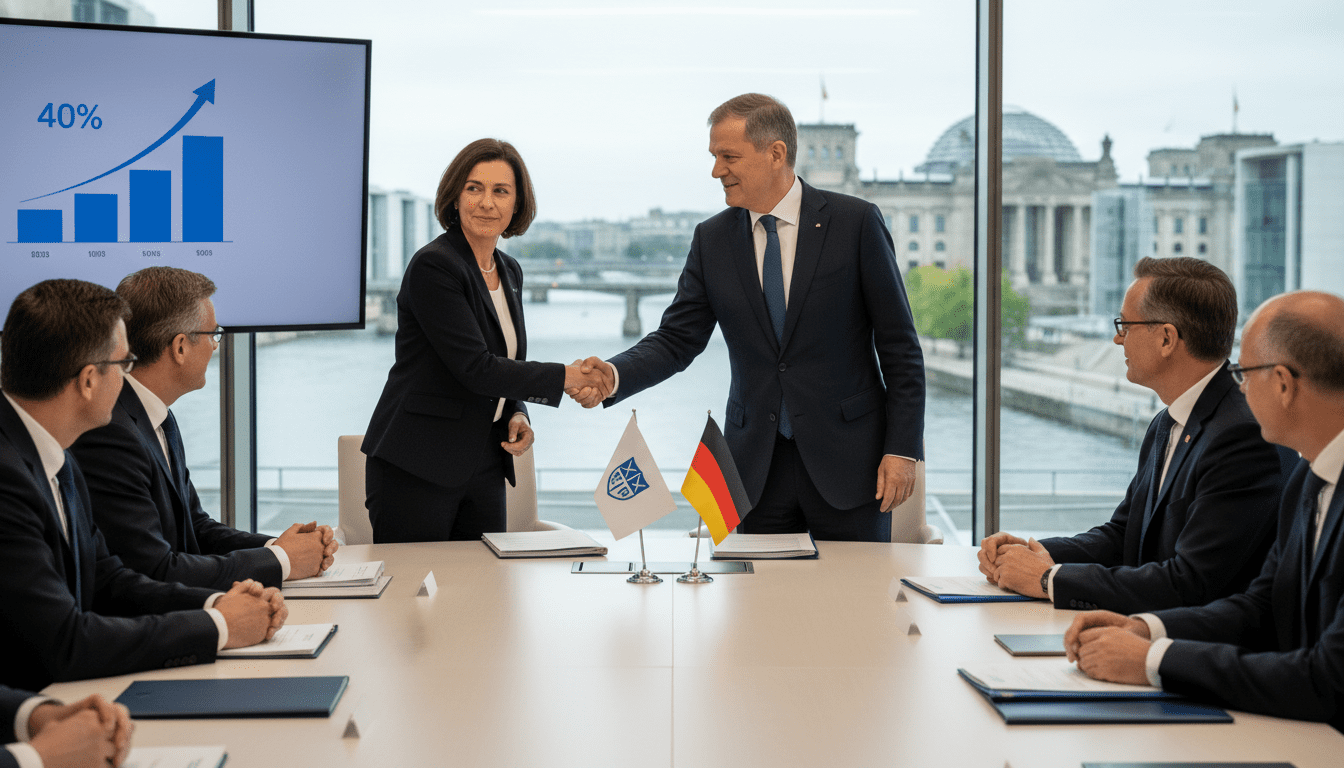
German government to take 40% stake in KNDS in planned strategic move
Berlin agrees initial 40% investment in KNDS, with intent to reduce state holdings to 30% in two to three years while establishing equal Franco-German governance.
The German federal government has agreed to acquire an initial 40 percent stake in KNDS, the Franco-German defense group behind the Leopard 2 main battle tank, officials said, marking a major shift in the company’s ownership and governance. KNDS will remain a strategic industrial asset as Berlin and Paris negotiate a new shareholder structure that grants equal decision-making rights to both states regardless of differing stakes. The move, confirmed by KNDS supervisory board chair Tom Enders, reflects growing European concern to safeguard defence capabilities and domestic jobs while preparing the group for a planned stock market listing.
Deal terms and planned state stake reduction
Berlin will take an immediate 40 percent stake in KNDS under the agreement reached between German and French government circles. Officials expect the German share to be reduced to about 30 percent within two to three years as part of a broader plan to rebalance public and private ownership. The exact price the federal government will pay has not been disclosed, and negotiations over valuation mechanics and timing are ongoing.
The arrangement envisions parallel reductions of French and German state holdings over time, with both capitals ultimately looking to limit combined state control. Company and government representatives have signalled that eventual public-market steps and governance upgrades must accompany the changes.
Current ownership and governance overhaul
Until now KNDS has been held equally by the French state and a German private family, and the new agreement aims to reconfigure that split so Germany and France hold matching shares. Crucially, the governments have agreed that, irrespective of their respective financial stakes, they will have equal voting rights on matters deemed central to national interests. That parity is intended to ensure joint oversight of employment, production sites and other strategic decisions.
KNDS will be required to adopt what officials described as “market-ready” governance rules to increase agility and competitiveness and to facilitate a potential initial public offering. Those changes are expected to include board and voting arrangements that protect bilateral decisions on sensitive operational matters.
Industrial reasons and national-security considerations
KNDS, valued at roughly €20 billion by market estimates, is a major European defence industrial player producing, among other systems, the Leopard 2 tank. It is also a partner in the Main Ground Combat System (MGCS), the Franco-German project to develop next-generation armoured vehicles. Supporters of a state stake argue that public ownership is necessary to protect critical know-how, preserve domestic jobs and secure supply chains for the armed forces.
Defense Minister Boris Pistorius first publicly floated the prospect of a federal entry last year, framing state participation as a tool to preserve industrial capacity in Germany. Proponents say that a measured government presence can reduce the risk of capability loss while companies restructure and expand into wider European consolidation efforts.
Industry leadership and shareholders’ future role
Tom Enders, the KNDS supervisory board chair and former Airbus chief executive, welcomed the federal entry but urged a clear exit path for state ownership over time. He has argued that strategic security concerns should be addressed primarily through long-term procurement contracts and specific protective clauses rather than permanent majority holdings. Enders also called for governance that allows KNDS to pursue technological and financial excellence across Europe.
Company executives and advisers are preparing a governance model aimed at reconciling the need for state safeguards with the commercial discipline required for a successful public listing. Market participants say that clarity on rights, board composition and minority protections will be essential to attract investors.
Political debates and ministerial responsibilities
The decision followed intense talks within the German government, where the economics ministry will lead the acquisition while coordinating closely with the defence ministry. Ministers disagreed in public and private discussions over how large a stake Berlin should take; Defence Minister Pistorius pushed for a significant stake, while the economics portfolio favoured a more cautious approach. Regional political leaders and stakeholders, especially in Bavaria where major KNDS production sites are located, also lobbied for a strong national presence.
The agreement reflects a compromise that balances political pressure to secure domestic industry with an aim to avoid long-term state dominance in the sector. Officials say upcoming negotiations will determine transaction specifics, including the timeline for stake adjustments and the structure of joint Franco-German decision-making.
Market implications and next steps for KNDS
KNDS has announced plans to pursue an initial public offering, and the new ownership framework is intended to prepare the company for that move while protecting key strategic interests. How soon a stock-market debut could take place will depend on regulatory approvals, the pace of governance reforms and market conditions. Observers expect further technical and legal work in the coming weeks as the two governments and KNDS management shape the implementation plan.
Analysts note that the interplay between public stakes, equal voting arrangements and an IPO will be closely watched across Europe, as the outcome could set a precedent for state involvement in defence consolidation projects. For KNDS, success will hinge on aligning state security requirements with investor expectations for transparency and growth.
Germany and France now face a complex transition: they must preserve critical defence capabilities and jobs while enabling KNDS to operate competitively in an evolving European arms market.
