
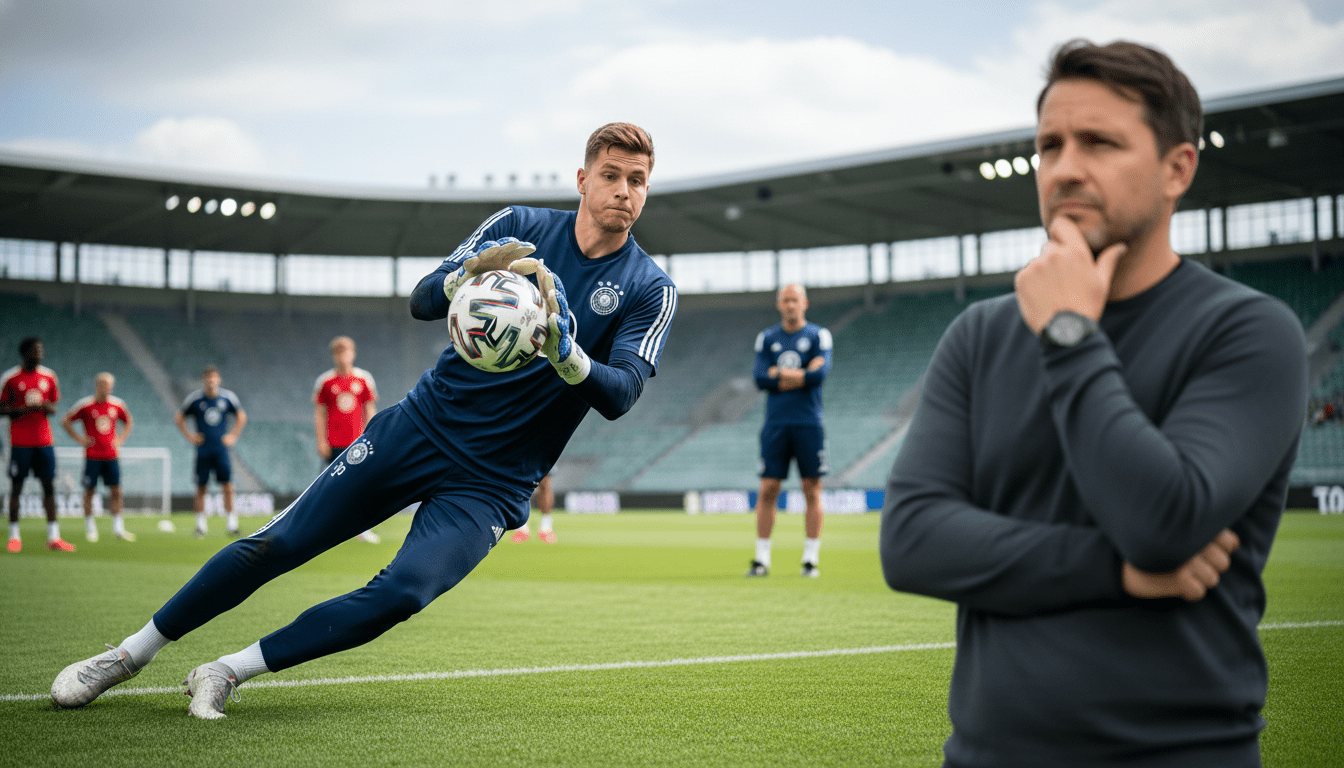
Oliver Baumann Faces Selection Setback but Likely to Join Germany’s World Cup Squad, Mental Coach Advises Recovery
Oliver Baumann was named the apparent loser in the recent squad decision yet is still expected to travel with Germany to the World Cup; a mental coach outlines how he can recover and how the coach must manage the locker room. The goalkeeper’s situation risks both individual morale and team cohesion if handled poorly. Andreas Bosch, a sports mental coach, lays out practical steps to help Baumann move past the setback and stay ready to contribute.
Selection outcome and Baumann’s immediate status
Oliver Baumann was not chosen as the first-choice starter in the latest selection, a decision that observers described as a clear personal setback. Despite that, team officials indicate he will likely be included in the traveling party as a backup and experienced presence. The mixed message — excluded from the preferred role but retained in the squad — creates a delicate psychological situation for the goalkeeper and the group around him.
The sporting implications are straightforward: Baumann’s match minutes may be limited barring injury or suspension to the starter, but his role off the pitch becomes pivotal. For a player used to regular responsibility, the sudden shift in status can erode confidence if left unaddressed.
How a mental coach frames the recovery
Andreas Bosch recommends immediate reframing: Baumann should reinterpret the selection as an opportunity to contribute differently rather than as a personal failure. Bosch stresses structured short-term goals, such as daily performance targets in training and specific tasks to support the starting goalkeeper, to rebuild agency and focus. These concrete objectives help replace rumination with actionable work.
Bosch also recommends established mental skills — imagery, breathing routines, and consistent pre-game rituals — to maintain readiness for sudden deployment. Regular, measurable psychological training can reduce anxiety and preserve the instinctive responses that goalkeepers rely on in high-pressure matches.
Team integration and role clarity recommended
A central task for the coaching staff is to define Baumann’s squad role in clear, public terms to prevent speculation and resentment. Bosch advises assigning responsibilities that harness Baumann’s experience, such as leading goalkeeping drills, mentoring younger keepers, and contributing to set-piece organization. Clear duties give the player status and daily purpose even without guaranteed minutes.
Open communication within the group is equally important; teammates should understand why the decision was made and what the retained goalkeeper is expected to deliver. This transparency cuts off rumor and helps the team view Baumann as an asset rather than a leftover casualty of selection.
Risks to cohesion if the situation is mishandled
If Baumann’s demotion is left ambiguous or treated privately, a chain reaction can follow: dwindling morale, fragmented subgroups, and a decline in training intensity. A sidelined senior player can either become a galvanizing voice or a source of division, depending on management. Bosch warns that unresolved hurt or perceived injustice will surface in small, destructive ways that undermine group performance.
The head coach must therefore act proactively, both to protect Baumann’s mental health and to shield the broader squad from negative spillover. That includes regular one-on-one check-ins, visible inclusion in tactical meetings, and monitored social dynamics in daily routines.
Practical steps for the coaching staff before the tournament
Bosch outlines a short checklist for the coaching staff: set explicit performance expectations, create opportunities for visible contribution, schedule mental-skills sessions, and maintain regular private conversations about mindset and readiness. These measures are framed as low-cost, high-impact interventions that can sustain professionalism and keep all goalkeepers match-ready.
Additionally, the staff should prepare contingency plans that place Baumann in scenarios where his experience is an advantage, including tailored match simulations and leadership assignments. Doing so preserves competitive edge and ensures the squad benefits from his presence regardless of minutes played.
Outlook: Baumann’s experience, if managed correctly, can convert a personal disappointment into a stabilizing force for the squad. With targeted mental preparation and clear communication from the coaching staff, he can remain ready to perform and help maintain team unity during the tournament.
