
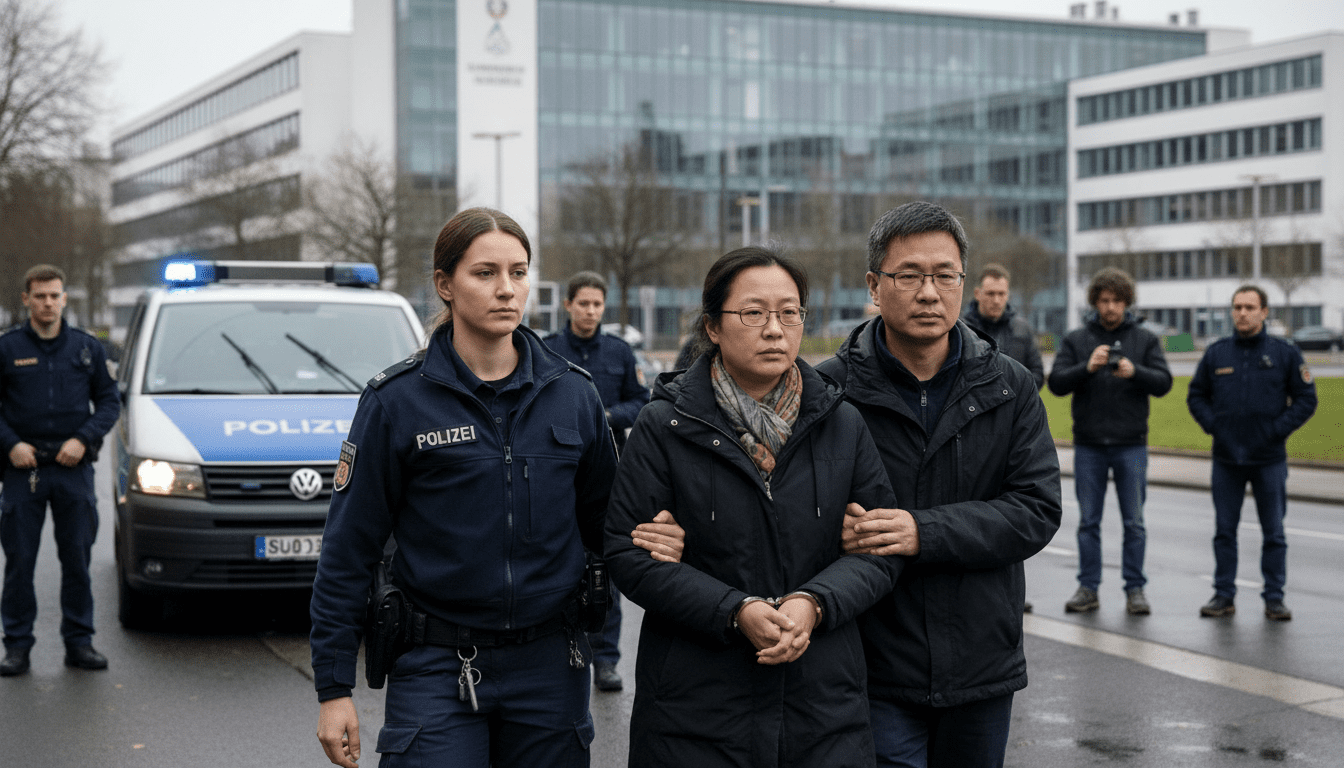
Munich Couple Arrested in Alleged Chinese Espionage Targeting AI and Aerospace Researchers
Munich couple arrested in probe of Chinese espionage targeting AI, aerospace and computer science researchers; prosecutors say some scholars were lured to China.
The Federal Prosecutor’s Office in Karlsruhe says a married couple was detained in Munich on suspicion of carrying out Chinese espionage against researchers at German universities and research institutions. The suspects, who are German citizens, are accused of building contact networks with academics—particularly professors and chair holders in aerospace engineering, computer science and artificial intelligence—and of arranging appearances that investigators say served intelligence collection purposes. Authorities say the case was coordinated with the Federal Office for the Protection of the Constitution and that the suspects will be presented to an investigating judge at the Federal Court of Justice on May 20, 2026.
Arrests and Searches in Munich
Federal prosecutors confirmed the arrests followed a targeted operation in Munich, where police from the Bavarian State Criminal Police Office executed searches of the couple’s homes and work premises. Officials said the searches sought electronic devices, documents and other material that could shed light on the scope and methods of the alleged espionage. Local and federal teams worked in tandem during the initial phase of the inquiry to secure potential evidence and to prevent the removal or destruction of material.
Police described the detained pair as having actively cultivated relationships with researchers over a sustained period, using those ties to access meetings, seminars and private communications. Investigators emphasized that the arrests were based on concrete operational findings rather than speculative links, and that further investigative steps were ongoing across multiple jurisdictions.
Targets Included Aerospace, AI and Informatics Experts
Prosecutors identified the primary targets as senior academics and research leaders in aerospace engineering, informatics and artificial intelligence, fields that carry both civilian and potential military applications. Several chair holders and research group leaders were reportedly approached and engaged in ways consistent with academic collaboration, according to the statement from Karlsruhe. The selection of high-level researchers has raised concern within the academic community about the vulnerability of expert networks to covert approaches.
Universities and research institutes contacted by investigators are assisting the inquiry by providing records of events, communications and travel that may be relevant. Officials cautioned that being contacted by the suspects does not imply wrongdoing by the academics themselves and that many contacts are being recorded only as potential witnesses.
False Identities and Invitations to China
According to the Federal Prosecutor’s Office, the suspects sometimes posed as interpreters or as employees of an automobile manufacturer when approaching researchers. In several cases, academics were offered paid invitations to travel to China for lectures purportedly organized for civilian audiences. Investigators allege that some of these events instead took place before personnel associated with state-linked defense companies, enabling access to technical knowledge and contacts.
Prosecutors said that the guise of commercial or academic cooperation was used repeatedly to gain trust and arrange meetings. The alleged strategy included promises of honoraria and professional exposure, which investigators say were employed to mask the end recipients of the lectures and the true purpose of the engagements.
Nationwide Witness Checks and Evidence Gathering
Alongside the detentions, authorities conducted checks on ten additional individuals in six German states—Baden-Württemberg, Bavaria, Berlin, Brandenburg, Lower Saxony and North Rhine-Westphalia—who are being examined as potential witnesses. Officials stressed these contacts are under review to determine whether they provided information to the suspects, were unwitting intermediaries, or can offer testimony relevant to the case. The nationwide scope of the checks reflects investigators’ concern about a wider network of contacts and the need to map the suspects’ activities comprehensively.
Investigative teams are also reviewing academic event lists, travel records and financial flows connected with the invitations to China. Forensic analysis of seized devices and documents is expected to take weeks, and prosecutors said they will pursue both administrative and criminal lines of inquiry as evidence dictates.
Federal Agencies Coordinate Security Response
The Federal Prosecutor’s Office is leading the criminal investigation in close cooperation with the Federal Office for the Protection of the Constitution, which focuses on counterintelligence matters. The coordinated approach indicates the case is being treated as both a legal prosecution and a national security concern. Officials have not publicly characterized the level of state involvement alleged on the part of foreign actors but said the partnership between prosecutorial and intelligence bodies is designed to manage both evidentiary and security priorities.
University administrations and research funders have been briefed on the case and advised to review protocols for external invitations, travel and collaborations. Security officials urged institutions to increase vigilance, particularly around requests that involve overseas travel funded by third parties or solicitations that offer unusually favorable terms.
Court Proceedings and Next Steps
The suspects will appear before an investigating judge at the Federal Court of Justice (Bundesgerichtshof) on May 20, 2026, where prosecutors will present grounds for continued detention and outline the charges. If the judge orders pretrial detention, the case will move into a more formal stage of evidence-gathering and possible indictment. Prosecutors signaled that further arrests or searches could follow as the investigation develops and additional evidence is evaluated.
Legal experts note that espionage cases often proceed cautiously due to the sensitivity of the material and the involvement of national security agencies, which can limit public disclosure. Observers expect a careful balance between transparency to affected academic communities and the protection of classified investigative methods.
Authorities emphasize that the investigation remains ongoing and that the identification of the suspects as German nationals does not alter the cross-border dimensions of the alleged activity. Academic institutions and individual researchers are being encouraged to report any suspicious approaches and to coordinate with institutional security officers while the inquiry continues.
