
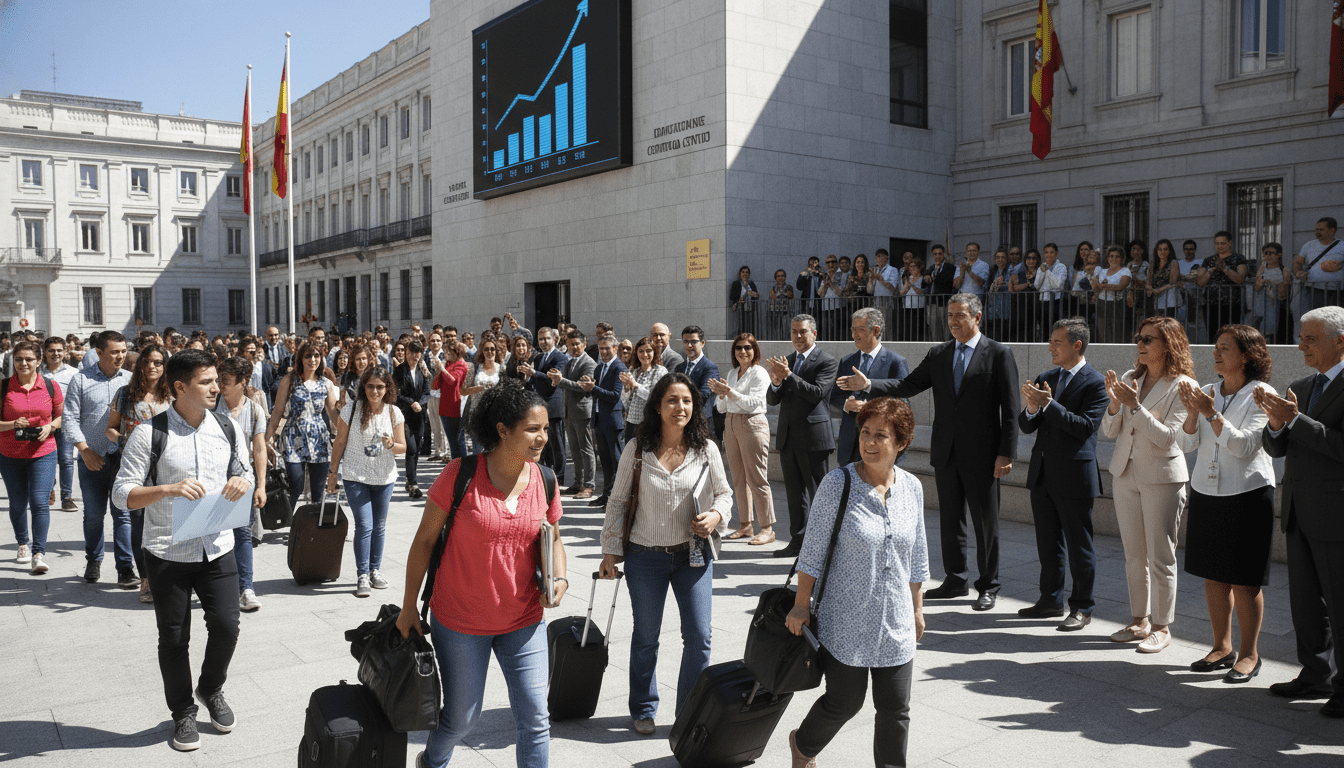
Spain’s job boom driven by migrant workforce lifts employment to historic highs
Spain’s job boom is reshaping the labor market: migrants filled nearly 70% of 2.8 million jobs created since 2020, pushing employment to historic highs across Spain.
Spain’s job boom has transformed city streets and workplaces from Madrid to Barcelona, with migrants accounting for a large share of positions created since 2020. New official figures show the number of people employed has climbed sharply in recent years, a development that economists and local business owners say is reshaping labour patterns nationwide. The rapid expansion of jobs has been particularly visible in service sectors where demand rebounded after the pandemic.
Migrants account for the bulk of new hires
A recent analysis by the Spanish think tank Funcas estimates that nearly 70 percent of the 2.8 million jobs created from 2020 onward have been filled by migrant workers. This surge in migrant employment has been credited with reinvigorating sectors that struggled during the pandemic, from hospitality to health services. Observers note that migrants often fill roles both in entry-level positions and in skilled technical jobs, broadening the labour supply.
Industry leaders and local officials say the influx of workers from Latin America, South Asia and elsewhere has been decisive in allowing businesses to expand quickly. The composition of the new workforce has also changed the profile of many neighbourhoods, with small firms and public services increasingly staffed by people born abroad. For employers seeking staff, the arrival of migrant workers has often been the difference between remaining understaffed and growing.
Employment reaches levels not seen since before the crisis
Spain’s National Statistics Institute reports employment rising from roughly 17.8 million people in 2016 to about 22.2 million in the most recent count, marking a historic high for the country’s workforce. That rise reflects both creation of new posts and higher participation rates in the labour market, and it comes despite demographic headwinds that have weighed on labour pools across Europe. Economists say the headline numbers underscore a strong cyclical recovery in jobs but leave open questions about long-term sustainability.
These employment gains are uneven across regions and sectors, with tourism-heavy areas and large cities recording especially strong rebounds. The growth has helped reduce unemployment rates in many provinces, though wage growth and job quality remain focal points in ongoing policy conversations. Analysts caution that headline employment figures mask varying degrees of job stability and seasonality within the broader expansion.
Madrid and Barcelona illustrate the shift on the ground
A stroll through districts such as Chamberí in Madrid or Nou Barris in Barcelona reveals the human dimension of Spain’s job boom. In Madrid, a newly opened bar is owned by an Argentine entrepreneur and staffed by workers from Colombia and Honduras, reflecting the multicultural face of the city’s hospitality sector. In Barcelona, a Venezuelan-born manager who now holds dual nationality runs a dental practice and highlights how migrant professionals have moved into small-business ownership and management.
Other stories underscore the diversity of roles migrants occupy: an IT specialist in a call centre originally from Bangladesh, care workers and seasonal staff in hotels and restaurants. These examples show that the labour market shift is not limited to low-skilled roles but extends into technical and service professions where language skills and vocational training are often in demand. Local councils and chambers of commerce say these changes have revitalised neighbourhood economies and consumer services.
Which sectors absorbed the most new workers
Hospitality and tourism have been primary engines of the hiring surge, buoyed by a return of international visitors and domestic travel. Hotels, restaurants and leisure providers have ramped up recruitment to meet post-pandemic demand, often relying on migrant applicants to fill gaps. Health and social care services have also seen significant hiring as public and private providers expand capacity for an ageing population.
Other growth areas include logistics, construction and information technology, where firms report persistent skill shortages that migrants have helped to address. Call centres and customer support operations, in particular, have benefited from multilingual staff recruited from diverse countries. The cross-sector breadth of job creation suggests the labour market recovery has been broad rather than narrowly concentrated.
Economic drivers, integration and pending risks
Analysts point to several factors behind Spain’s job boom, including the rebound of tourism, stronger domestic demand and the reopening of sectors hit hardest by Covid-19. Labour market flexibility and targeted hiring practices have allowed firms to scale up quickly, while migrant inflows provided an available pool of workers as vacancies surged. Policymakers say the return to employment has supported consumption and fiscal stability after the pandemic shock.
Yet challenges remain: integration, housing pressures and ensuring decent work standards are central concerns for unions and community groups. Seasonality in tourism-dependent jobs can mean irregular incomes, and there are ongoing debates about wages, contracts and training pathways. Experts emphasize the need for policies that convert short-term hiring gains into long-term, high-quality employment while supporting social inclusion for migrant workers.
Spain’s job boom has put the country’s labour market on firmer footing, but the next phase will test whether growth can be sustained in a way that raises living standards and locks in broader economic benefits.
