
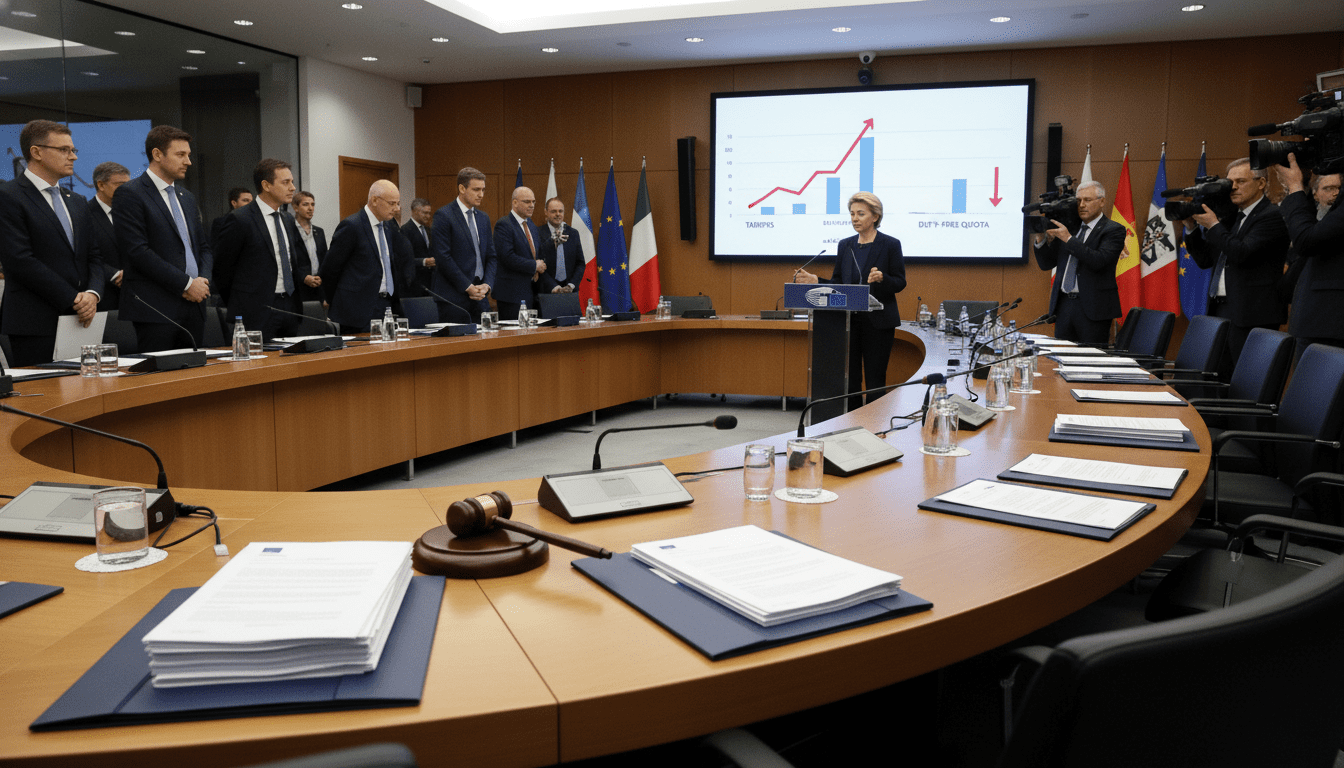
EU Parliament approves 50% EU steel tariffs to protect domestic industry
EU Parliament backs 50% EU steel tariffs from July, cutting duty-free quota to 18.3M tonnes to shield industry amid global overcapacity and protect jobs.
The European Parliament voted in Strasbourg to impose a 50 percent tariff on most steel imports from third countries, tightening protection for the bloc’s producers from July. The decision, described by lawmakers as a necessary response to surging global overcapacity and unfair trade practices, also reduces the annual duty-free quota to 18.3 million tonnes. The package combines immediate trade measures with new controls on foreign investment, signaling a shift in EU industrial policy.
Parliament’s vote and next procedural steps
The plenary approved the tariff increase after earlier agreement with member states, leaving adoption by the Council as a formal step that is expected to follow. Parliamentarians argued the measure is calibrated to give European producers breathing space to adjust and to restore a level playing field. Lawmakers emphasize the change does not close markets but aims to ensure openness under fair competitive conditions.
Quota lowered to 18.3 million tonnes amid rising imports
Under the new rules the annual quota for tariff-free steel imports falls to 18.3 million tonnes, a cut of roughly 47 percent from current levels. For context, EU annual crude steel output stands at about 145 million tonnes while recent imports have been near 40 million tonnes. Officials cited global overcapacity that analysts estimate could grow toward 720 million tonnes by year-end, with major production increases in China, India and Turkey.
Economic impact and industry losses since 2007
The European Commission’s data presented during debates indicates the bloc has lost some 65 million tonnes of production capacity since 2007 and as many as 100,000 jobs in the steel sector. Supporters of the tariffs said the step was overdue, noting pressure from foreign dumping and the distortionary effects of other trade barriers such as those applied by the United States. Critics warned the move risks higher downstream costs for industries that use steel, underscoring the trade-off policymakers faced.
Exemptions for the United States and measures on Russia and Belarus
The measure keeps the existing EU agreement with the United States intact, maintaining a zero percent tariff rate for U.S. steel shipments under that deal. U.S. imports into the bloc have been modest in volume, and officials signaled the exemption reflects ongoing transatlantic arrangements. By contrast, the law enshrines a phased reduction to zero for imports from Russia and Belarus, reflecting geopolitical and trade considerations.
Built-in reviews and potential expansion to steel-containing goods
Lawmakers required the Commission to review the measures within six months to assess extension to additional steel products such as certain pipes, types of wire and forged bars. A broader review within twelve months will determine whether the duties should apply to goods that contain significant amounts of steel. The Commission is also empowered to adjust the duty-free threshold within a range of 14.4 to 22.2 million tonnes to respond to market developments and supply needs.
Stricter foreign investment screening aimed at strategic sectors
Alongside tariffs, the Parliament approved tighter rules for screening foreign takeovers in sensitive sectors, obliging member states to establish at least a basic control mechanism. The expanded scrutiny covers military-use goods, key raw materials and critical energy, transport and digital infrastructure. While the new framework is aimed in particular at reducing vulnerabilities from certain non-EU investors, member states retain discretion over how deeply to scrutinize individual transactions.
The vote highlighted tensions between free-trade rhetoric and protective policy tools, with proponents framing the package as defensive and temporary and opponents warning of a tilt toward protectionism. SPD trade committee chair Bernd Lange described the measures as essential to restore fair competition and support investment, while left-wing critics framed the shift as moving away from liberal trade principles.
As the Council prepares to formalize the changes, businesses across the steel value chain are expected to reassess supply contracts, sourcing strategies and investment plans. The Commission’s capacity to tweak quota levels and to extend duties to related products provides flexibility, but also leaves manufacturers and users of steel watching closely for follow-up decisions.
