
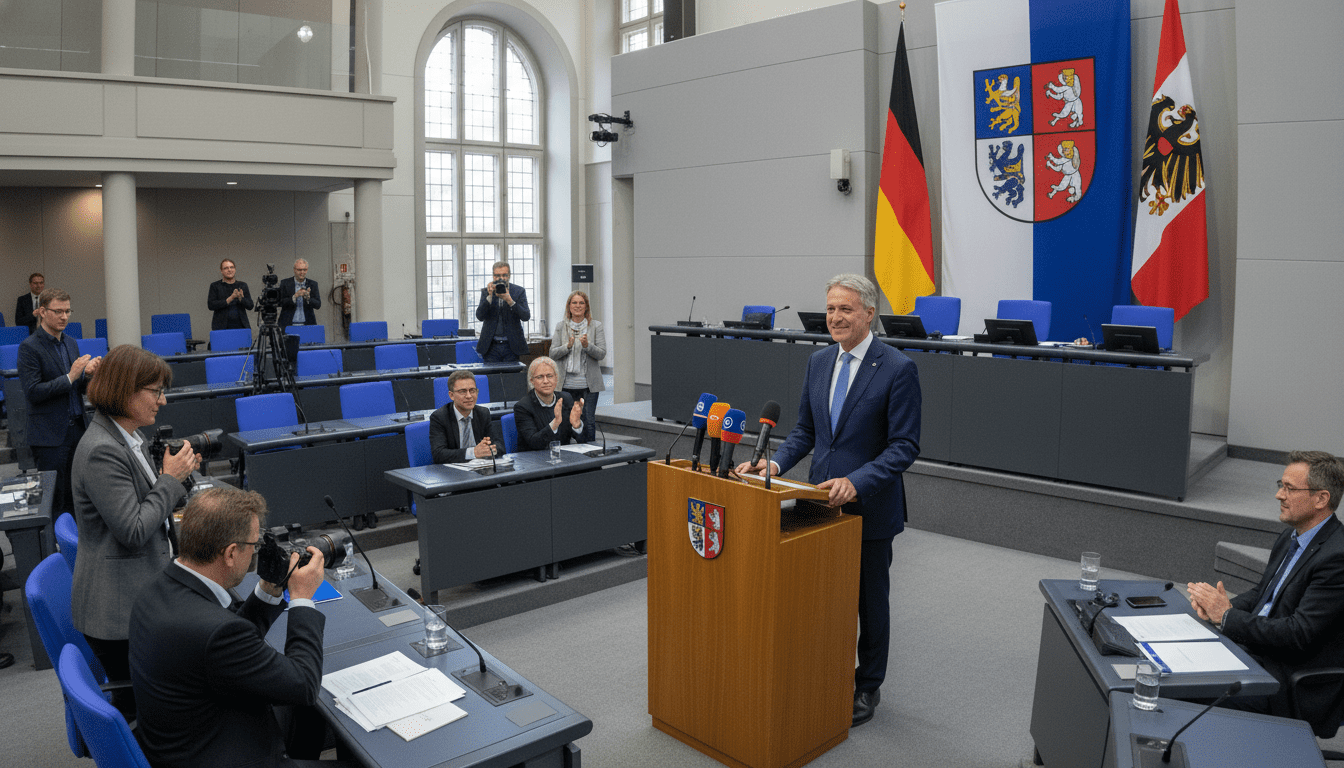
Gordon Schnieder to Become Rhineland-Palatinate Minister‑President After CDU Victory
Gordon Schnieder to be elected minister‑president of Rhineland‑Palatinate on May 18, 2026, promising pragmatic, low‑drama governance amid tight finances and a strong AfD showing.
Gordon Schnieder is set to take office as minister‑president of Rhineland‑Palatinate after winning a narrow but decisive shift in the state parliament, with the CDU and SPD expected to provide the votes needed on Monday, May 18, 2026. The former opposition leader campaigned on criticism of education policy and municipal finances, and he presented himself as a steady, risk‑averse administrator ready to repair what he described as long‑standing problems in the state. His rise marks the end of a 35‑year period of uninterrupted SPD rule in the state and introduces a coalition dynamic that emphasizes compromise over confrontation.
Parliamentary vote and coalition math
Schnieder is to be elected with backing from both the CDU and SPD lawmakers after the recent state election produced a configuration that made a grand coalition the most viable governing option. Party officials say the arrangement reflects a desire to stabilize governance after a campaign marked by sharp debates over finances and public services. The cross‑party support makes Schnieder’s path to the minister‑presidency smoother in the short term, but it also ties his agenda to compromises negotiated in coalition talks.
A local politician with administrative experience, not ministerial background
At 50, Schnieder brings decades of local and administrative experience but no prior ministerial portfolio at state level. He served as an unpaid mayor of Birresborn in the Vulkaneifel district and built his public profile through long service in the Bitburg‑Prüm county administrations and as a former finance civil servant. Schnieder is also a father of three, a detail often highlighted by colleagues to underscore his local roots and practical outlook rather than national political ambition.
Campaign focus on schools and municipal finances
Throughout the campaign Schnieder concentrated on tangible governance issues, targeting what his party called failing education outcomes and precarious municipal budgets. He used a recent civil service scandal to criticize the SPD for treating public office as a source of patronage, arguing that voters deserved a government focused on competence and fiscal responsibility. Those themes resonated with enough voters to deliver a change in leadership despite the incumbent’s relative popularity.
Governing style: low profile and compromise
Schnieder has signaled he intends to govern quietly, favoring compromise and steady administration over flamboyant rhetoric or media‑driven confrontations. Colleagues describe him as well prepared, cautious with political risk and more interested in managing the day‑to‑day work of government than seeking national prominence. That posture contrasts with more polarizing figures in the CDU’s recent history and is intended to appeal to centrist voters and coalition partners alike.
Financial limits and key ministry trade‑offs
Despite ambitious policy goals, Schnieder faces immediate fiscal constraints; Rhineland‑Palatinate’s commitments will require funding the state does not easily possess. In coalition negotiations he conceded the influential finance ministry to the SPD, a concession that reflects the give‑and‑take required to secure a stable governing majority. Analysts say that handing over finance to a coalition partner will test Schnieder’s ability to deliver campaign promises while managing tight budgets.
Political headwinds from AfD and national trends
The state election also saw a strong showing from the AfD, which secured close to 20 percent of the vote and established itself as a persistent force in the new parliament. That result complicates the political landscape, placing pressure on the governing coalition to demonstrate effective governance quickly to blunt populist momentum. Observers note that national party trends — including a difficult period for the SPD at federal level — helped create conditions for the CDU’s comeback in the state.
Schnieder’s immediate task will be to translate campaign themes into concrete policies while maintaining the coalition consensus that brought him to power. Balancing fiscal restraint with the need for visible improvements in schools and local services will shape his first months in office and will determine whether his low‑drama approach can produce the change voters sought.
