
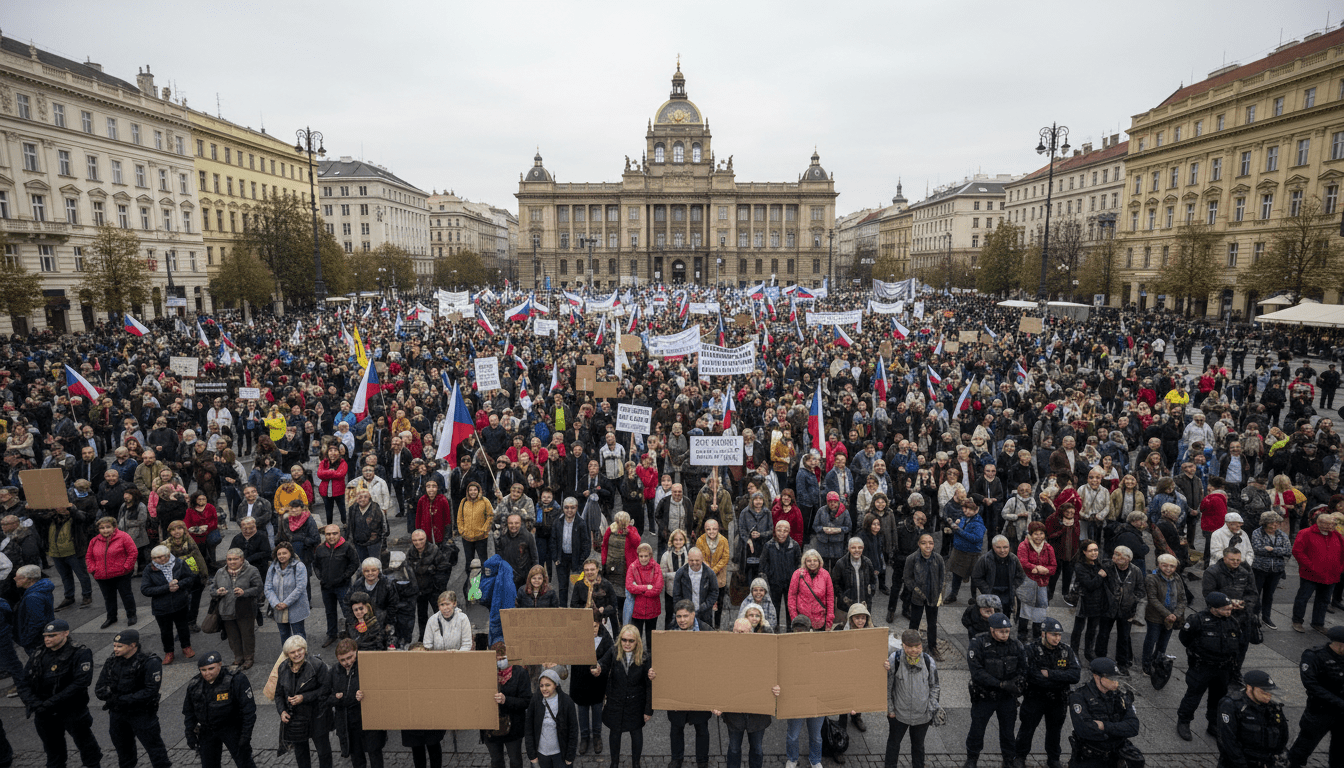
Thousands protest Czech public broadcasting reform as government moves to end licence fees
Thousands across Czech cities protested a government bill to end licence fees and shift funding of public broadcasters to the state, raising fears of political influence.
In the latest wave of demonstrations, thousands of people gathered in a dozen Czech cities to oppose the Czech public broadcasting reform proposed by the ruling coalition, underscoring widespread anxiety over the future of Czech Television and Czech Radio. The protests targeted a draft law that would abolish traditional radio and television licence fees and instead finance broadcasters directly from the state budget, a move critics say threatens editorial independence and could lead to budget cuts. Demonstrators carried banners demanding press freedom and were met with visible support from media staff inside broadcasting buildings.
Widespread street protests in major cities
Images and reports from national agencies showed crowds outside public broadcasting headquarters in cities including Brno and Prague, holding Czech flags and placards that read slogans such as “Freedom for the media” and “We stand with you.” Organizers said the demonstrations were coordinated across twelve of the country’s largest municipalities, with turnout described as substantial by local organizers. Radio and television employees responded to the protests from studio windows and balconies, some unfurling banners thanking demonstrators for their support.
Key elements of the proposed law
The reform was advanced by Culture Minister Oto Klempir and backed by the three-party coalition that took office in December, comprising Prime Minister Andrej Babiš’s ANO party, the Freedom and Direct Democracy (SPD) party, and the Motorists party. At the core of the draft is the elimination of separate radio and television fees and the replacement of that income with direct allocations from the national budget to Czech Television (CT) and Czech Radio (Český rozhlas, CRo). Supporters of the draft argue the change would simplify the funding mechanism, but the bill’s fiscal details and oversight mechanisms remain focal points of debate.
Concerns over editorial independence and financial cuts
Media watchdogs, journalists and opposition politicians have warned that moving public broadcasters onto the state payroll would expose them to political pressure and reduce their autonomy. Critics fear that direct budget funding could make editorial decisions vulnerable to the preferences of ministers and lawmakers, especially if allocations are tied to political priorities or subject to periodic cuts. There is also concern that the reform could be accompanied by staffing reductions or programming cuts that would weaken the broadcasters’ capacity to provide independent reporting.
Role of the ‘One Million Moments for Democracy’ movement
The protests were called by the civic movement known as “One Million Moments for Democracy,” which organized an earlier demonstration in Prague in early May and has since mobilized citizens nationwide. The group, drawing support from civic activists, journalists and ordinary citizens, framed the rallies as a defense of democratic norms and media plurality. Organizers say their immediate goal is to pressure lawmakers to amend or abandon parts of the bill that would transfer funding control away from independent bodies.
Government defenders and political context
Members of the ruling coalition argue the wider package of reforms is intended to modernize public finances and reduce the perceived burden of licence fees on households. Officials have defended the principle of state financing while asserting that safeguards will be put in place to preserve editorial independence. Nonetheless, the composition of the coalition — with parties that have previously clashed with mainstream media — has intensified scrutiny and mistrust among opponents of the proposal.
Legislative outlook and public pressure
The bill must now proceed through parliamentary readings and committee review, a process that will determine whether the draft is amended, delayed or approved. Lawmakers facing visible demonstrations in their constituencies are under growing pressure to take public concerns into account, and opponents of the reform are seeking to use the protests to influence the parliamentary debate. Analysts say the timing and scale of demonstrations could shape how negotiators craft oversight provisions and funding guarantees for public broadcasters.
The protests in the Czech Republic represent a significant popular rebuke to a major policy shift in media financing, with demonstrators emphasizing that the structure of public broadcasting matters for democratic accountability. As the parliamentary process unfolds, both supporters and critics of the reform are likely to intensify their lobbying, leaving the future financing and independence of Czech Television and Czech Radio at the center of a contentious national conversation.
