
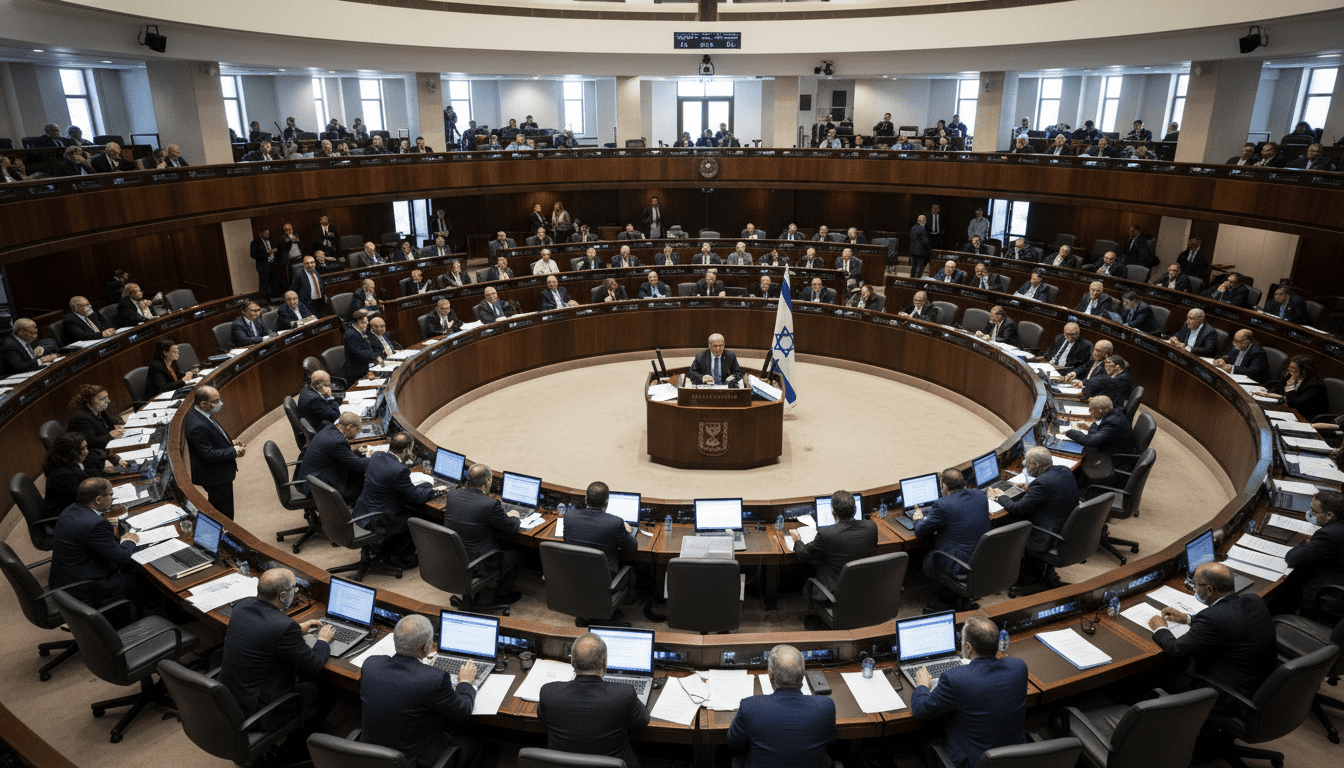
Israel Approves Eichmann-Style Tribunal to Try Suspects in October 7 Attacks
Knesset unanimously passed a law creating an Eichmann-style special military tribunal to try suspected perpetrators of the October 7 attacks, raising legal and human-rights concerns.
Lawmakers Pass Tribunal Bill Unanimously
The Knesset voted 93–0 to create a special military tribunal to prosecute more than 300 surviving suspects accused of taking part in the October 7, 2023 attacks. Proponents framed the measure as an extraordinary legal response to an attack that killed roughly 1,200 people and saw about 250 abducted. The new mechanism was explicitly likened by some backers to the 1961 trial of Adolf Eichmann, which supporters say provides a precedent for public, historic proceedings.
Public statements from the bill’s sponsors stressed the symbolic weight of the process and its perceived necessity to address the scale and brutality of the assaults. At the same time, the statute permits charges ranging from genocide and high treason to aiding the enemy and violations of state sovereignty, and it carries the prospect of capital punishment for those convicted.
Design of the Special Tribunal and Trial Procedures
The law envisions a hybrid judicial body staffed by up to 15 Israeli and foreign judges, with panels of three assigned to single-defendant cases and five-judge panels set to handle multi-defendant trials. Lawmakers backing the bill said proceedings would be filmed and made available on a dedicated website, echoing the historic public broadcast of the Eichmann trial. Advocates argue these measures will provide transparency while documenting the crimes for the historical record.
Despite these public commitments, the statute places the tribunal under civil-military rules and emergency defense regulations, altering some standard criminal guarantees. That structural design is intended to speed complex war-era prosecutions, but it also narrows certain procedural protections commonly associated with ordinary criminal courts.
Budget, Timing and Institutional Disagreements
Officials have not set a timetable for the tribunals, and cost estimates vary widely as ministries weigh the financial and logistical burden. Early media reports and legislative debates cited figures of up to 5 billion shekels — roughly €1.5 billion — for establishing and operating the tribunal infrastructure. That projection has prompted a dispute between the Defense and Finance ministries over funding and long-term affordability.
Lawmakers acknowledged the technical and evidentiary challenges inherent in assembling cases that span multiple scenes of violence and involve a large number of suspects and victims. Prosecutors will face the task of reconstructing events amid wartime conditions, collecting chain-of-custody evidence and ensuring reliable testimony from survivors and witnesses dispersed across borders.
Access to Detainees and Conditions of Detention
A central practical hurdle for investigators has been limited access to detained suspects. Israeli authorities have held thousands of Palestinians in connection with the Gaza conflict, including members of elite units alleged to have taken part in the October 7 incursion. International organizations, including the International Committee of the Red Cross, have reported restricted access to many detainees, complicating independent monitoring of conditions.
Human-rights groups and rights monitors have documented deaths in custody and alleged mistreatment among the detained population, raising alarm about the reliability of evidence obtained in such circumstances. The bill’s supporters assert that securing custody and gathering material evidence now makes future trials feasible in ways that were not possible in the immediate aftermath of the attacks.
Human Rights Organizations Warn of Due Process Gaps
Three prominent Israeli human-rights groups issued a joint statement opposing the tribunal’s framework, arguing it removes essential judicial safeguards and opens the door to political interference. The organizations said the civil-military structure and emergency legal exemptions would limit judicial independence, narrow rules of evidence and curtail defendants’ rights to a fair hearing. They also underscored the gravity of empowering a court that can impose the death penalty while operating under relaxed procedural standards.
Critics pointed to public rhetoric surrounding the vote, including posts by Finance Minister Bezalel Smotrich emphasizing the law’s role in producing death sentences for alleged members of the Nukhba unit. Human-rights advocates said such commentary increases the risk that the tribunal will be perceived and operated as a vehicle for retribution rather than impartial adjudication.
Political Context and Families’ Reactions
The tribunal debate has become interwoven with domestic politics and the wider effort to determine how Israel will conduct accountability for the October 7 attacks. Some politicians have used the measure to signal toughness ahead of elections, while other officials and affected families have urged different forms of redress. Many bereaved relatives present during the parliamentary debate expressed support for vigorous prosecution, but a sizable number have instead called for a state commission of inquiry to examine failures before and during the attacks.
Government officials continue to resist creating a broad investigatory commission, arguing that criminal proceedings against perpetrators must take precedence. That position has left parts of the victims’ community frustrated, as they seek both individual accountability and a comprehensive public reckoning with the circumstances that allowed the October 7 assault to occur.
The law establishes an unprecedented judicial pathway that its backers say will provide definitive legal closure and historical record, even as opponents warn it risks undermining core legal guarantees and international standards. The practical rollout of the tribunal — its judges, schedule, evidentiary rules and oversight — will determine whether it produces credible convictions and a defensible account of the events of October 7, or whether it becomes a contentious symbol of a nation’s struggle to reconcile justice, security and rule of law.
