
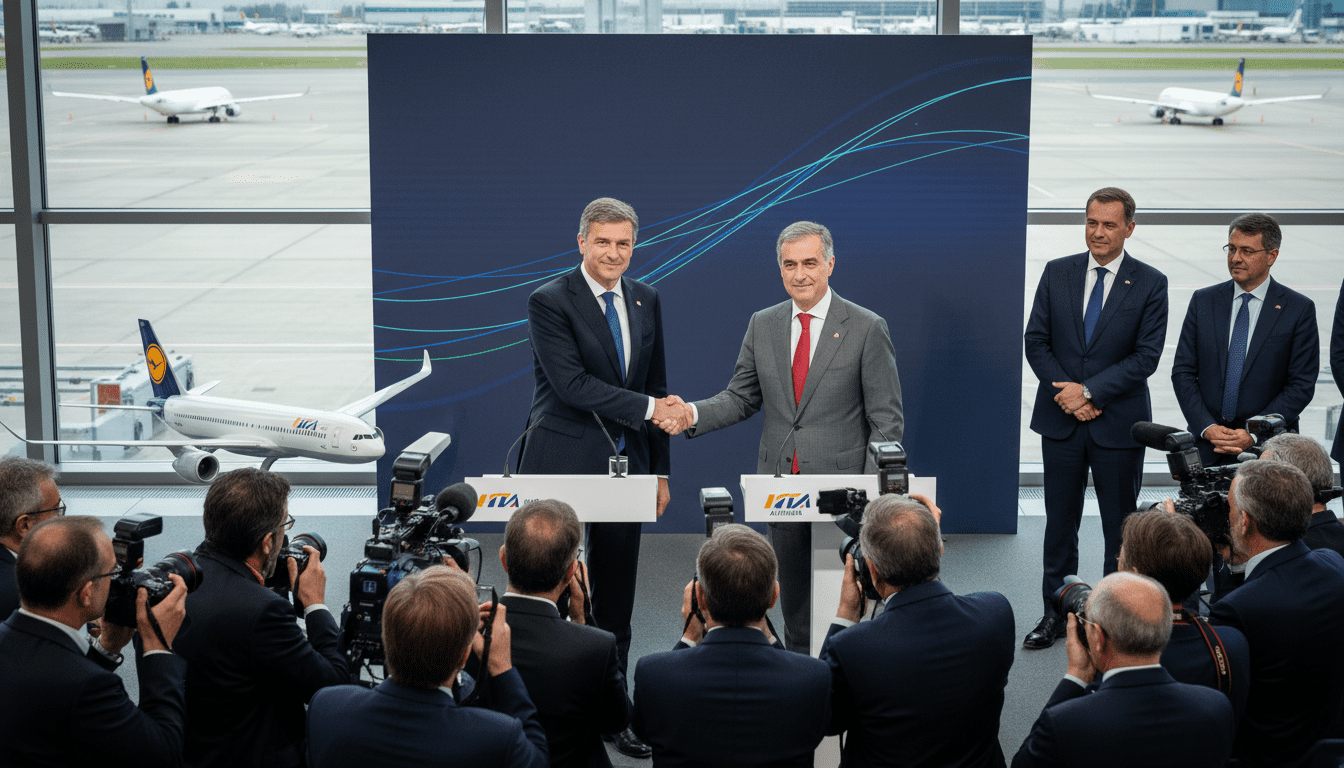
Lufthansa raises ITA stake to 90% and orders 20 long‑haul jets in bold expansion move
Lufthansa raises stake in ITA to 90%, orders 20 long‑haul jets and aims for an 8–10% 2030 operating margin amid shareholder debate over strikes and governance.
Lufthansa used its annual shareholder meeting in Frankfurt to announce a sweeping set of strategic moves that signal accelerated international expansion and fleet renewal. The group said it will raise its stake in Italian carrier ITA from 41% to 90%, exercising an option in June for roughly €325 million, and has placed an order for 20 additional long‑haul aircraft. The company framed the package as part of a broader plan to lift profitability and scale its international footprint while addressing investor concerns about labor conflict and governance.
Majority acquisition of ITA confirmed
Lufthansa confirmed it will complete a binding purchase to increase its holding in ITA to 90% and expects to close the majority takeover in the first quarter of 2027, subject to regulatory approvals. The carrier said the June option will require an upfront payment of about €325 million, and retains a right to acquire the remaining 10% from the Italian state through 2028. Management described the transaction as a step toward integrating ITA into the Lufthansa Group model and strengthening the group’s presence in southern Europe.
Lufthansa also signaled that the acquisition is part of a broader push for international consolidation, with preparations underway for a potential offer for a stake in Portugal’s TAP while rival bidders, including Air France‑KLM, are reported to be active. Executives argued that widening the group’s geographic reach is essential for competing with large international airline groups.
Fleet order accelerates modernization program
The board announced an order for 20 new long‑haul aircraft with a list price cited at approximately €7.7 billion, bringing the fleet renewal pipeline to a total of 232 aircraft. The purchase is intended to modernize the long‑haul fleet, increase fuel efficiency and support network expansion tied to new acquisitions. Management framed the investment as necessary to sustain competitive capacity on intercontinental routes and to reduce unit costs over time through newer, more efficient equipment.
Executives said the larger order underpins long‑term network plans by aligning aircraft types and schedules across the growing group, including newly acquired carriers. The move also reflects a bet on demand resilience for long‑distance travel despite near‑term cost pressures in the industry.
Financial targets and margin ambitions through 2030
Chief Executive Carsten Spohr told shareholders that 2025 had been a “transformational” year, with consolidated revenue reaching almost €40 billion, and that the group aims to raise operating profit margins to between 8% and 10% by 2030. Last year’s group margin was reported at 5.1%, with the core Lufthansa brand margin substantially lower at around 0.9%, illustrating the gap management hopes to close. The company said higher scale, fleet efficiencies and network integration are key levers to achieve the targeted margin uplift.
Management stressed that the margin target is conditional on execution across multiple fronts, including successful integration of acquisitions, disciplined fleet deployment and containment of operating disruptions. Investors at the meeting pressed for clearer milestones linking the capital spending plan to measurable margin improvements.
Shareholders warn over strike costs and operational risks
Several shareholders voiced concerns about the financial impact of labor disputes after Lufthansa quantified strike‑related losses at about €40 million in the first quarter and €150 million in the second quarter. Fund representatives warned that recurring industrial action creates “holes” in profit and loss statements and undermines investor confidence. Large investors also questioned whether new subsidiary models and lower‑cost entities erode trust and complicate labor relations.
One prominent investor noted that while strategic scale and internationalization are logical, the company’s ability to deliver on those plans will hinge on stabilizing labor relations and avoiding costly service interruptions. The meeting underscored the tension between cost discipline and workforce stability as a material risk for the business.
Management defends restructuring and Cityline decision
Lufthansa’s leadership defended recent restructurings, including the closure of the Cityline subsidiary, saying the move will reduce daily costs by about €0.5 million and save roughly €180 million annually. CEO Spohr argued that the group must adapt its structure to remain competitive globally and that difficult decisions were necessary to restore profitability in core operations. He rejected characterizations of the changes as mere cost‑cutting for short‑term gain, insisting they are part of a strategic repositioning.
Labor representatives delivered sharp critiques at the meeting. The head of the flight attendants’ union accused management of engaging in an “ideological culture war” against professional unions, and retired pilots and other speakers described deep mistrust among staff. Management’s stance is that reconfiguration of cost bases and operating models is essential for the group’s long‑term health.
Supervisory board transition and succession questions
The meeting also marked a governance transition as long‑time supervisory board chairman Karl‑Ludwig Kley stepped down for age reasons, and Johannes Teyssen was named his successor. Investors urged the new supervisory chair to rebuild alignment between employee and shareholder representatives and to ensure the board holds management accountable for execution. Observers noted that Teyssen will face an early test in navigating industrial relations, strategic integration of acquisitions, and the looming task of identifying a successor to CEO Spohr, whose contract runs through the end of 2028.
Shareholder delegates also flagged the growing stake of major investor Klaus‑Michael Kühne, now above 20%, and called for clarity on how concentrated ownership might influence strategic decisions. The governance debate at the meeting reflected broader concerns about execution risk, leadership continuity and oversight as the group pursues an ambitious growth plan.
Lufthansa’s announcements at the shareholder meeting set a clear course toward expansion, fleet renewal and higher profitability, but also sharpen the challenges ahead in labor relations and governance. Management must now translate commitments into performance while securing regulatory approvals and maintaining operational stability as the group increases its international footprint.
