
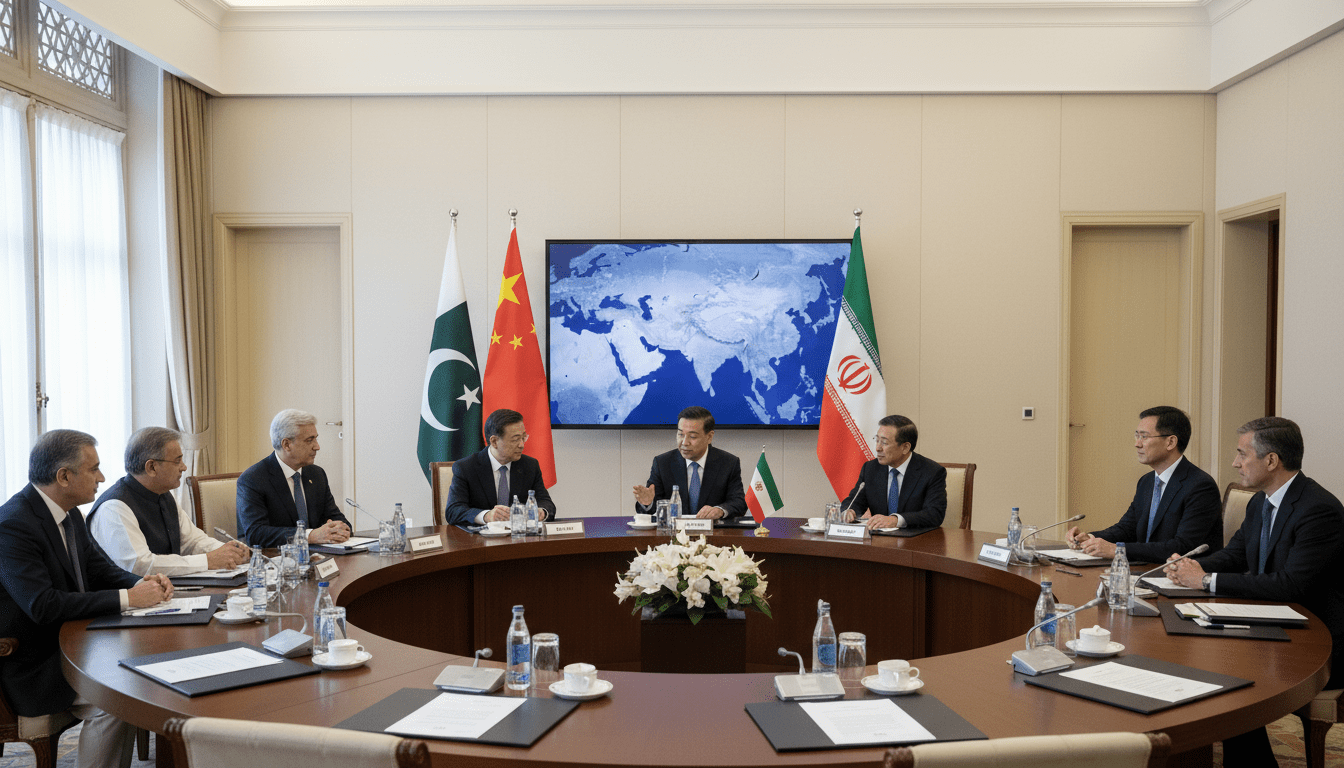
Pakistan mediation between Iran and the US gains support after Dar-Wang call
Pakistan’s efforts to mediate between Iran and the US drew public backing from China after Foreign Minister Ishaq Dar spoke with Chinese counterpart Wang Yi, who praised Islamabad’s role and highlighted the need for a durable ceasefire and safe passage through the Strait of Hormuz.
Key call between Dar and Wang Yi
Pakistan’s Foreign Minister Ishaq Dar held a phone conversation with China’s Foreign Minister Wang Yi to outline Islamabad’s ongoing Pakistan mediation between Iran and the US.
In an official readout, Pakistan’s Ministry of Foreign Affairs said Dar described efforts to facilitate engagement between Tehran and Washington and to reduce tensions in the region.
China expresses support for Pakistan mediation
The ministry’s statement reported that Wang Yi “reiterated appreciation and support for Pakistan’s constructive mediation role,” signaling Beijing’s endorsement of Islamabad’s diplomatic initiative.
Analysts say China’s public backing gives Pakistan greater diplomatic leverage as it seeks to position itself as a neutral interlocutor acceptable to both Tehran and Washington.
Ceasefire and maritime security emphasized
Both ministers underscored the importance of achieving a durable ceasefire and ensuring normal passage through the Strait of Hormuz, according to the foreign ministry readout.
The Strait of Hormuz remains a critical artery for global energy supplies, and stakeholders have repeatedly warned that disruptions would have immediate international economic consequences.
Diplomatic activity intensifies amid high-level visits
The Dar–Wang exchange comes as broader diplomatic engagement around the conflict accelerates, with multiple capitals coordinating responses and shuttle diplomacy taking place.
The Pakistani statement noted the call coincided with an uptick in international talks, and it referenced a forthcoming official visit by US President Donald Trump to China later this week, which could influence ongoing negotiations.
Practical steps in Pakistan’s mediation strategy
Pakistan’s approach appears to combine back-channel contacts, formal diplomatic outreach, and attempts to convene direct or indirect meetings between Iranian and US representatives.
Officials have framed Pakistan mediation as focused on de-escalation measures, confidence-building steps and opening communication channels that can lead to a ceasefire and reciprocal concessions.
Challenges and regional implications
Observers caution that Pakistan mediation between Iran and the US faces significant hurdles, including deep mistrust, competing regional interests, and the risk of spoilers who benefit from continued instability.
Nevertheless, if Islamabad can secure even modest agreements—such as temporary cessation of hostilities or agreed safe corridors in the Strait of Hormuz—it would represent a tangible improvement in regional security dynamics.
Possible outcomes from China’s backing
Beijing’s public endorsement may encourage both Tehran and Washington to treat Pakistan as a credible facilitator, particularly if China leverages its own ties to influence the parties.
At the same time, closer coordination between Islamabad and Beijing could shift negotiation dynamics, prompting other regional actors to either support or contest Pakistan’s mediating role.
Pakistan’s mediation between Iran and the US now carries higher diplomatic visibility after the Dar–Wang call, but translating support into a lasting ceasefire and secure maritime routes will require concrete steps and political will from all parties involved.
