
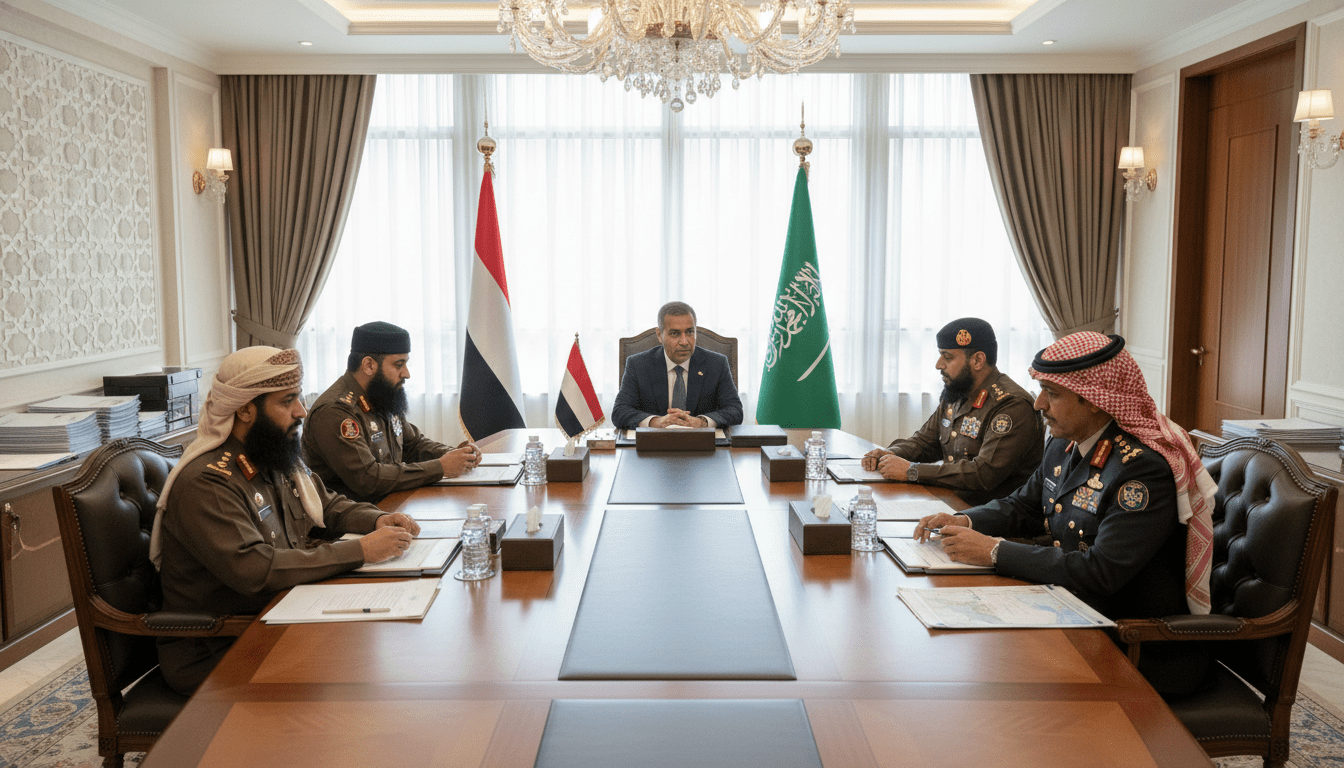
Salafi leadership in Yemen consolidates power after April 30, 2026 military appointments
Salafi leadership in Yemen rises after April 30, 2026 appointments. Salafi commanders now head key military regions, shifting balance in anti-Houthi campaigns.
Opening summary
Salafi leadership in Yemen has moved from religious preaching to formal military command as Salafi figures assume control of strategic regions following April 30, 2026 appointments. Fighters who once focused on mosque-based teaching are now leading brigades that cover Aden, Lahj, Taiz, Abyan and parts of al Dhale. The change reflects a broader realignment in government held areas where the Presidential Leadership Council seeks unified forces against the Houthis.
From pulpit to battlefield
Aged leaders known for traditional attire and religious teaching have been among those who switched roles to armed command. One veteran, who served as a proselytiser in Lahj, says his group took up arms in 2015 when Houthi advances reached their villages and threatened local religious practice. He frames the turn to combat as defensive and faith driven rather than political.
The Salafi movement follows a literalist Sunni school that historically kept distance from party politics and maintained a focus on scripture and ritual. That posture began to shift amid the civil conflict as frontline pressures and local security considerations pushed religious cadres into military roles.
Legacy of Dammaj and displacement
Tensions between Salafis and the Houthi movement trace back more than a decade and were especially visible in Saada governorate. A prolonged siege of the Dar al Hadith centre in Dammaj culminated in heavy casualties and the evacuation of thousands in 2013 and 2014. Many displaced Salafis relocated to southern governorates including Lahj where they later joined new fighting fronts.
The Dammaj years remain a formative memory for many fighters who say forced displacement and the loss of religious centres were decisive in their decision to remain on the battlefield. Those events also hardened Sunni-Shia sectarian divisions in northern and southern theatres of the war.
Formation of the National Shield Forces
In 2023 the Presidential Leadership Council with Saudi backing formed the National Shield Forces as a formal command structure that placed Salafi commanders at its head. The new force emerged amid concerns about the reliability of existing allied factions and the need to field a cohesive, Saudi-supported contingent against the Houthis.
Commanders who lacked formal military college credentials rose to leadership through battlefield experience and mobilising capacity. The NSF has absorbed fighters with diverse backgrounds, and while Salafi doctrines shape its leadership, many non-Salafi personnel also serve within its ranks.
Recent operations and southern clashes
The National Shield Forces took on a central role during recent clashes between the Presidential Leadership Council and the Southern Transitional Council. NSF deployments from the Saudi border and Marib pushed back STC influence across Hadhramout, Shabwa and Abyan before reaching Aden. Those operations were carried out under the PLC banner and framed by some commanders as efforts to restore order rather than sectarian campaigns.
Officials within the Defence Ministry stress that the aim is to unify military units under the Ministry and to remove fractious loyalties. A senior ministry source speaking on condition of anonymity said leaders are chosen for competence and loyalty to the state rather than religious affiliation, while acknowledging the prominent battlefield role Salafi fighters have played.
April 30, 2026 appointments and territorial command
On April 30, 2026 the PLC appointed Brigadier General Hamdi Shukri as commander of the Fourth Military Region, a post that covers Aden and surrounding governorates. That appointment symbolises the institutionalisation of Salafi leadership in Yemen as Salafi-affiliated commanders now head several regional military commands across PLC held areas.
Analysts note that Saudi support was decisive in elevating Salafi commanders into formal command structures because Riyadh viewed them as reliable partners on the ground. The result is a redistribution of power inside government-held territory that places Salafi leaders at the centre of future operations against the Houthis.
Political consequences and state rebuilding
Political analysts warn that the ascendancy of Salafi leadership in Yemen may complicate postwar governance and state reconstruction. Appointments based on battlefield loyalty and external patronage risk entrenching factional influence inside military and political institutions. This could make the transition to a neutral civil state more difficult if reconciliation efforts succeed or the conflict ends.
Observers also point to a potential tension between professionalisation of the army and the consolidation of forces under ideologically aligned commanders. The Defence Ministry asserts its intent to reorganise under a single command chain represented by the Ministry, but the balance between loyalty, competence and external backing will shape whether that goal is realised.
The rise of Salafi commanders into formal military positions marks a clear shift in Yemen’s wartime dynamics and will influence coalition strategy, internal politics and prospects for future stability.
Salafi leadership in Yemen now plays a central role in shaping the next phase of the conflict and the difficult task of reconstructing state institutions once the fighting subsides.
