
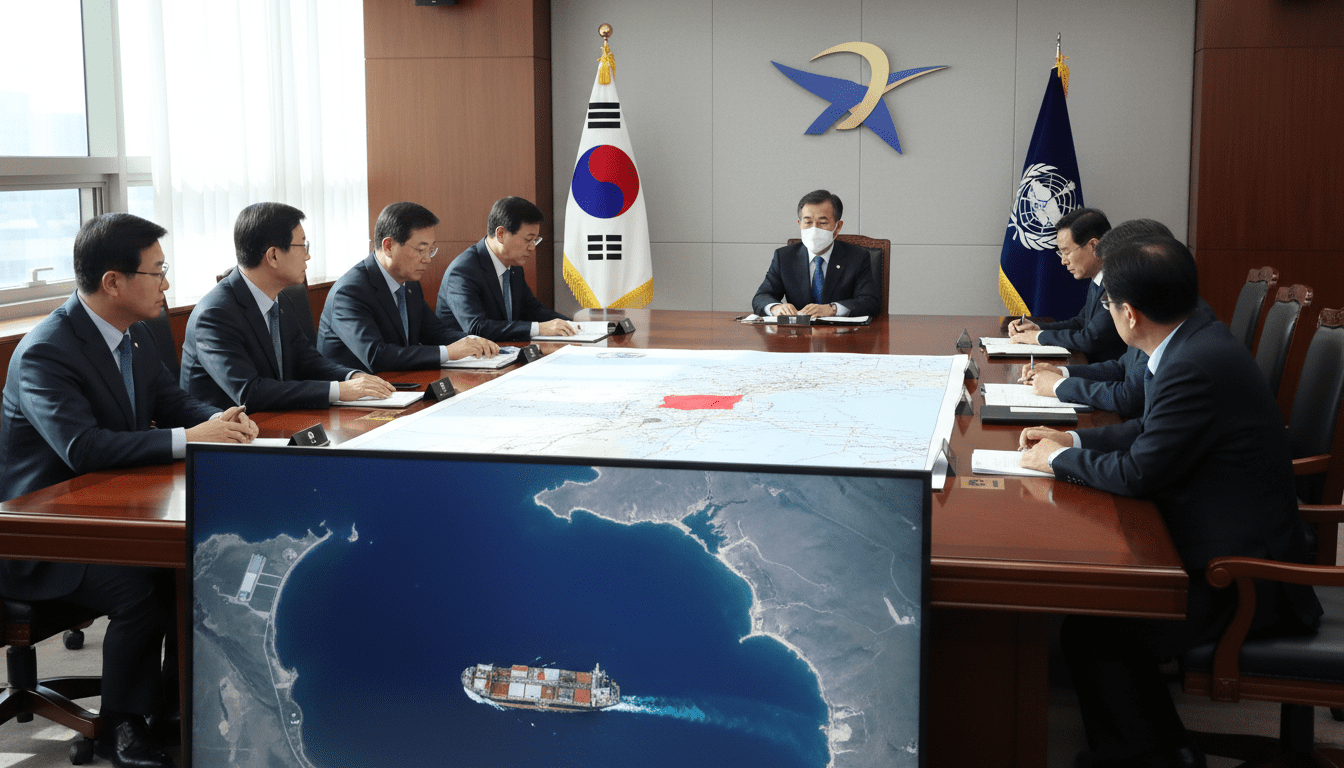
South Korea Investigates Strike on Korean-Operated Cargo Ship in Strait of Hormuz
South Korea has launched an investigation after two unidentified objects struck a Korean-operated cargo ship in the Strait of Hormuz on May 4, causing a fire and damage to the vessel’s stern.
Incident Details and Timeline
South Korean officials announced on May 10, 2026 that they are probing an incident on May 4 when two unidentified objects hit a cargo ship operated by a South Korean company while transiting the Strait of Hormuz.
The strike reportedly triggered a fire and left visible damage at the stern of the vessel, according to the initial account provided by Seoul.
Local maritime authorities and the ship’s operator have supplied preliminary information to South Korean investigators, who are now seeking to establish the nature and origin of the objects.
At this stage, officials have not publicly attributed the strikes to any party or indicated whether the objects were explosive, ordnance, or debris.
Ship Damage and Onboard Impact
The reported impact concentrated on the vessel’s stern, where the fire originated and structural harm was observed.
Shipboard systems located aft can include steering gear, propulsion components and accommodation spaces on many cargo vessels, which makes stern damage operationally significant.
There has been no widely released detailed inventory of damage or an official statement about injuries, repairs or the ship’s immediate seaworthiness from the investigating authorities.
Owners and insurers will typically conduct surveys and technical inspections to determine repair needs and potential causes once the vessel is secured.
South Korean Investigation and Agencies Involved
Seoul has said it is conducting an inquiry, indicating involvement by naval and maritime safety authorities alongside the ship operator’s team.
Investigators are expected to examine physical evidence, crew testimony, voyage data, and any available imagery or sensor records from the ship and surrounding vessels.
The probe will likely assess whether the strike was accidental, related to maritime traffic or fishing activity, or the result of deliberate action, although authorities have not specified investigative hypotheses.
Given the passage of time since the May 4 incident, specialists will prioritize preserving and reviewing perishable evidence that could clarify the sequence of events.
Regional Security Context in the Strait of Hormuz
The Strait of Hormuz remains one of the world’s most sensitive maritime choke points, with heavy commercial and energy-related traffic and a complex security environment.
Incidents involving merchant ships in the waterway can quickly attract scrutiny from regional governments and international maritime organizations.
While the South Korean announcement did not place responsibility for the strike, any attack on a flagged or operated vessel typically raises concerns about the safety of commercial shipping and prompts calls for enhanced situational awareness.
Regional and global shipping actors monitor such developments closely, given the potential for escalation or disruption to trade routes.
Implications for Shipping Operators and Insurers
An incident that produces fire and structural damage on a commercial vessel introduces immediate operational and commercial consequences for the ship operator and charterers.
Owners will need to arrange technical inspections, repairs and potential rerouting while insurers assess liability and policy coverage under war-risk, hull or cargo insurance provisions.
Shipping firms operating in high-risk maritime areas routinely review transit advisories and adjust risk mitigation measures, including employing armed security, altering routes or taking convoy measures, though no changes were announced in relation to this specific incident.
Insurers and classification societies may also seek prompt, detailed findings from investigations to refine underwriting and safety guidance for vessels transiting the Strait of Hormuz.
Information Gaps and Expected Next Steps
Key details remain unconfirmed, including the precise nature of the objects, any involvement by other vessels, and whether the attack was targeted or accidental.
South Korean authorities are likely to issue further updates as forensic analysis and interviews progress, and the ship operator will provide technical reports to support the official inquiry.
International maritime agencies and regional partners may offer technical assistance or request briefings if the investigation uncovers evidence with broader security implications.
For now, the focus is on completing a methodical investigation to determine cause and responsibility while ensuring the safety of crew, the vessel and other ships in the area.
South Korea’s announcement of the probe underscores ongoing concerns about maritime safety in strategic waterways and signals that authorities intend to pursue clarity on an event that resulted in fire and stern damage to a Korean-operated cargo ship.
