
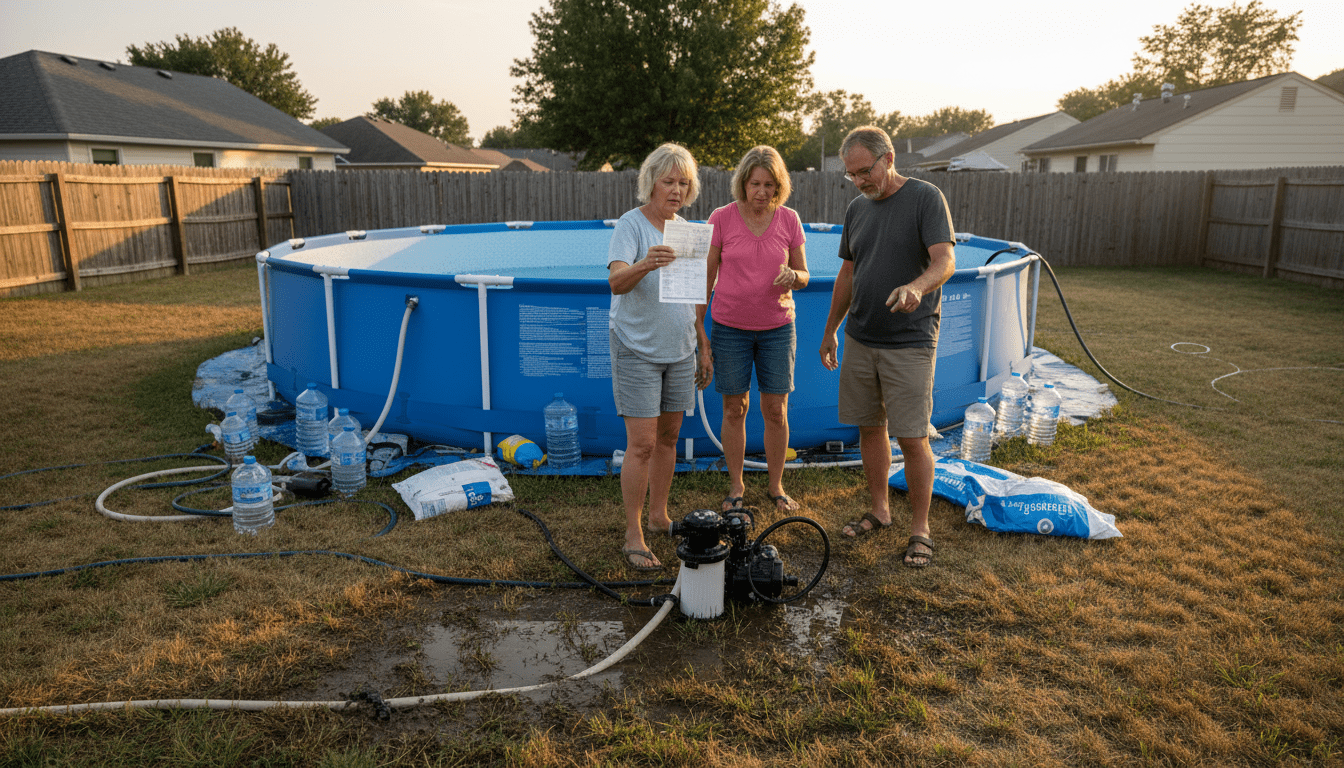
Above-ground pool buyers confront hidden costs and water-loss risks after DIY purchases
Low-cost above-ground pool purchases often hide high upkeep, repair and water-loss expenses; homeowners and experts warn buyers to factor long-term costs.
Quick summer buys, lasting commitments
The surge in DIY backyard projects has put the above-ground pool on many shopping lists this spring, promising easy installation and instant leisure. What begins as a bargain weekend purchase at a hardware store often becomes a long-term responsibility requiring time, money and regular attention. Homeowners who expected a low-effort setup say the realities of filtration, chemical balance and seasonal care quickly become central to ownership.
Retail promotions drive impulse purchases
Discounts and display models in garden centers lower the barrier to entry, making pools appear like low-risk accessories for the backyard. Sales staff and attractive seasonal displays can understate the practical needs of a filled pool, including a firm, level base and adequate space for equipment. These impulse purchases frequently outlast the buyer’s initial plans, exposing families to recurring expenses that were not considered at the point of sale.
Ongoing upkeep raises total cost of ownership
Running a cartridge-filtered above-ground pool requires regular chemical treatment, filter maintenance and electricity to operate pumps, all of which add recurring costs. Filters must be cleaned or replaced, water chemistry monitored, and winterization carried out properly to avoid damage during colder months. Owners report that the cumulative cost of consumables and utility use can surpass the original purchase price within a few seasons.
Leak incidents reveal environmental and financial impacts
A Berlin homeowner recounted the experience of filling a round Bestway model—about 1.22 meters high and 3.66 meters in diameter—only to discover a leak from a previous season that had gone unnoticed. The damaged liner was only apparent after the pool was filled for the third season, by which time several thousand liters of water had been lost into the dry garden soil. Incidents like this highlight both the water waste and the expense of delayed detection, since repairs or replacement often follow significant water loss.
Safety considerations and local requirements
Even temporary pools can trigger safety and regulatory responsibilities depending on local ordinances and the pool’s size and permanence. Owners should verify municipal rules that may affect fencing, drainage or wastewater disposal, and consider child-safety measures such as covers and alarms. Insurance implications are also relevant; some household policies require notification or may affect liability coverage if a pool is installed.
Practical steps to reduce risk and extend lifespan
Buyers can reduce long-term costs by preparing the site correctly: use a level, compacted base and a protective ground cloth to prevent abrasive damage to the liner. Inspect seams and fittings before filling and again at the start of each season, and keep a repair kit and replacement cartridges on hand. Regular water testing, a fitted cover, and following the manufacturer’s winterization guidance will lower the chance of leaks and the need for emergency refills.
Pools with cartridge filtration are common, but consumers should size the pump to the pool volume and adhere to maintenance schedules to avoid overworking equipment. Warranty terms vary widely, so document purchases and retain receipts to support claims if defects appear. For those who plan heavy use, investing in a sturdier model or professional assembly can be more economical over time.
Evaluating alternatives and long-term value
Prospective buyers should compare the short-term enjoyment of an inexpensive above-ground pool with alternatives such as membership at a community pool, inflatable options for limited use, or higher-grade framed pools designed for greater durability. For many households the decision hinges on frequency of use, climate, and tolerance for maintenance tasks. Considering total cost of ownership—including water, power, chemicals, repairs and potential replacement—gives a clearer financial picture than the headline sale price.
Above-ground pools can deliver affordable backyard recreation, but the initial bargain price often masks ongoing responsibilities and risks. Prospective owners are advised to research models carefully, prepare the site properly, and budget for maintenance and possible repairs to avoid costly surprises and excessive water loss.
