
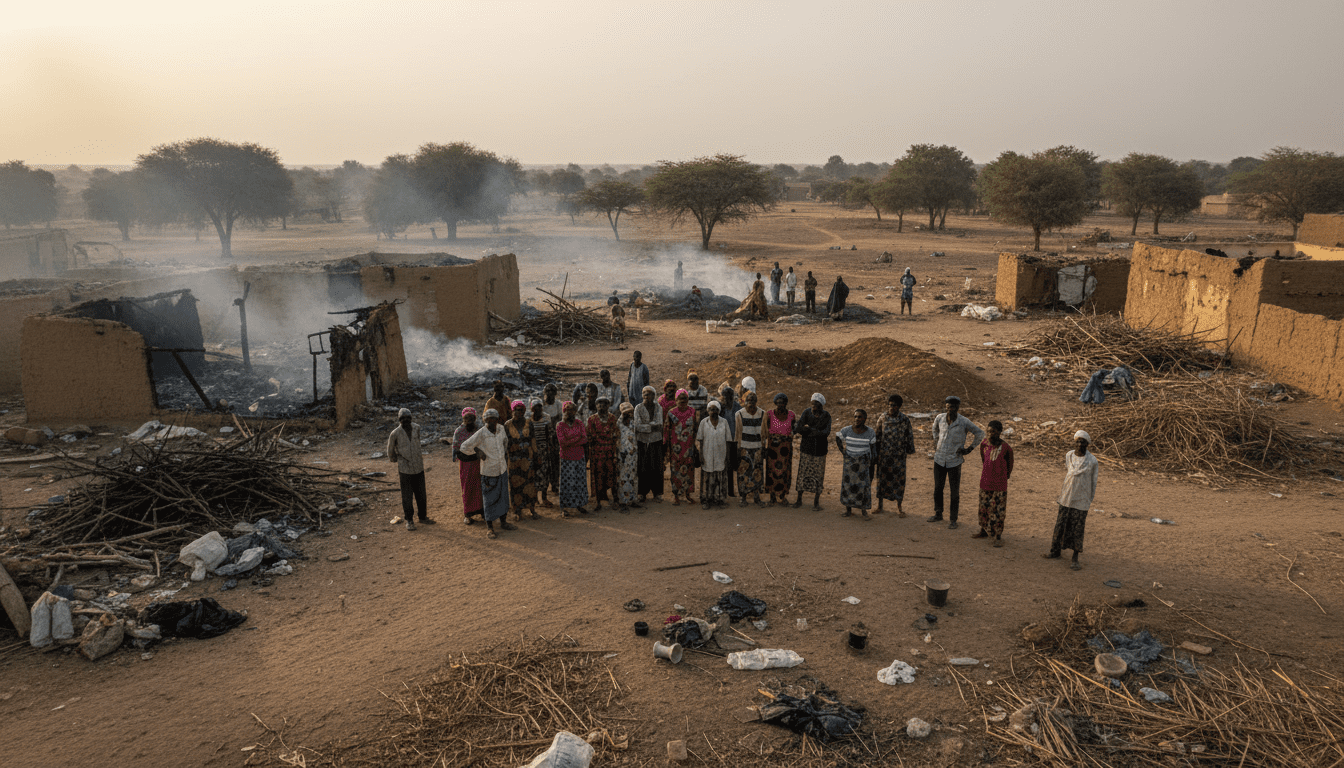
JNIM attacks in Mali kill dozens as violence spreads across central villages
JNIM attacks in Mali have killed at least 70 people in a series of assaults on central villages, security officials and local authorities said, as survivors and community leaders accuse the army of failing to intervene. The deaths follow earlier raids that left at least 30 people dead, pushing the toll higher amid renewed clashes in the region.
JNIM Claims Responsibility for Latest Killings
Local security sources said the jihadist militia Jama’a Nusrat ul-Islam wa al-Muslimin (JNIM) claimed responsibility for the latest raids on villages in central Mali. The group, which is linked to Al-Qaeda, reportedly carried out coordinated attacks on Kouroude and Dougara following earlier killings in Kori Kori and Gomossogou.
Authorities and security officials described the assaults as deliberate and targeted, with attackers arriving in force and executing residents in multiple locations. The claims of responsibility were made through channels commonly used by the militia, according to the officials, who requested anonymity when discussing the sensitive details.
Death Toll Reported Between 70 and 80 after Successive Raids
Security officials gave differing counts, saying the number of fatalities from the series of attacks over several days had risen to more than 70, while another source put the figure at about 80. Earlier in the week, JNIM-linked fighters killed at least 30 people in two villages, and the subsequent attacks pushed the overall toll significantly higher.
Local health workers and community leaders described overwhelmed clinics and makeshift burial preparations as families struggled to cope with the sudden wave of deaths. Precise verification remains difficult in the affected areas because of ongoing insecurity and limited access for independent observers.
Villages Said to Be Targeted Over Refusal to Sign Local Agreements
Security circles and regional officials said JNIM appears to be singling out communities that refused to sign local agreements with armed groups or their proxies. The group has previously demanded villages accept accords that place them under armed-patrol arrangements or impose strict social rules, officials said.
Residents in some towns told local leaders the attacks were punitive, aimed at forcing compliance or punishing those who resisted militia control. The targeting of communities that decline to enter such pacts underscores the militia’s strategy of using violence to consolidate influence where state authority is weak.
Local Leaders Accuse Army of Failing to Respond
A youth representative from the affected area publicly accused the Malian army of not coming to civilians’ aid during the latest assaults, saying security forces were absent when attacks occurred. Community spokespeople said several calls for military assistance went unanswered, exacerbating local fears and anger.
Military officials did not immediately respond to the accusations in the accounts made available by local sources. The repeated complaints about delayed or absent responses reflect longer-standing grievances about gaps in protection for rural communities in central and northern Mali.
Attacks Follow Large-Scale Offensive and Territorial Gains
The string of killings occurred roughly two weeks after a major offensive in which JNIM fighters, together with the Tuareg separatist Front de Libération de l’Azawad (FLA), seized control of multiple towns and outposts in northern Mali. The attackers in that earlier campaign captured several strategic locations, including the regional hub of Kidal, according to local reports.
Analysts say the recent offensives have emboldened militant networks and complicated efforts by the military government to reassert control. The advances also disrupted the already fragile security environment and appear to have provided jihadist groups with new leverage to pressure communities and challenge the state.
Foreign Forces and Shifting Security Alliances Shape the Conflict
Since the withdrawal of many Western troops in 2023, Mali’s military government has leaned on private security contractors and closer ties with foreign partners to counter armed groups. Russian mercenaries operating in support of Bamako have played a visible role in some operations, a shift that has altered the dynamics between local, regional and international actors.
The new constellation of forces has had mixed effects on security, officials and analysts say, with some gains in territory followed by renewed militia attacks in other areas. Observers warn that the involvement of non-state foreign actors complicates efforts to build a coordinated, accountable response to persistent violence.
Communities across central and northern Mali continue to bear the brunt of the fighting, with many residents displaced and local services strained by the influx of injured and fleeing civilians. Humanitarian agencies say access to some of the hardest-hit villages remains limited, hampering relief and verification efforts.
The recent spate of killings reinforces concerns about the erosion of state authority in rural Mali and the expanding reach of jihadist networks in the Sahel. With casualties rising and trust in security institutions weakened, local leaders and international observers warn that the human cost of the conflict may grow unless coordinated protection and reconciliation efforts are rapidly stepped up.
