
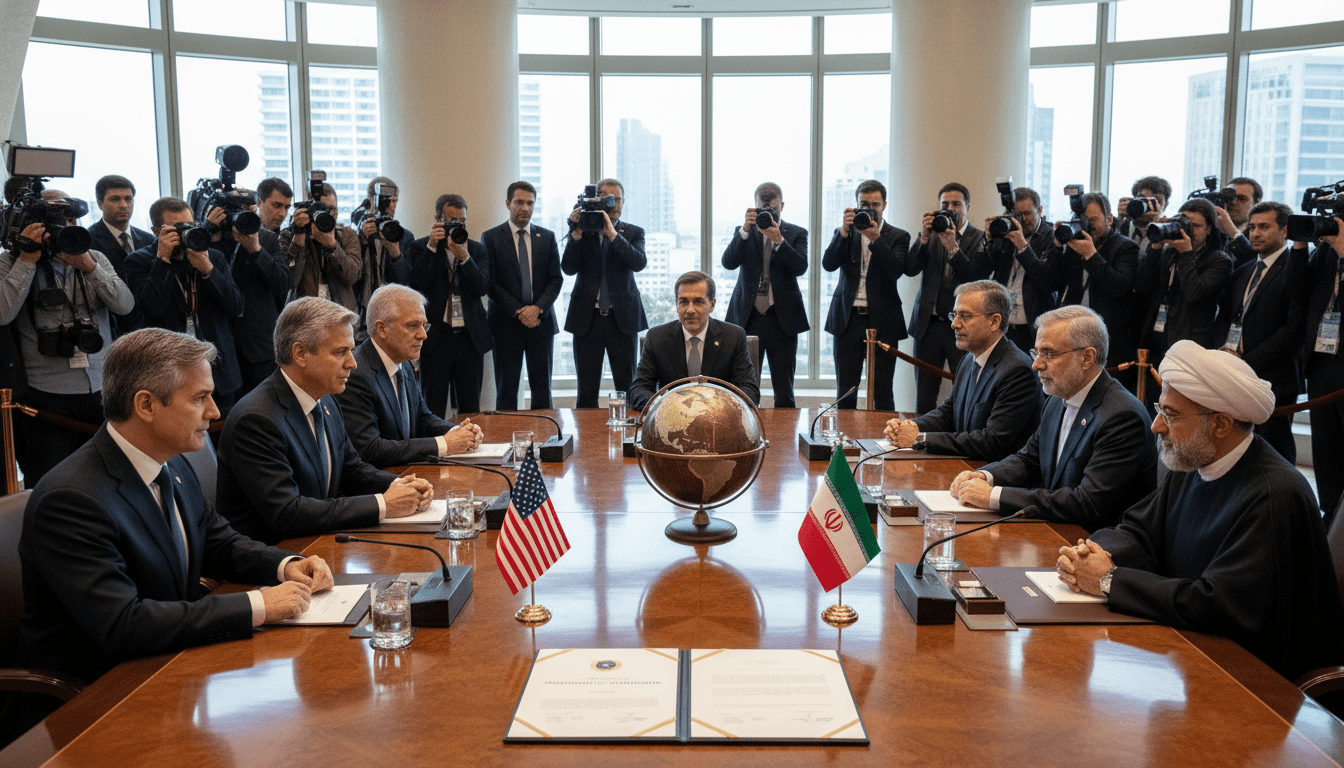
US-Iran memorandum of understanding proposed to end war and reopen Strait of Hormuz
US-Iran memorandum of understanding aims to end hostilities, reopen the Strait of Hormuz and deliver phased sanctions relief while broader negotiations continue.
The United States and Iran are reported to be negotiating a US‑Iran memorandum of understanding intended to halt combat operations and restore maritime traffic through the Strait of Hormuz. The proposed framework, described in multiple media reports, would set a three-stage process leading from a formal end to hostilities to wider, longer-term negotiations. Washington’s outline includes detailed nuclear, economic and naval conditions that would be implemented in stages if Tehran agrees.
Proposed three-stage framework
The negotiating outline would proceed in three phases, beginning with a formal cessation of hostilities and confidence-building measures. The second phase would address the immediate maritime crisis in the Strait of Hormuz, with a commitment to reopen shipping lanes within a set timeframe. The third phase would open a 30-day window for broader talks aimed at resolving underlying security and regional issues.
This staged approach is intended to create space for political and technical verification before moving to more sensitive topics. Officials and analysts say sequencing the deal could reduce the risk of renewed fighting while negotiators address complex demands on both sides.
Nuclear commitments and uranium surrender
US media reports say the United States would require Iran to commit not to develop nuclear weapons and to suspend uranium enrichment for an extended period. The outline reportedly asks Iran to halt enrichment for at least 12 years and to hand over roughly 440 kilograms of uranium enriched to 60 percent.
Those requests reflect Washington’s priority to sharply reduce Iran’s near‑weapons‑grade stockpiles as part of a confidence-building package. How Iran would meet those obligations, and how the material would be secured or transferred, remain central technical and political questions for negotiators.
Sanctions relief and frozen assets
In exchange for nuclear and non‑proliferation commitments, the United States would phase in sanctions relief and release frozen Iranian funds, according to the reports. The plan envisions a gradual easing of economic measures tied to verification steps, rather than an immediate lifting of all restrictions.
Officials say the phased approach would allow Tehran to see tangible economic benefits while giving the United States leverage to ensure compliance. The contours of financial transfers, which media reports suggest could involve billions of dollars, would need precise legal and logistical arrangements to satisfy both domestic legal constraints and international banking systems.
Strait of Hormuz reopening and naval terms
A central element of the proposed US‑Iran memorandum of understanding is reopening the Strait of Hormuz to commercial shipping within 30 days of signing. The proposal reportedly includes the end of any naval blockade and the normalization of maritime traffic procedures to prevent further disruption of global oil and shipping routes.
Restoring safe passage would likely require coordinated naval confidence-building, shared protocols for commercial vessels, and mechanisms to de-conflict operations in the narrow waterway. Regional and international maritime actors are expected to press for clear verification and safeguards to prevent immediate recurrence of violence or interference.
Verification and enforcement mechanisms
Negotiators would need to design independent verification steps to confirm Iran’s compliance on enrichment suspension and uranium transfers. The reports indicate that verification would be a prerequisite for each phase of sanctions relief and for the reopening of the strait, but specific monitoring arrangements have not been publicly detailed.
Experts caution that effective enforcement will require robust inspection access, secure custody chains for any transferred material, and clear consequences for violations. The credibility of the agreement will hinge on whether the verification regime can satisfy both Western security concerns and Iranian assertions of sovereignty.
Diplomatic timeline and remaining obstacles
The framework envisions a 30‑day negotiation window to convert initial commitments into a broader, durable settlement, but timeframes reported by media are subject to change as talks proceed. Implementing the US‑Iran memorandum of understanding would still face political resistance, practical logistics and the need for international coordination, all of which could delay or reshape the timeline.
Domestic politics in Washington and Tehran, as well as the positions of regional states, may complicate ratification and implementation. Observers note that any final accord will need to balance immediate de-escalation with sustainable mechanisms for addressing longer-term disputes.
The proposed US‑Iran memorandum of understanding marks a potentially significant diplomatic opening to end active hostilities and resume commercial shipping through a strategic chokepoint. Whether the framework can be translated into a detailed, verifiable accord will depend on intensive technical work, political buy‑in in both capitals, and coordination with regional and international partners.
