
Bundesrat Blocks 1000-euro Relief Bonus as States Protest Funding Burden
Bundesrat unexpectedly rejected the 1000-euro relief bonus; states demand federal compensation for lost tax revenue as mediation committee readies talks.
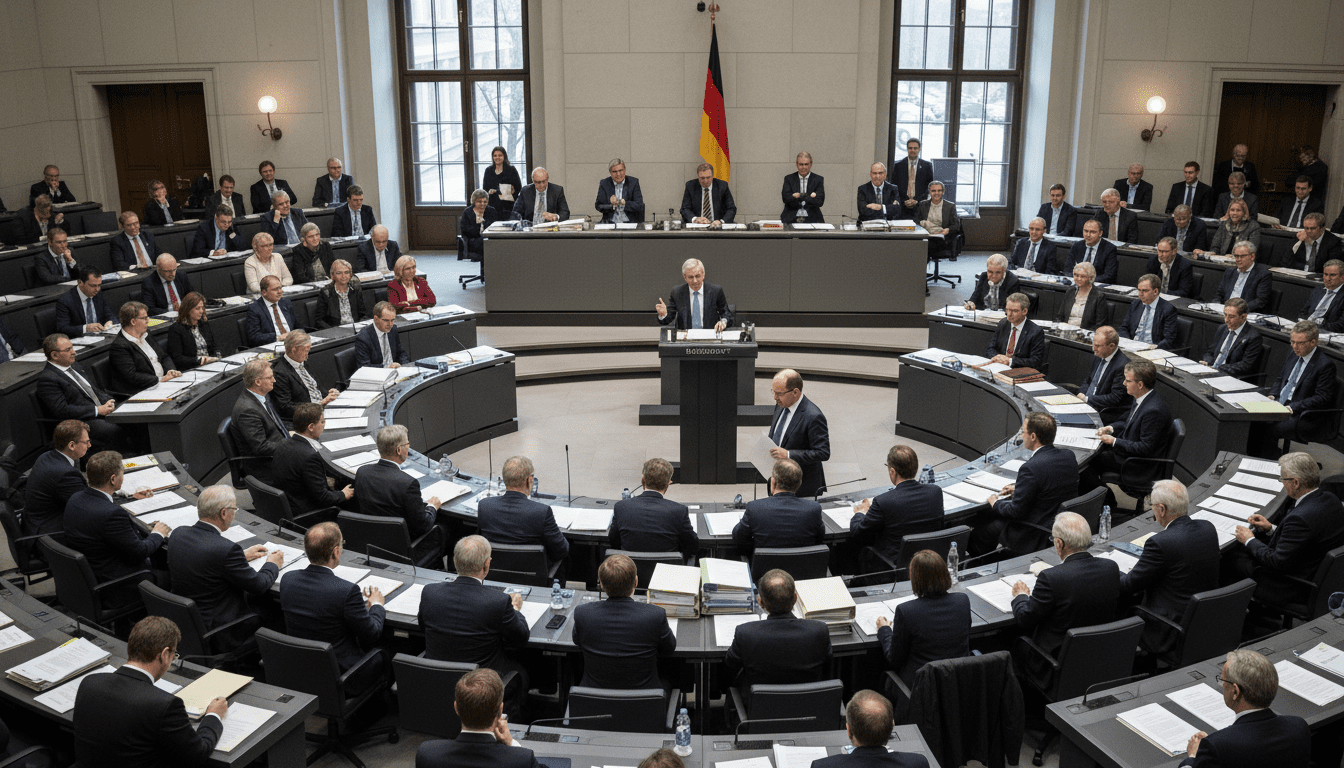
The Bundesrat on Friday refused to endorse a Bundestag-approved law that would have allowed employers to pay a tax-free 1000-euro relief bonus to employees, leaving the measure in limbo and prompting calls for urgent talks. The 1000-euro relief bonus, intended as a one-off, tax-exempt payment to help households cope with higher energy costs and wider economic fallout, cannot be paid out under the current legislative timetable without renewed agreement. With the federal government able to call the mediation committee of the Bundestag and Bundesrat, political actors now face a fast-moving negotiation over who will bear the fiscal consequences.
Bundesrat Rejects 1000-euro Relief Bonus
The Bundesrat’s rejection was unexpected because the Bundestag had already passed the bill, which would have allowed employers to grant a tax-free premium of up to 1,000 euros to staff through June 30, 2027. Senators representing the Länder objected primarily to the distribution of financial burdens across federal, state and municipal budgets. Their vote effectively sends the draft law back into intergovernmental negotiations rather than into implementation.
The government’s rationale cited ongoing economic instability linked to the Iran war and elevated energy prices as the justification for a temporary relief measure. Legislators framed the premium as an employer-paid, non-taxable supplement designed to deliver quick relief without increasing individual income tax complexity.
Proposed Structure and Eligibility
Under the draft law, employers could have classified payments of up to 1,000 euros per employee as tax-exempt, treating them as deductible business expenses. The exemption was modeled on earlier crisis-era rules used during the COVID-19 pandemic and the energy price shock following Russia’s invasion of Ukraine.
The scheme applied to payments made in the current calendar year and up to June 30, 2027, and would have required employers to opt in; it did not mandate automatic distribution. The government argued the measure would target immediate household strain while maintaining administrative simplicity for employers.
States Raise Objections Over Cost Sharing
Regional governments objected that the measure creates sizeable revenue shortfalls for Länder and municipalities while the federal government would capture any offsetting tobacco-tax increases. According to government estimates in the bill, the exemption could reduce tax receipts by as much as €2.8 billion because employers can deduct the bonus as a business expense and employees do not report it as taxable income.
States say that nearly two-thirds of those foregone revenues would effectively fall on them and local authorities, exacerbating tight budgets. They contend that the proposed tobacco tax hike, which was intended as partial financing, would flow exclusively to the federal coffers and therefore would not compensate subnational budgets for their share of the loss.
Voices from State Leaders
Several prominent state officials voiced sharp criticism after the Bundesrat vote. Baden-Württemberg’s outgoing Minister-President Winfried Kretschmann of the Greens accused the federal government of repeatedly designing measures that leave the long-term financial responsibilities to the Länder and municipalities. He argued that short-term federal support too often translates into sustained spending obligations for regional budgets.
Hamburg’s Finance Senator Andreas Dressel of the SPD highlighted the imbalance in compensation mechanisms, insisting the federal government should at minimum cover the roughly €700 million in costs that would fall on municipalities. Both officials framed their objections as part of a broader dispute over fiscal federalism and the recurring practice of passing costs down the public finance chain.
Projected Fiscal Impact and Precedents
Fiscal authorities estimate the tax-free bonus would cost the public purse up to €2.8 billion, a sum driven by business deductions and the absence of employee tax liability. Supporters pointed to precedents from pandemic-era relief and energy-related aid as justification, saying similar temporary measures were previously deployed to stabilize incomes quickly.
Opponents warned that without a clear, shared financing plan the measure would set an unwelcome precedent for shifting structural revenue burdens to regions. The debate exposes an ongoing tension in Germany’s federal system: the political appeal of rapid relief versus the fiscal reality of multi-level budget responsibilities.
Path Forward: Mediation Committee to Decide
With the Bundesrat’s refusal, the federal government can now refer the bill to the Vermittlungsausschuss, the mediation committee made up of Bundestag and Bundesrat representatives, to seek a compromise. That body has the authority to broker adjustments to cost allocation, funding sources or the duration of the exemption to secure wider support.
Negotiators are expected to focus on whether the tobacco-tax revenue can be shared with Länder and municipalities or whether the federal government will assume a greater share of the bill. Time pressure will likely increase the political stakes, since implementation windows and employer planning depend on a clear legal outcome.
The dispute over the 1000-euro relief bonus highlights the friction between fast-acting federal relief measures and the realities of Germany’s fiscal federalism. How the mediation committee resolves the allocation of costs will determine whether the payment becomes law, and it may shape future debates over how emergency economic measures are financed across levels of government.
