
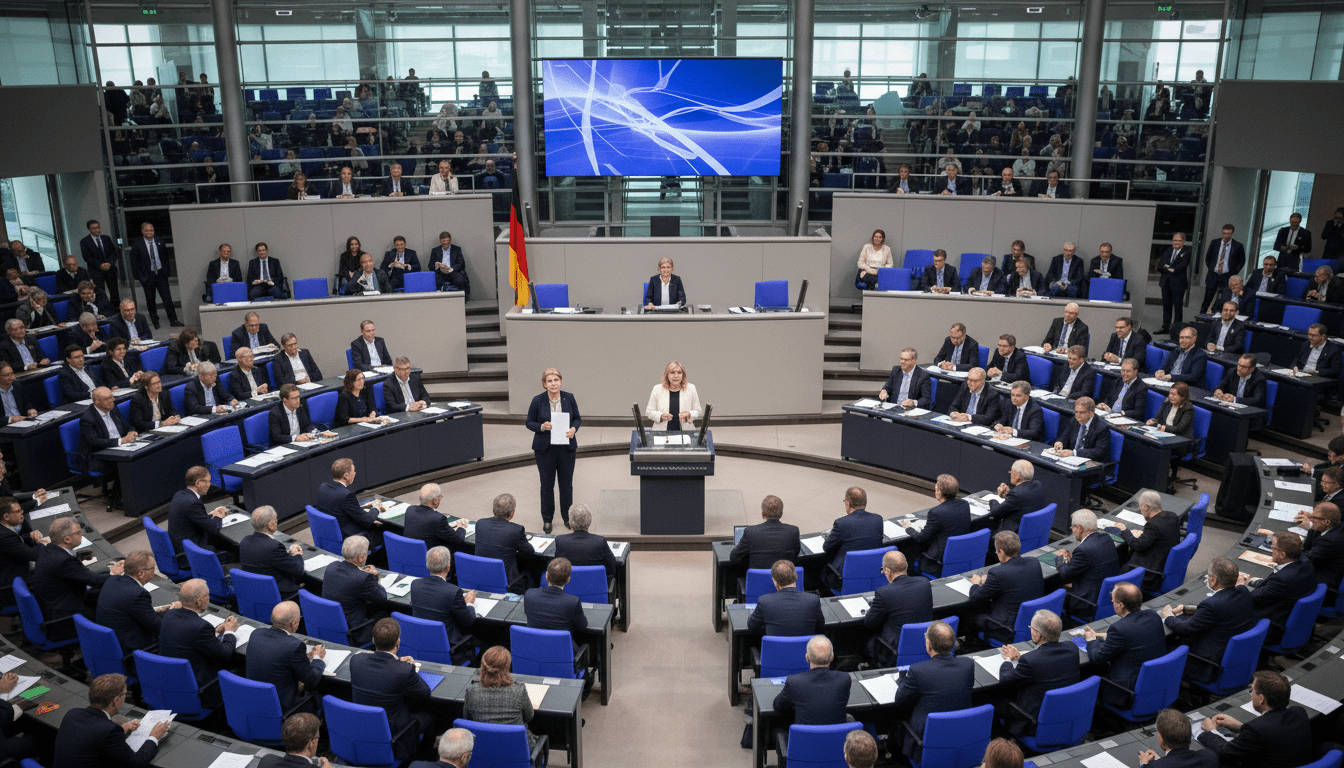
Bundestag Debate Marks Push for Stronger Protection for Women After Restraining Orders Failures
SPD MP Carmen Wegge’s sharp warning in the Bundestag ignited debate on protection for women, as lawmakers confront failures of existing restraining orders and call for stronger measures.
A Bundestag debate opened on Friday with a pointed intervention that underscored growing frustration over state responses to violence against women. SPD lawmaker Carmen Wegge told the chamber, “Sehr geehrte Frau Präsidentin, mir reicht es” — “Madam President, I’ve had enough” — and described survivors who followed the rules yet continued to live in fear. The intervention framed a wider parliamentary discussion about whether current legal tools, including the existing proximity ban (Annäherungsverbot), are adequate to protect victims.
Wegge’s testimony set the tone
Wegge told colleagues she had met women who “did everything right” — reporting to police, filing charges and attending court — but still feared for their safety because the perpetrator remained nearby. She argued the proximation ban had been little more than “a piece of paper” for many victims. Her closing line in the chamber, “Das ist jetzt vorbei” — “That is over now” — signalled demands for concrete change.
Survivors’ experiences highlighted urgency
Lawmakers on both sides of the aisle heard accounts intended to illustrate systemic gaps between law on the books and practical protection. Members referenced cases in which enforcement lapses, delayed police responses or limited risk assessment left survivors exposed to repeated intimidation. Those testimonies were used to argue that improving enforcement and expanding protective instruments should be a priority for legislators.
Flaws in the current restraining-order regime
The debate identified specific weaknesses in how restraining orders and proximity bans are applied, monitored and enforced. Speakers pointed to inconsistent policing practices, limited resources for monitoring offenders and legal thresholds that can delay protective action. Several MPs said the current framework often depends on victims’ ability to repeatedly seek official help rather than on proactive state measures.
Proposals for legal and practical reforms
Parliamentarians put forward a range of reform ideas aimed at strengthening protection for women, from clearer enforcement mechanisms to expanded emergency powers for police and courts. Suggestions included faster judicial procedures for protective orders, compulsory risk assessments after reported violence, and better coordination between law enforcement and victim services. Some MPs also urged greater funding for shelters and support services as part of a comprehensive response.
Political response and next steps in parliament
The debate closed with parties signaling that follow-up legislative work was likely, though details and timelines were not settled in the chamber. Lawmakers acknowledged that any new measures would require negotiation across party lines and careful balancing of civil liberties and effective prevention. Parliamentary committees were expected to examine proposals and compile amendments before any final vote or draft law is scheduled.
The debate also exposed political sensitivities: while there was widespread agreement on the need to improve protection for women, differences emerged over the scope of state intervention and the resources required. Some opposition MPs demanded immediate interim measures, while others cautioned that rushed legal changes could create enforcement problems of their own.
The Bundestag session made clear that the political momentum has shifted from rhetorical commitments to tangible policy work. Carmen Wegge’s intervention crystallized a narrative that many victims’ protections have been insufficient in practice, and that the existing restraining-order system must be strengthened to deliver real safety. The coming weeks are likely to see committee hearings and legislative proposals aimed at translating that consensus into concrete reforms to improve protection for women.
