
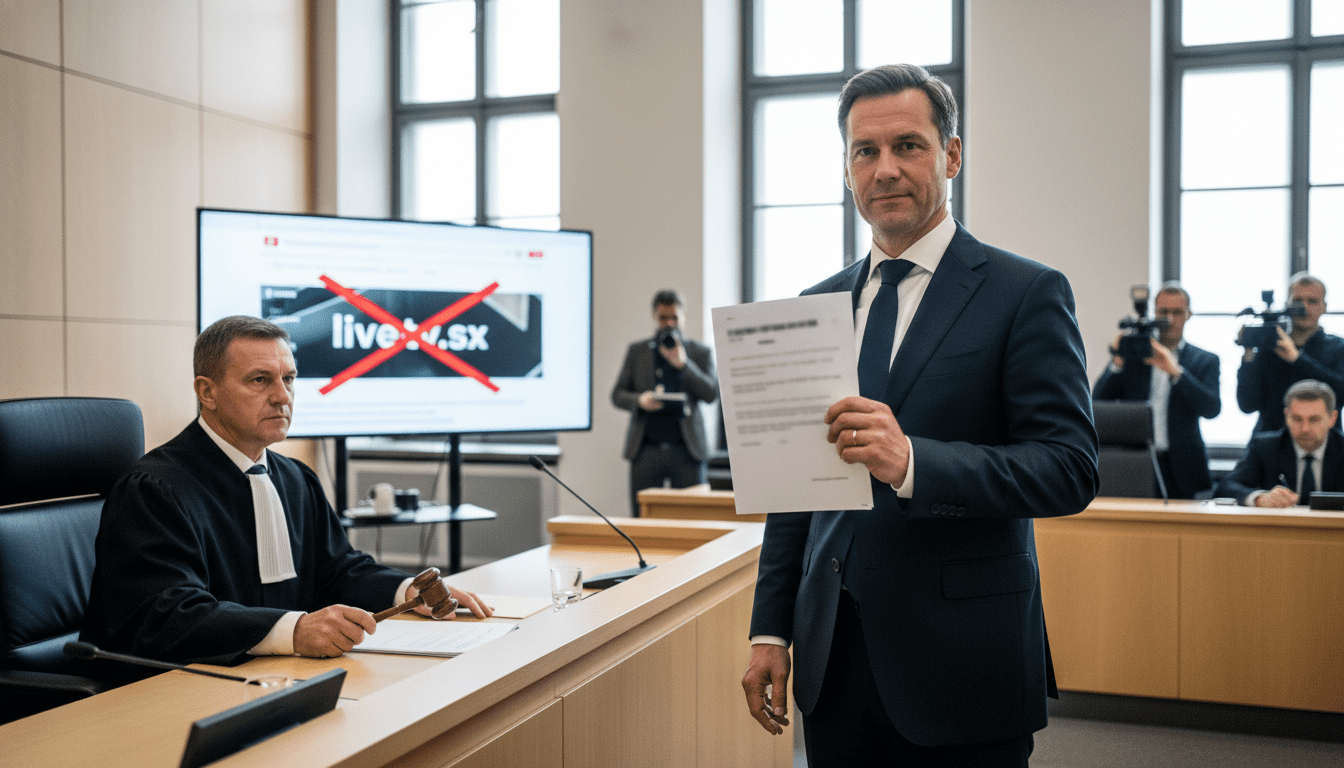
DFL Blocking Order Secures Court-Ordered Block of livetv.sx
DFL secures court-ordered blocking order against illegal sports site livetv.sx with DAZN, a major legal win in Germany’s fight against streaming piracy.
The German Football League (DFL) announced on Wednesday that it has obtained a court-ordered blocking order against the website livetv.sx, describing the move as a significant step in its anti-piracy campaign. The press release said the DFL, working with broadcast partner DAZN, achieved the decision as part of a coordinated effort to curb “piracy and the theft of content.” The DFL blocking order targets what officials called the largest illegal sports-streaming platform operating in Germany.
Court Grants Blocking Order Against livetv.sx
A regional court issued the blocking order after reviewing evidence presented by the DFL and its legal team, according to the league’s statement. The judge concluded that livetv.sx was facilitating unauthorized access to live sports broadcasts and that a block was necessary to protect commercial rights holders. The order is framed as a preventative measure intended to disrupt revenue loss and discourage further proliferation of illicit streaming services.
DFL and DAZN Coordinated Legal Strategy
The DFL said the action was taken in partnership with DAZN, which holds digital broadcasting rights to Bundesliga matches in several markets. Together they compiled technical and legal documentation to support the application for judicial intervention, arguing that the platform systematically distributed protected content. League and broadcaster cooperation reflects an industry trend of rights holders pooling resources to pursue civil remedies and technical enforcement against piracy networks.
Scope and Mechanics of the Blocking Order
According to the DFL’s description, the order requires internet service providers to block access to the specific domain used by livetv.sx and related infrastructure identified in the proceedings. Such measures typically rely on DNS or IP-level restrictions to prevent users on domestic networks from connecting to the targeted servers. Legal blocking orders vary in scope; some cover additional subdomains or mirror sites, while others are limited to named addresses until further motion or evidence is presented.
Enforcement Challenges and Circumvention Risks
Blocking orders can limit casual access, but technical workarounds persist and may blunt their effectiveness. Users frequently employ VPNs, mirror domains, or proxy services to reach blocked platforms, and operators of illicit sites often migrate to new addresses. Enforcement therefore tends to be iterative: rights holders seek successive orders against mirrors and upstream infrastructure, while authorities and judges consider expanded remedies aimed at payment processors or advertising networks that sustain pirate services.
Precedent and Industry Implications
Legal observers say this ruling adds to a body of case law enabling rights holders to obtain swift interim relief against piracy websites. For the DFL and premium sports broadcasters, the decision reinforces the use of civil litigation as a tool alongside technical countermeasures. The outcome may encourage other leagues and rights holders to pursue similar injunctions, while prompting policy debates about the balance between rapid enforcement and safeguards for internet intermediaries and end users.
Responses from Stakeholders and Next Steps
The DFL framed the judgment as a deterrent and signaled continued monitoring for new illicit distribution channels, while DAZN welcomed the decision as supportive of investment in legitimate sports coverage. Consumer and digital rights groups typically stress that blocking orders must be narrowly tailored and accompanied by transparency and appeal mechanisms to avoid overreach. Industry sources say further legal motions may be necessary to close mirrors and address payment flows that enable pirate platforms to operate.
The court order marks a tactical victory for the DFL and its partners, but it is unlikely to be a final solution to live-streaming piracy. Rights holders are expected to combine judicial remedies with technical, commercial, and public-awareness measures to reduce demand for illicit services. Monitoring, additional litigation, and cooperation with international enforcement bodies will likely follow as stakeholders seek a more durable reduction in unauthorized sports streaming.
