
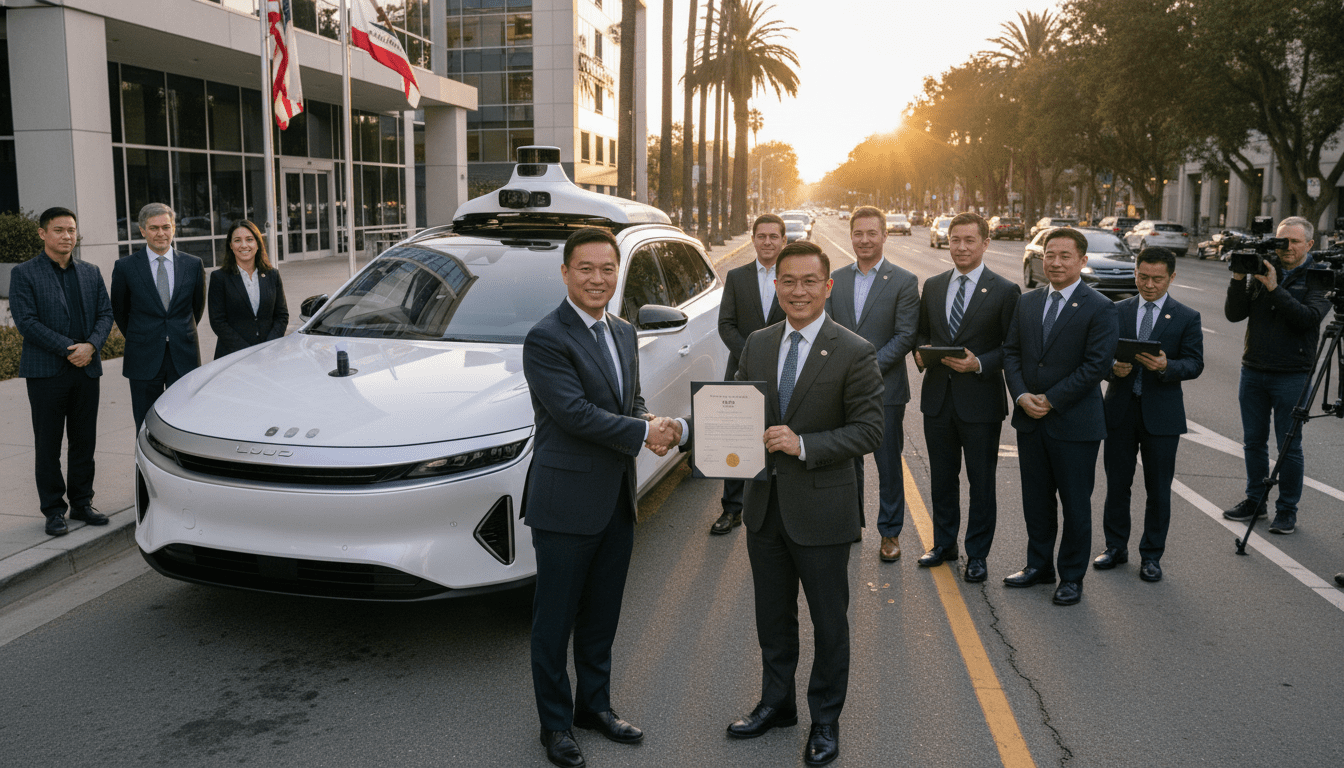
Nuro driverless testing permitted for Lucid Gravity SUVs by California DMV
California DMV has modified Nuro’s driverless testing permit to include Lucid Gravity SUVs, enabling staged driverless trials as Uber and Lucid expand robotaxi plans.
Nuro driverless testing received a formal modification from the California Department of Motor Vehicles to allow Lucid Gravity sport-utility vehicles to operate on public roads without a human safety driver behind the wheel. The move adds a new vehicle platform to Nuro’s existing six-year driverless permit, even as Nuro cautions that fully driverless trials are not yet underway. The vehicles are intended for eventual use in Uber’s premium robotaxi service, part of an expanded collaboration among Nuro, Lucid and Uber.
California DMV modifies permit to include Lucid Gravity
The California DMV confirmed it has updated Nuro’s driverless autonomous vehicle permit to cover Lucid Gravity SUVs. This change authorizes testing of those vehicles in driverless mode on California public roads under the regulatory framework that governs autonomous systems.
Nuro previously held a driverless permit tied to low-speed delivery vehicles, a program that ended when the company pivoted toward licensing its autonomy stack to ride-hailing partners. The permit modification is a procedural milestone rather than an immediate rollout of fully driverless passenger service.
Company says driverless testing will start later this year
Nuro told reporters that it expects to begin driverless testing of the Lucid Gravity SUVs later this year, but declined to provide a precise timetable. A company spokesperson said the firm is still preparing the vehicle integration and safety validation required before removing safety drivers from behind the wheel.
Until those steps are complete, Nuro and its partners continue to operate Lucid vehicles in autonomous mode with a trained human safety operator present. Uber has expanded limited internal trials that allow employees to request autonomous rides in Lucid vehicles through the Uber app while a safety operator remains on board.
Several regulatory approvals remain before commercial service
Securing the DMV modification is one of multiple regulatory hurdles Nuro and Uber must clear before launching commercial robotaxi service. The companies will also need a driverless ride-hailing permit from the California Public Utilities Commission and a separate deployment authorization from the DMV to carry paying passengers without onboard safety drivers.
Regulators may impose geographic limits, operational constraints, or phased deployment requirements, and final approvals could affect whether initial commercial operations are truly driverless. Companies pursuing robotaxi rollouts have typically navigated a mix of state and local conditions that influence the scale and timing of service launches.
Uber increases investment and vehicle commitments to Lucid
The three-way partnership among Uber, Lucid and Nuro has deepened since it was announced in mid-2025. Uber initially committed $300 million and an order for 20,000 robotaxi-ready vehicles; that agreement has since expanded to $500 million and a minimum purchase of 35,000 vehicles.
Under the revised deal, Uber’s order includes at least 10,000 Gravity SUVs alongside 25,000 electric vehicles built on Lucid’s upcoming mid-size platform. Uber has also made a multimillion-dollar investment in Nuro as part of the broader effort to commercialize autonomous premium ride services.
Technical architecture and fleet testing continue around the U.S.
Lucid’s robotaxi design for the Gravity SUV is equipped with high-resolution cameras, solid-state lidar and radar sensors to support perception and navigation. The autonomy software powering those sensors is Nuro’s system, running on Nvidia’s Drive AGX Thor compute platform to process sensor data and make driving decisions.
Lucid reported delivering 75 engineering vehicles to Nuro and Uber for testing and said mileage accumulation is ongoing across multiple U.S. cities. The automaker indicated it remains on track for commercial robotaxi operations to begin in late 2026, while acknowledging that regulatory approvals will determine the form and scope of those initial services.
Nuro driverless testing of Lucid Gravity SUVs marks a significant step in the partnership among Nuro, Lucid and Uber, but the timeline for full driverless robotaxi service still depends on further safety validation and regulatory clearances. The companies are continuing staged trials with safety operators, expanding vehicle testing fleets, and working through the permits required to move from pilot programs to paid public operations.
