
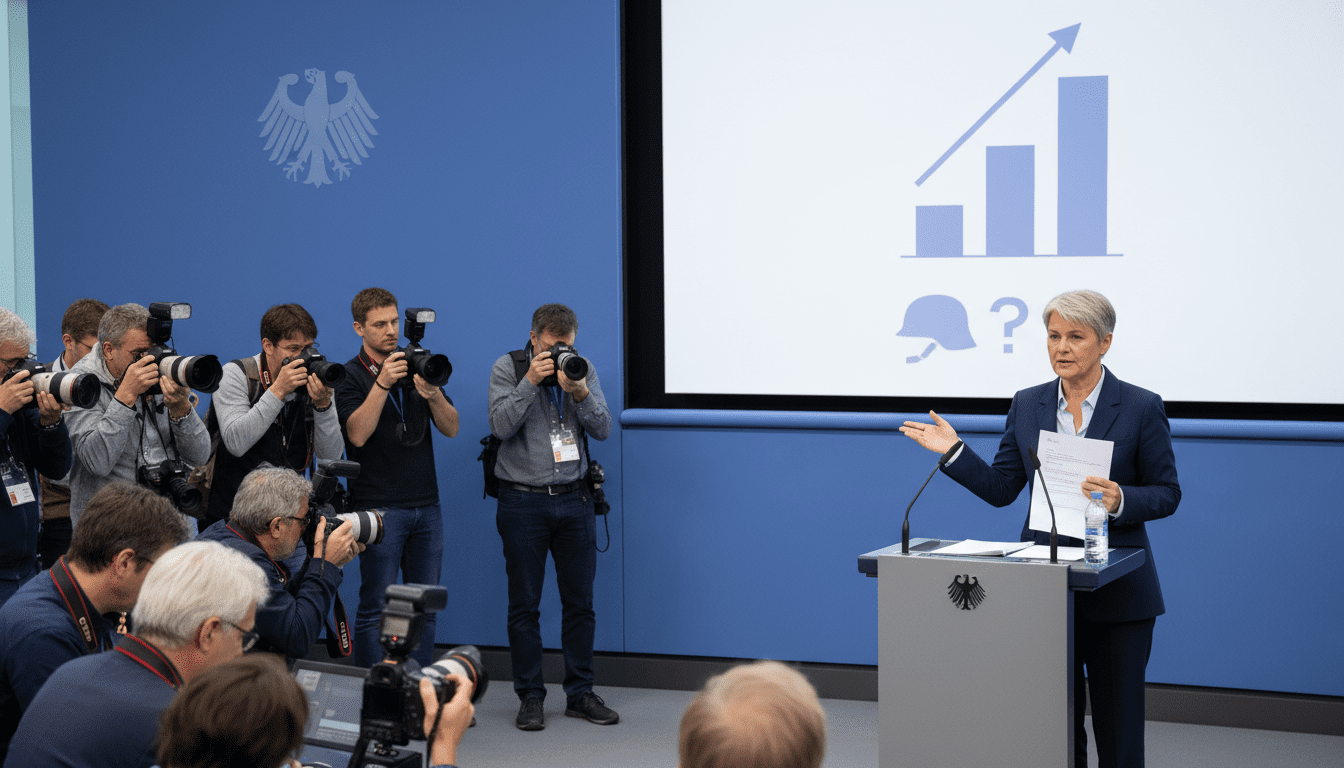
Bundeswehr questionnaire reaches large numbers of young people, military says
Bundeswehr questionnaire launched in January has been sent to a large number of young men and women, the military says, as officials assess suitability and willingness for service.
Since January the Bundeswehr questionnaire has been sent to a broad swath of young people as part of a new effort to assess suitability and willingness for military service, the German armed forces announced this week. The ministry said the distribution reached a substantial number of men and women across the country, and a Bundeswehr spokesperson offered initial remarks on the public response and next steps. The questionnaire is intended to provide the military with baseline information on interest and fitness for potential service pathways.
Distribution and scale disclosed
The Bundeswehr confirmed that, months after the initiative began, the survey has been delivered to a significant cohort of young people of recruitment age. Officials characterized the rollout as nationwide, noting that both women and men were included in the outreach. The military framed the distribution as a preliminary phase designed to gauge interest rather than a formal enlistment process.
Purpose and design of the questionnaire
Military officials say the questionnaire is aimed at mapping willingness to serve and basic suitability indicators among young people, with questions focused on background, health, education and disposition toward service. The Bundeswehr described the instrument as a tool to guide future recruitment planning and to identify candidates who might be interested in voluntary service options. Authorities emphasized that the survey is part of broader personnel planning rather than an automatic call-up.
Official comments on response patterns
A Bundeswehr spokesperson commented on the resonance of the initiative, offering context on response patterns and what the military hopes to learn from the data. While officials have not released exhaustive breakdowns of replies, they indicated that the initial returns will inform follow-up measures, including targeted information campaigns and individual follow-up for those who express interest. The spokesperson stressed that responses will be used to shape recruitment and training offers rather than to compel participation.
Political and recruitment context
The questionnaire comes amid ongoing public and political debate about Germany’s force structure, recruitment challenges and the role of young people in national defense. Policymakers have in recent years sought better data on recruiting dynamics to adapt voluntary service options and boost operational capacity. The military frames the survey as a pragmatic means to acquire current information on attitudes among potential recruits without immediately altering legal obligations.
Privacy and administrative safeguards
Officials said that the collection and handling of personal data are governed by existing regulations and internal safeguards to protect respondents’ privacy. The Bundeswehr indicated that participation is consultative and that respondents can expect information on how their data will be stored, used and, where applicable, shared with relevant authorities. Privacy advocates and civic groups have urged transparency about retention periods and access rights, while the military has pledged compliance with data-protection standards.
Implications for recruitment and training planning
Military planners view the questionnaire results as a foundational dataset to refine outreach, training throughput and reserve planning in the medium term. If the returns indicate greater voluntary interest, the Bundeswehr could scale recruitment drives and adapt enrolment pathways; if not, officials say they will analyze barriers and adjust messaging or incentives. Planners also expect the exercise to yield insights on regional variations in interest and on demographic factors that affect willingness to serve.
The Bundeswehr questionnaire represents an early step in an evidence-driven approach to personnel planning, according to military officials, who stress that the results will inform policy choices and operational planning without imposing immediate obligations on those surveyed. The coming weeks of response analysis will determine how the armed forces translate the data into concrete recruitment and training measures.
