
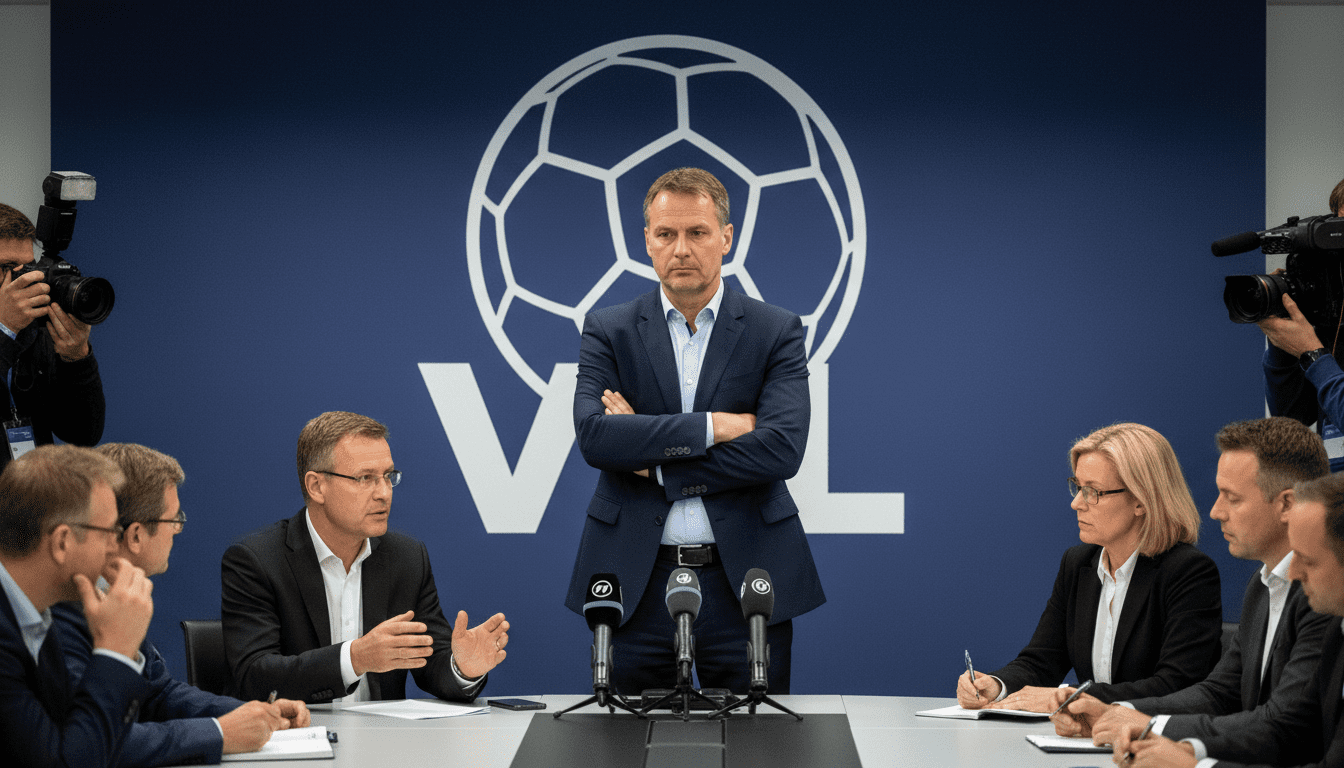
Dieter Hecking Says His Reputation Intact as VfL Wolfsburg Battles Relegation
Dieter Hecking tells reporters his reputation remains “intact” as VfL Wolfsburg fights to avoid relegation, addressing criticism, club decisions and what must change for survival.
Dated May 3, 2026, the Wolfsburg head coach Dieter Hecking acknowledged in a wide-ranging interview that the club is confronting difficult questions about its future while insisting his personal standing in the game remains solid. He responded to what he called “a bit of envy” and addressed the atmosphere around Wolfsburg’s recent struggles, saying the team must stabilise to emerge with minimal damage. Hecking framed the discussion around concrete steps the club should take and the standards he expects from players and management alike.
Hecking rejects personal blame and cites reputation
Dieter Hecking repeatedly defended his record, telling journalists that despite the club’s precarious position since March he believes his professional reputation is unchanged. He acknowledged scrutiny but characterised some criticism as motivated by envy rather than constructive analysis. Hecking emphasised that long-term assessments of coaches should account for context and underlying club issues beyond immediate results.
Hecking also stressed accountability, saying he will not evade difficult questions about tactics, selection and team management. He asked for clarity from the club on its aims and resources so that any evaluation of his work can be measured against a clear mandate. That balance — between personal responsibility and institutional context — framed much of his interview.
Recent run of form and league situation since March
Wolfsburg’s troubles began to intensify in March, when the team slipped into a relegation battle that has dominated the club’s season narrative. Results have been inconsistent, and the squad has struggled to find a stable identity in matches, contributing to mounting external and internal pressure. The coach acknowledged the urgency but avoided dramatics, focusing on small, measurable improvements for upcoming fixtures.
Club sources indicate training focus has shifted toward defensive organisation and transition play as immediate priorities. Hecking said the coaching staff has analysed the lapses that led to dropped points and is working to reduce errors that have proven costly in tight games. He underlined that short-term tactical adjustments are necessary, but not sufficient without broader squad cohesion.
Questions Wolfsburg must resolve about the club’s future
Hecking outlined several structural issues Wolfsburg must address to avoid repeating a similar crisis. He urged the board to clarify the club’s sporting objectives, recruitment policy, and the timeline for achieving stability. Without agreed priorities and coherent investment, he warned, stopgap measures would only postpone difficult decisions.
Contract renewals, transfer strategy and the composition of the sporting management team were singled out as areas that require prompt discussion. Hecking argued that clarity from the hierarchy would enable coaching staff and players to plan with purpose, rather than react match by match under a cloud of uncertainty.
Tactical adjustments and squad responsibilities
On the pitch, Hecking said Wolfsburg needs greater consistency in pressing and defensive transitions to limit opponents’ high-quality chances. He described a focus on improving set-piece defence and ensuring clearer roles for midfielders in shielding the backline. Training has emphasised sharper possession sequences to reduce turnovers in dangerous areas.
He also called on senior players to lead more visibly both in matches and in the dressing room. Hecking warned that when leadership lapses occur, younger players can be left adrift and tactical plans unravel. The coach indicated he will make changes in personnel and formation where necessary, but emphasised that buy-in from the squad is non-negotiable.
Scenarios that would spare Wolfsburg serious damage
Hecking sketched pragmatic scenarios that, in his view, would allow VfL to emerge from this period with only minor long-term consequences. A sequence of disciplined performances, securing points in tight home fixtures and stabilising away results would be the shortest path out of danger. He stressed that avoiding panic and focusing on process rather than headline-grabbing remedies increases the club’s chances.
Equally, Hecking said institutional support — clear communication from the board and targeted reinforcement in the transfer window if available — could materially improve prospects. He maintained that an honest assessment after the season will determine whether continuity or a more radical reset is required.
Public reaction and the tone of criticism around Wolfsburg
The coach acknowledged a heightened level of public attention and what he described as Schadenfreude from some quarters of the media and rival supporters. He suggested that this reaction partly stems from Wolfsburg’s profile and past success, but he urged a measured response from stakeholders and fans. Hecking emphasised the need to protect the players from excessive external noise so they can focus on performance.
He called for constructive scrutiny that helps the club improve rather than commentary that simply magnifies failure. While conceding that criticism is part of football, he insisted that the conversation should help identify solutions rather than deepening divisions.
With the season entering its decisive phase, Hecking repeated his central point: clear priorities from the club and collective responsibility on the pitch are essential. He said his reputation will ultimately be judged by outcomes and the process the team shows in the coming weeks, but for now he remains focused on steadying Wolfsburg and delivering the results the club needs.
