
Jordan strikes in Syria hit alleged weapons and drug depots, Amman says
Jordan strikes in Syria hit alleged weapons and drug depots near Suweida and Arman; Amman calls it a deterrent against Captagon and arms smuggling.
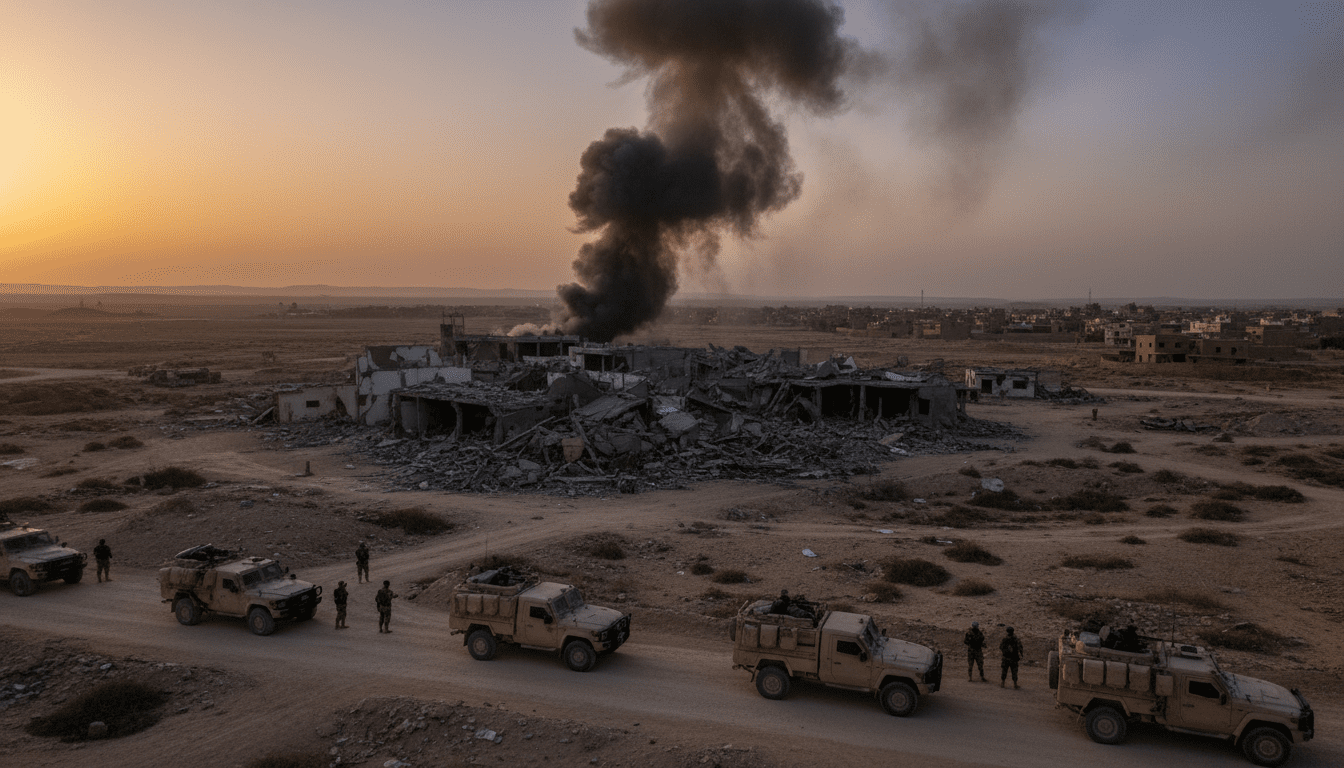
Jordan strikes in Syria overnight targeted an alleged weapons and drug warehouse complex in the Suweida region and other sites near Arman, military and local sources said. The Jordanian army described the operation as a “deterrent” move against groups it says used positions along the northern border for arms and drug trafficking. Syrian state media and local monitors reported that multiple airstrikes struck at least five locations, including storage facilities and an area near a local security branch.
Jordanian military frames operation as deterrent
The Jordanian armed forces issued a statement saying it carried out a proactive and determined operation to neutralize threats to the kingdom’s security and sovereignty. The statement said the military would continue to use its capabilities and resources “with full force” to confront such threats along the shared border. Officials characterized the action as part of an effort to disrupt networks that use southern Syrian terrain to transport weapons and narcotics into Jordan.
The government in Amman emphasized that the strikes were aimed at criminal and armed groups, rather than at civilian infrastructure. Military briefings released by Jordan have framed recent operations as necessary to prevent spillover violence and to stem the flow of illegal consignments across the frontier. Jordan has repeatedly said that cross-border smuggling presents a direct threat to domestic security.
Reported targets include warehouses in Arman and Suweida province
Syrian state television, citing local sources, reported airstrikes hit what it described as a headquarters of rebel groups in the village of Shahba in the Suweida governorate, where weapons and drugs were allegedly stored. International news agency reporting based on local contacts said at least five targets were struck, including warehouse sites in the town of Arman. The Syrian Observatory for Human Rights, which relies on a network of activists, said one of the strikes occurred near a branch of local security forces.
Details on the exact locations and scale of the damage remain limited and are difficult to verify independently from the ground. Syrian state-run outlets and monitoring groups have offered overlapping but not identical accounts, reflecting the fragmented information environment in southern Syria. Local witnesses contacted by reporting agencies described explosions and plumes of smoke following the strikes.
Captagon trade and regional pressure on smuggling networks
Authorities and regional analysts point to Captagon, an amphetamine-like stimulant, as a key commodity fueling smuggling in southern Syria. The drug has been in high demand across the Gulf and is widely cited by officials in the region as a major source of illicit revenue for armed groups. Jordanian security statements have singled out narcotics trafficking alongside arms smuggling as a central concern driving recent cross-border operations.
Since the early 2020s, seizures of Captagon and other synthetic stimulants have prompted intensified law enforcement cooperation among neighboring states. Jordan has repeatedly tightened border controls and increased patrols, citing the need to prevent both criminal networks and armed groups from exploiting porous frontiers. Analysts warn that the financial incentives of the synthetic drug trade make trafficking networks resilient and adaptable to interdiction efforts.
Previous Jordanian strikes and reported coordination with Damascus
Jordan has carried out similar strikes in southern Syria in recent years, according to regional reporting, often citing the need to disrupt smuggling rings and armed cells operating near the border. The latest operation follows a period of heightened security collaboration, according to Amman and some Syrian sources, aimed at reducing cross-border criminal activity. Both capitals have expressed interest in limiting the movement of contraband, though the extent and formality of any coordination remain opaque.
The source material for these developments includes state media accounts and international monitoring organizations, which have routinely served as primary conduits of information about military actions in Syria. Observers note that cooperation between neighboring states in counter-smuggling initiatives can be pragmatic and episodic, but may carry diplomatic sensitivities given Syria’s complex internal politics and the presence of multiple armed factions.
Verification challenges and local reporting caveats
Independent confirmation of the full scope and consequences of the strikes was constrained by limited access to the affected areas and competing narratives from state and non-state actors. The Syrian Observatory for Human Rights, while widely cited, draws on activist networks and has faced both scrutiny and recognition for the limits and value of its reporting. Syrian state media offered a narrative emphasizing an attack on rebel positions and illicit stores, while Jordanian statements focused on counter-smuggling objectives.
Humanitarian and monitoring groups warn that information emerging from conflict-affected zones often reflects the perspectives of parties with divergent interests, underscoring the need for caution in interpreting initial claims. Local residents and relief actors may be unable or unwilling to provide detailed accounts amid security concerns, complicating independent assessments of casualties and material damage.
Implications for border security and regional diplomacy
The strikes underscore Jordan’s continued focus on securing its borders and curbing transnational criminal economies that it says threaten domestic stability. They are likely to prompt renewed diplomatic exchanges with neighboring states about joint measures to counter trafficking and the proliferation of arms. Regional governments and security services may step up intelligence sharing, surveillance, and interdiction efforts in response.
At the same time, strikes that cross into Syrian territory carry risks of escalation and miscalculation, particularly in a landscape crowded with armed groups and foreign actors. Observers will watch for follow-up statements from Damascus and other regional capitals, and for any changes in Jordan’s posture along the frontier in the coming days.
Confirmation of casualties, the identities of those affected, and any formal communications between Amman and Damascus remained limited at the time of reporting, with independent verification still pending.
