
Spirit Airlines halts operations as jet-fuel costs force sudden shutdown
Spirit Airlines halts operations as jet fuel prices surge amid the Iran war; all flights canceled, refunds promised and roughly 17,000 employees affected.
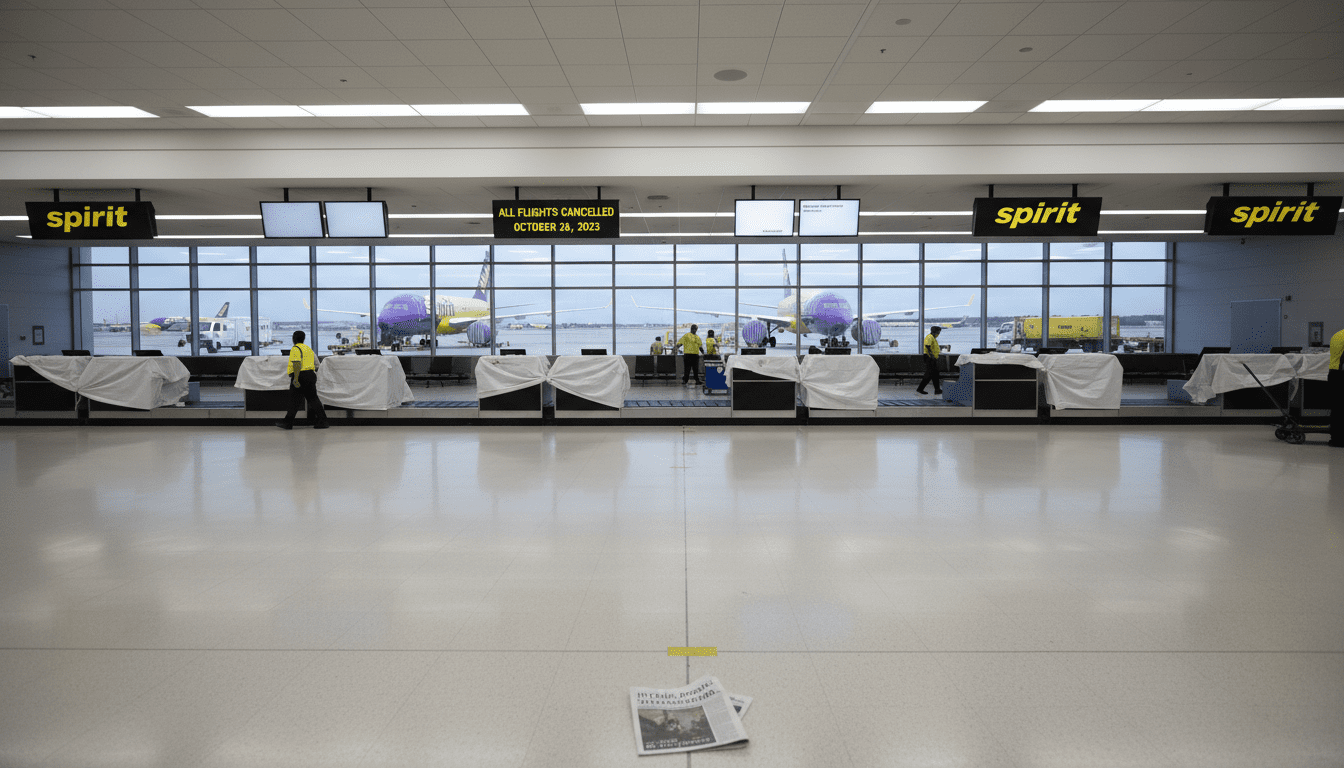
Spirit Airlines announced an immediate cessation of flight operations on Friday, saying that a steep rise in jet-fuel prices tied to the Iran war had rendered continued service impossible. The low-cost carrier said all flights were canceled and that customer service was not available, while promising refunds for passengers with existing bookings. The move ends 34 years of operations for the carrier and leaves roughly 17,000 employees without work.
Spirit Airlines halts flights immediately
The company posted a statement on its website declaring an immediate suspension of all services, citing “the recent sharp rise in oil prices and other business pressures” as the reason. Spirit said its financial outlook had been “materially impaired” and that continuing to operate under current market conditions was no longer viable.
Passengers who held reservations were told they would receive refunds, though Spirit said its customer-support channels were not available at the time of the announcement. Airport counters and scheduled departures were abruptly affected at major Spirit hubs, causing immediate disruption for travelers.
Failed rescue talks with U.S. authorities
Negotiations with the U.S. government over a potential rescue package collapsed before the shutdown, according to people familiar with the talks. Reports described a proposed $500 million aid package that would have given the government a majority stake of roughly 90 percent, but the plan did not move forward amid concerns about the airline’s pre-existing financial fragility.
Company leadership had previously disclosed multiple financial restructurings and two bankruptcy filings in recent years. Executives said they had reached a shareholder-backed restructuring agreement that might have supported ongoing operations, but that escalating fuel costs removed any practical path to keep flying.
Fuel price spike tied to Iran conflict
Spirit identified surging jet-fuel prices, linked by the company to the ongoing Iran war, as the proximate cause of its collapse. Airline fuel is one of the largest single operating expenses for carriers, and steep short-term price moves can quickly overturn narrow-margin business models typical of ultra-low-cost operators.
Industry analysts have warned that sudden geopolitical shocks to crude markets can create liquidity crises for carriers that operate with limited cash reserves. For budget airlines that depend on high utilization and tight cost controls, a rapid increase in fuel costs can be especially damaging.
Operational and passenger impacts at key hubs
Spirit’s network had been concentrated in leisure corridors, with strong footprints in Las Vegas, Fort Lauderdale and Orlando. The airline’s signature bright-yellow fleet was a common sight in U.S. sun destinations and short-haul routes.
With flights canceled across the system, airports and travel partners scrambled to rebook passengers and adjust operations. Local airport authorities said they were monitoring gate use and ground handling shifts but cautioned that immediate alternatives for affected travelers would be limited during a high-demand travel season.
Consequences for employees and the market
Approximately 17,000 Spirit employees are now affected by the shutdown, spanning flight crews, ground staff, mechanics and administrative personnel. Labor representatives said they were seeking clarification on severance, benefits and the timeline for any potential claims in a formal insolvency process.
Competing carriers may face short-term scheduling and capacity adjustments as market gaps appear on routes formerly served by Spirit. Some competitors could pick up traffic and fares may temporarily rise on certain leisure routes, while others may hesitate to expand capacity until market conditions stabilize.
Regulatory and consumer questions ahead
The abrupt closure raises immediate questions about consumer protections, refunds and the handling of stranded passengers. Airlines are generally required to provide refunds for canceled flights, but the process often becomes protracted when a carrier halts operations and centralized customer service is not functioning.
Regulators and consumer-rights groups are likely to monitor the situation closely, and airport authorities have signaled readiness to coordinate with airlines and federal agencies to mitigate passenger disruption. The legal and financial steps that follow — including any formal insolvency filings and claims processes — will determine how quickly customers and workers can secure compensation.
Final fallout for the U.S. aviation market will depend on how long elevated fuel prices persist and whether carriers take capacity or pricing actions in response. For now, Spirit Airlines’ sudden exit leaves passengers, employees and airports facing immediate uncertainty while highlighting the vulnerability of low-cost carriers to acute fuel-price shocks.
