
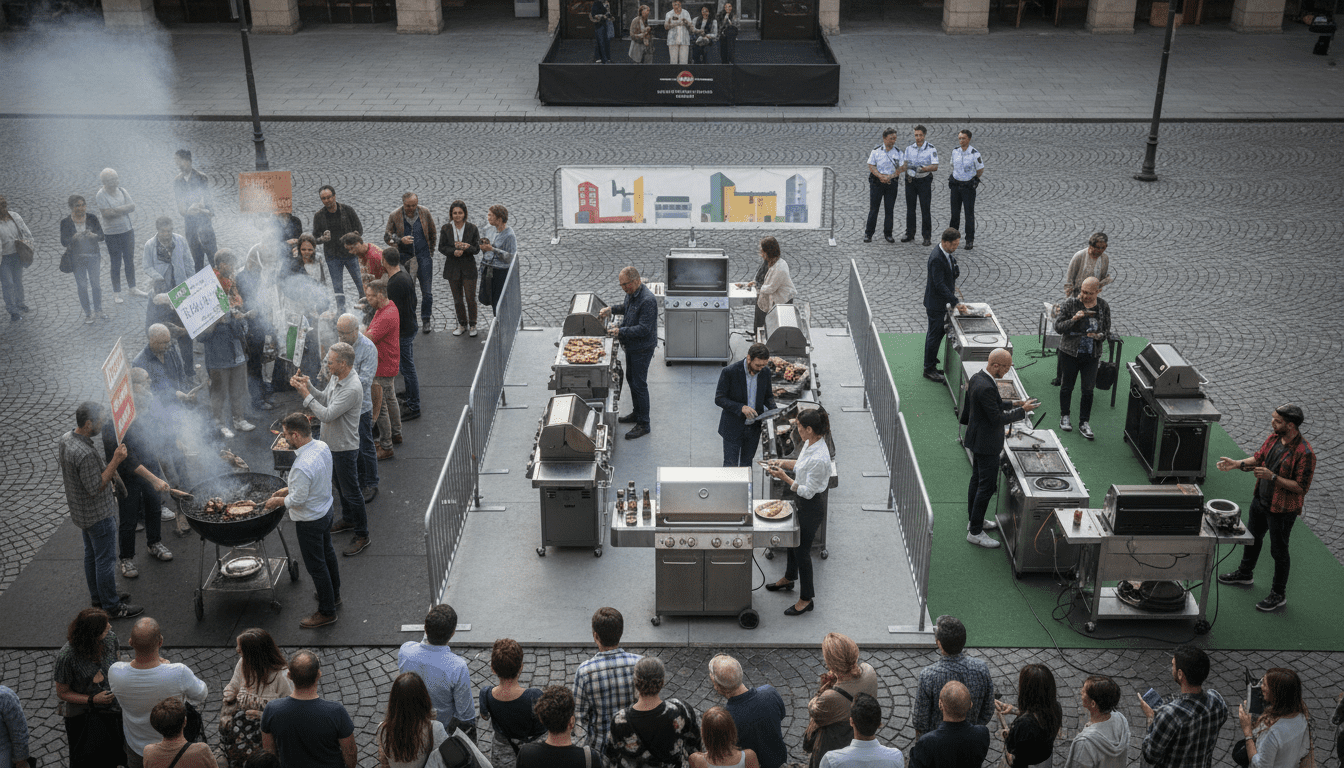
Grilling divides taste and law: charcoal, gas and electric grills shape identity and neighborhood rules
Grilling divides taste and law: charcoal, gas and electric grills shape identity and neighborhood rules. Practical advice on safety and choosing a grill.
Grilling has become more than a way to prepare food; it is a public expression of taste, technique and, increasingly, local regulation. From charcoal purists who prize aroma and sear to gas advocates who value control and speed, each method carries social signals as well as practical trade-offs. As debates over smoke, noise and safety intensify, grill choice is shaping who stands where and how communities manage shared spaces.
Charcoal purists and the case for smoke
Charcoal enthusiasts argue that smoke and ember create flavours that other methods cannot reproduce. They point to the Maillard reaction, searing and wood-smoke nuances as reasons to accept longer set-up times and the characteristic smell that neighbours sometimes find intrusive.
At the same time, charcoal cooking requires attention to airflow, fuel quality and temperature management. Those practical demands make charcoal grilling both a ritual and a skill, one that reinforces identity for many who see the grill as a stage for craftsmanship.
Gas grilling: control, convenience and trade-offs
Gas grills appeal to consumers who prioritise control and convenience over ceremony. Instant ignition, adjustable heat zones and easier cleanup make gas models popular for families and people with limited outdoor time.
Critics of gas grilling note a loss of traditional smoky flavours and argue that rapid cooking can encourage uniformity over careful technique. Still, for many households the predictability of gas is a decisive factor when balancing lifestyle, time and the desire to grill regularly.
Electric grills and urban practicality
Electric grills have gained ground where smoke and open flames are impractical, such as balconies, apartment terraces and some indoor settings. They are quiet, fast to heat and produce minimal odour, making them an attractive option in dense residential areas.
Their main disadvantages are limited char and the absence of combustion-derived aromas that define classic barbecue. Nevertheless, electric grills have helped broaden who can grill, turning the activity into a feasible option for urban dwellers subject to building rules or strict neighbour concerns.
Rules, neighbours and the limits of permissibility
Grilling often collides with rules set by landlords, housing associations and municipalities, especially where balconies, shared courtyards or parks are involved. These regulations range from outright bans on certain fuel types to specific safety and cleanliness requirements enforced by local authorities.
Because regulations differ by location and property, grillers face a patchwork of expectations. Responsible practices—keeping flames under control, avoiding excessive smoke and informing neighbours for large gatherings—reduce conflict even where formal rules are absent.
Disposable grills, parks and public space conflicts
Disposable grills remain a frequent flashpoint in public areas during warm months, prompting some cities to restrict or ban their use. The combination of litter, fire risk and intense smoke has led municipal authorities and park administrations to seek alternatives and stricter enforcement.
Public campaigns and designated barbecue areas are common responses, aiming to preserve access while managing safety. For organisers and casual users alike, planning around wind, distance from vegetation and legal restrictions is essential to avoid fines and accidents.
Choosing a grill: matching method to context
Selecting a grill should begin with questions about place, frequency and priorities. If aroma and tradition matter most, a charcoal set-up may be appropriate; if speed and convenience are paramount, gas or electric units will typically deliver better results.
Beyond taste, practical concerns such as storage, maintenance, and the expectations of neighbours should guide purchase decisions. Investing in a quality thermometer, learning safe fuel handling and testing techniques at low-stakes gatherings can help bridge the gap between enthusiasm and responsibility.
Grilling remains as much a cultural practice as a culinary technique, revealing personal priorities and local tensions in equal measure. While debates over smoke and style persist, most seasoned grillers agree that good outcomes depend on technique, respect for neighbours and sensible safety practices.
