
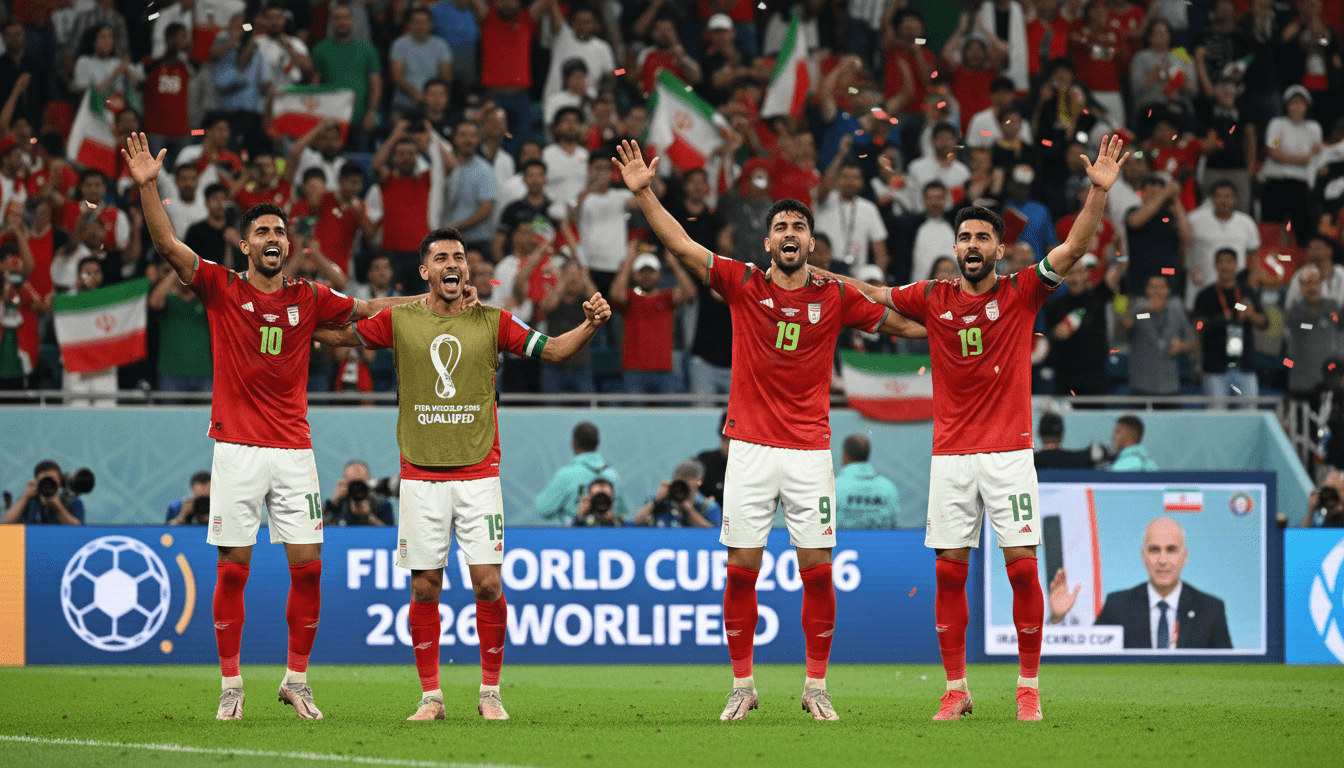
Infantino Confirms Iran at World Cup 2026 Despite Canadian Entry Dispute
Infantino says Iran will play at World Cup 2026 in the US, Canada and Mexico after Tehran’s delegation pulled out of the FIFA congress in Vancouver on April 30.
The president of FIFA, Gianni Infantino, announced on April 30 that Iran will participate in the 2026 World Cup in the United States, Canada and Mexico, dismissing speculation about the team’s exclusion. Iran at World Cup 2026 was reiterated as a certainty by Infantino, who framed the decision as part of FIFA’s role in bringing people together through sport. The tournament runs from June 11 to July 19, 2026, and Iran is scheduled to play group-stage matches in Los Angeles and Seattle.
Infantino’s Statement at the FIFA Congress
Gianni Infantino told delegates in Vancouver that Iran’s presence at the tournament is guaranteed and that the national team will play its matches in the United States. He framed the decision as aligned with FIFA’s mission to unite people and prevent politics from removing teams from competition. Infantino said FIFA has a responsibility to keep sport inclusive and reiterated that sporting events should remain separate from diplomatic disputes.
Iranian Delegation Withdraws from Vancouver After Border Incident
Iran’s football federation announced that its delegation pulled out of the FIFA congress following an incident at Toronto’s airport, citing an insult by an immigration officer as the reason for returning. Iranian state and semi-official media reported that federation president Mehdi Taj and two staff flew back to Turkey after being refused entry, despite holding official visas. The Iranian statement described the behavior of Canadian officials as unacceptable and framed the decision as a matter of national dignity.
Canadian Entry Refusal and Security Concerns
Local reports indicated that Mehdi Taj was denied entry to Canada despite possessing a valid visa, a move that officials in Tehran linked to Taj’s prior service in Iran’s Revolutionary Guard-affiliated institutions. Canada lists the Islamic Revolutionary Guard Corps among entities it designates as terrorist organizations, and that classification has complicated travel and diplomatic interactions for some Iranian officials. Canadian authorities have not publicly detailed the specific grounds for the refusal, and the incident has further strained an already sensitive backdrop to the tournament.
Iran’s Group Opponents and Match Venues
Iran has been drawn into a World Cup group alongside Belgium, Egypt and New Zealand, with fixtures scheduled in Los Angeles and Seattle during the group stage. The allocation places Iran in Group F, where it will face a mix of European, African and Oceanian opponents with different tactical profiles. Match travel and team logistics will now be a focus for both FIFA and the affected host cities as they finalize arrangements for teams and fans.
FIFA’s Position on Sporting Neutrality and Safety
FIFA emphasized that the organization’s role is to safeguard the tournament’s integrity and ensure participating teams can compete regardless of geopolitical tensions. Officials argue that barring a qualified team for political reasons would set a precedent contrary to established sporting norms and the World Cup’s inclusive ethos. At the same time, FIFA must weigh security planning and host-nation legal frameworks to accommodate delegations that raise diplomatic concerns.
Potential Diplomatic and Operational Implications
The entry refusal and Iran’s abrupt departure from the congress add a diplomatic layer to World Cup preparations and may require further coordination between FIFA and host governments. Organizers will need to address visa and accreditation processes for Iranian staff and assess how national security policies could affect team movements and fan travel. National federations, players and supporters will be watching closely for assurances that matches will proceed without disruption and that teams will receive equal treatment.
The controversy surrounding the Iranian delegation’s withdrawal has prompted questions about how international sport navigates state-level tensions while preserving competition. FIFA’s public assurance that Iran will play at World Cup 2026 aims to settle uncertainty but leaves practical issues — visas, security clearances, and diplomatic friction — to be resolved in the weeks before the tournament. The coming weeks will test the ability of FIFA, host governments and the Iranian federation to translate verbal guarantees into secure, operational plans so fans and teams can focus on the competition itself.
