
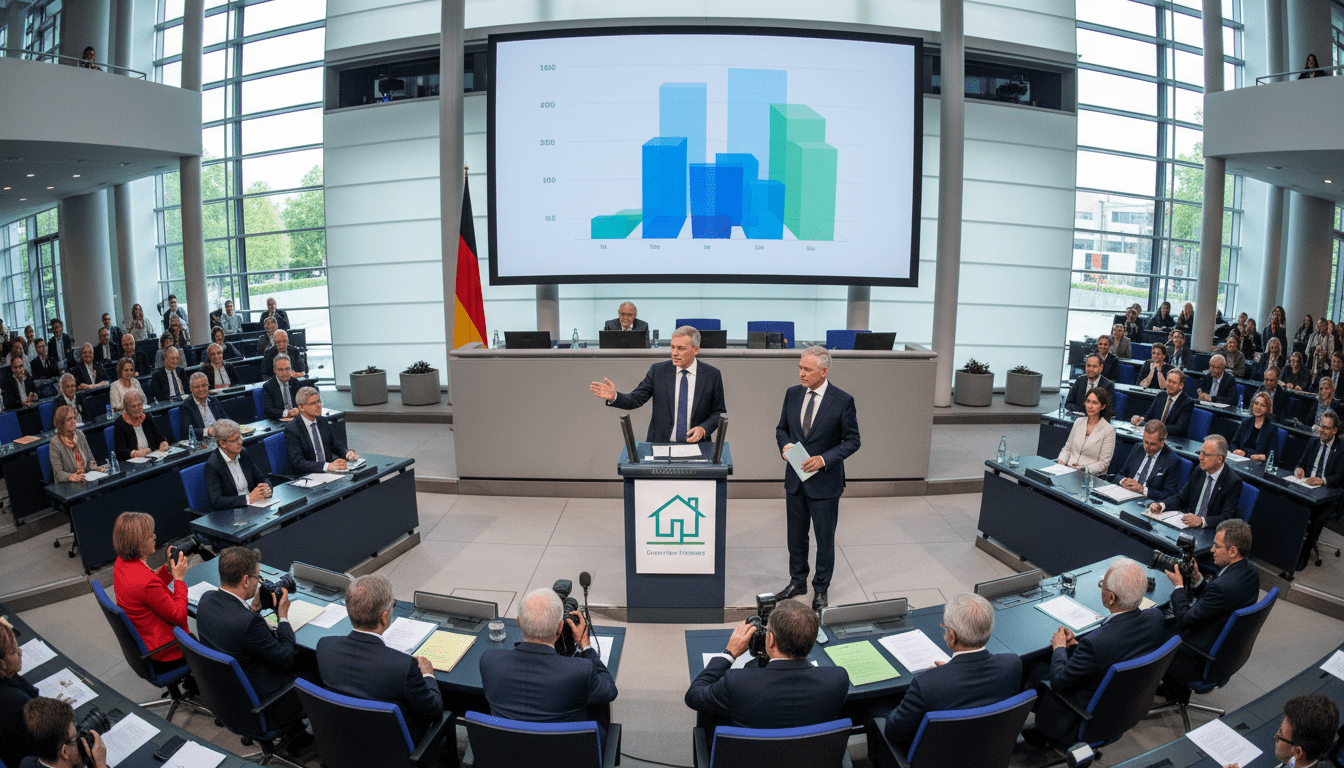
Germany heating law reform secures tenant cost cap as costs split with landlords
Coalition agrees to halve CO2, network and biogas cost risks for tenants while introducing landlord contributions for new fossil heating installations.
The ruling CDU/CSU–SPD coalition has agreed on a Germany heating law reform that introduces a legal cap on the costs borne by tenants, splitting cost risks between renters and landlords after heating replacements. SPD parliamentary leader Matthias Miersch said the deal will keep climate measures affordable for tenants and that cost risks for CO2 pricing, network charges and biogas will be “consequently halved.” The agreement, negotiated with ministers from both parties, is designed to apply to existing and future tenancy contracts following a heating changeover.
Agreement details on tenant protections
Under the coalition compromise, tenants will no longer carry the full burden of rising operating costs tied to heating transitions. Lawmakers agreed to allocate a defined share of expenses for CO2 levies, network fees and biogas between landlords and tenants, reducing the direct exposure of renters to sudden cost spikes.
SPD and CDU/CSU negotiators described the measure as a targeted tenant protection that follows the logic that those who decide the heating technology should also shoulder a portion of the associated economic consequences. The parties framed the change as ensuring climate policy does not translate into disproportionate household cost increases.
New landlord obligations for fossil fuel installations
As part of the reform, landlords will for the first time be required to co-pay elements of the ongoing costs when installing conventional gas or oil heating systems. Officials said this principle—placing economic responsibility on those who “create fossil facts”—is intended to re-align incentives around investment choices for building owners.
Union parliamentary leader Jens Spahn characterized the move as reversing the previous administration’s heating law approach and restoring “necessary freedom in basements,” while stressing the need for a fair balance between those who choose the heating technology and those who manage everyday energy use. The measure obliges landlords to contribute to network charges and fuel costs tied to new fossil fuel boilers.
How CO2, network charges and biogas are handled
The coalition says the reform will halve the cost risk stemming from CO2 pricing, grid tariffs and biogas price dynamics for tenants. That means statutory formulas or caps will determine how much of those line items may be recovered through operating cost passes to tenants after a heating replacement.
Legislators expect the change to moderate the short-term impact on utility bills by limiting pass-throughs, while maintaining price signals that support decarbonisation. The exact split, thresholds and calculation methodology are to be set out in the legislative text that defines the new cost-sharing regime.
Negotiation context and earlier proposals
The agreement follows a set of key points presented by the coalition at the end of February, when tenant protections and the risk of higher ancillary costs remained contentious. Opposition and tenant groups had warned that previous drafts could expose renters to steep increases in heating-related charges.
Throughout spring negotiations, ministers from both parties—among them Economy Minister Katherina Reiche (CDU) and Building Minister Verena Hubertz (SPD)—were involved in hammering out the formula that balances decarbonisation goals with social fairness. The compromise reflects those cross-ministerial talks as well as pressure from both parliamentary groups.
Implications for heating transitions and landlord decisions
Policy analysts say the new cost-sharing model may change landlord calculus when deciding whether to replace old systems with fossil-based boilers or invest in low-carbon alternatives. Sharing some ongoing fuel and network costs could make landlords more cautious about choosing new gas or oil installations if long-term liabilities rise.
Tenants, meanwhile, should see a reduced immediate hit to heating bills after a replacement, although final costs will still depend on overall energy market developments and the specific split codified in law. Market observers expect the reform to accelerate interest in electrification and renewable heating where feasible.
Next steps toward legislation and implementation
The parties must now translate the coalition accord into legislative text and guide it through parliamentary procedure before it becomes binding law. Officials have emphasized that the rules will apply to both existing and newly signed tenancy agreements once a heating exchange takes place, but the timing of enactment will depend on the parliamentary calendar and ministerial drafting.
Further technical work is required to define the precise calculation methods, transitional arrangements and enforcement mechanisms. Stakeholder consultations with tenant associations, landlords’ groups and energy regulators are likely as legislators finalize the details.
The coalition’s compromise aims to reconcile Germany’s decarbonisation objectives with social protections by limiting tenants’ exposure to energy cost volatility while attaching financial responsibility to property owners who opt for fossil heating systems.
