
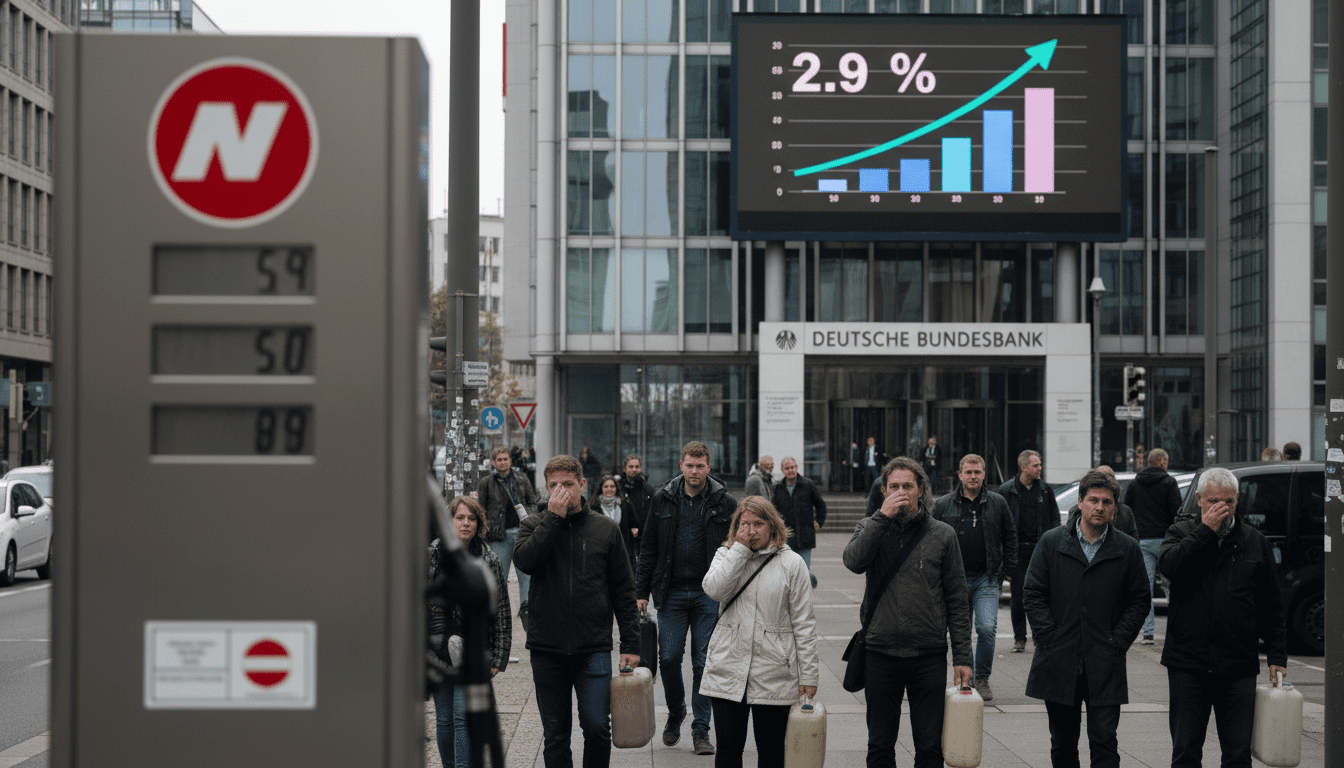
German inflation rises to 2.9% in April as energy costs surge
German inflation rose to 2.9% in April after oil-price spikes tied to the Iran conflict pushed energy costs higher and raised headline inflation, marginally.
Federal statistics office: Inflation at 2.9% in April
German inflation accelerated to 2.9 percent year-on-year in April, the Federal Statistical Office reported, up from 2.7 percent in March and 1.9 percent in February. This marks the highest reading since early 2024 and exceeded some expectations from market surveys. The agency’s figures show that the recent jump is driven primarily by higher energy costs rather than broad-based price increases.
Energy prices drive the uptick
Energy costs were the main contributor to the monthly rise, with nationwide energy prices up 10.1 percent compared with April of last year. Officials and economists link the jump to higher oil and gas prices following the outbreak of intensified military activity involving strikes on Iranian targets that began on 28 February. The disruption to shipping and tighter global supplies have pushed crude markets higher and fed through into pump and heating prices.
Sharp regional spikes in fuel and heating
Retail fuel prices saw particularly large increases in some regions, with diesel up 36.1 percent year-on-year in North Rhine-Westphalia and gasoline rising 18.8 percent in the same comparison. Heating oil costs climbed 27.3 percent, while district heating was about 2.0 percent more expensive than a year earlier. These pronounced regional and product-level movements underscore how concentrated energy shocks can translate into uneven price pressure for households.
Core inflation and food prices show restraint
Excluding food and energy, so-called core inflation rose by 2.3 percent, indicating that underlying price pressures outside the energy sector remain more contained. Food price inflation was modest at 1.2 percent in April, while services such as insurance and travel increased by 2.8 percent. Economists note that for now the inflation impulse appears concentrated in energy, rather than spreading broadly across goods and services.
Analysts respond and forecasts adjust
Analysts surveyed by news agencies had predicted a slightly larger rise, with some models pointing to 3.0 percent, but the official figure undershot those projections. Felix Schmidt, an economist at Berenberg Bank, said the Iran-related conflict and ensuing energy-price increases were the primary drivers of the latest data. Forecasters are now reassessing near-term inflation trajectories and the likelihood that energy shocks will filter into wage demands and broader price-setting behavior.
Policy and household implications
The renewed upward move in headline inflation is likely to feature in discussions among policymakers and central bank watchers, who must weigh whether recent pressures are temporary or more persistent. For households, the spike in fuel and heating costs will translate into higher living expenses at a time when many budgets remain stretched. Public and private sector decision-makers will be watching subsequent monthly reports for signs that energy-driven inflation is spreading to other parts of the economy.
The April data make clear that energy-market developments can quickly alter the inflation outlook in Germany, and subsequent months will be critical to determine whether the current rise proves temporary or signals a broader rebound in price growth.
