
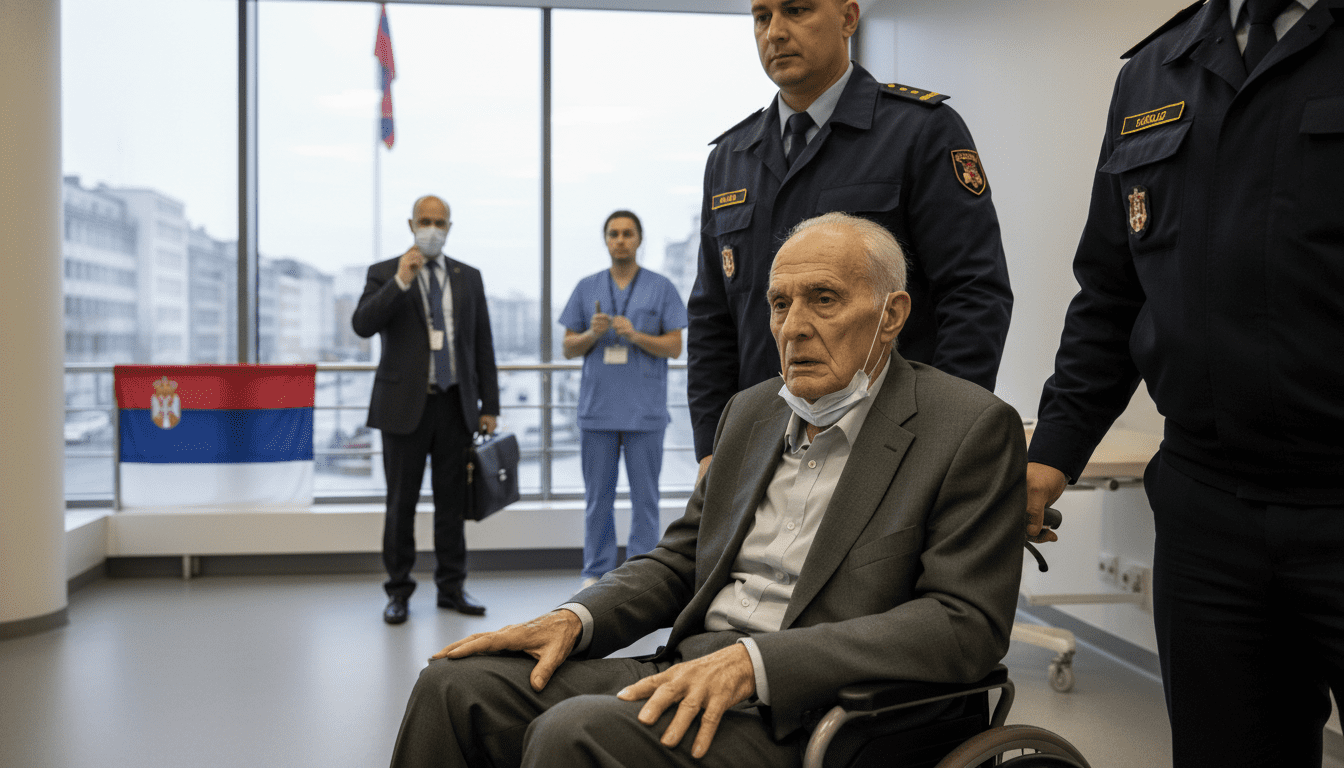
Ratko Mladić transfer request: Lawyers say 83-year-old wants urgent move to Serbia after stroke
Ratko Mladić transfer request: Lawyers say the 83-year-old convicted Bosnian Serb commander, following a recent stroke, urgently seeks transfer from The Hague to Serbia for further treatment and to be near family.
The lawyers for Ratko Mladić have formally requested that the 83-year-old, who is serving a sentence at the UN detention facility in The Hague, be moved to a medical facility in Serbia for continued care. The application, which was signed by his son Darko, follows medical assessments the legal team says show Mladić is gravely ill after suffering a stroke two weeks earlier. The request frames the transfer as necessary for ongoing treatment and to allow the former commander to be close to relatives during a period of serious illness.
Request and Medical Claims
Lawyers representing Mladić told the court that he urgently needs to be transferred to Serbia for further medical attention. They said physicians have concluded he is terminally ill following a stroke two weeks prior, and that confinement in The Hague is no longer appropriate for his care needs.
Darko Mladić, who co-signed the request, is cited by his lawyers as arguing that proximity to family and access to specific treatments in Serbia would improve his comfort and allow for better coordination of his medical regime. The legal filing asks the relevant authorities to expedite consideration given the allegedly deteriorating health of the former commander.
Legal Status and Conviction
Ratko Mladić was convicted by an international tribunal for crimes committed during the 1992–1995 Bosnian war, including charges related to Srebrenica. He is serving a sentence imposed by the court and remains in the custody of the international detention unit in The Hague.
His conviction and sentence are central to any transfer decision, since international courts retain authority over conditions of imprisonment and movements of convicted persons. Any change of location must align with existing judicial determinations and the terms under which Mladić remains detained.
Process for Transfers
Requests to move convicted persons from UN detention facilities typically require multiple approvals and formal medical assessments. Courts overseeing international sentences consider both legal and humanitarian factors, and they may ask for independent medical evaluations before granting any transfer.
Approval usually involves coordination between the tribunal or residual mechanism, the detaining authority, and the government proposing to receive the individual. Medical urgency can accelerate procedures, but legal safeguards and agreements between states commonly shape the timeline and outcome.
Family Statement and Son’s Role
Darko Mladić’s co-signature on the request underscores his active role in seeking care for his father. The family’s petition emphasizes the desire to have the former commander treated close to relatives and to ensure access to medical specialists in Serbia.
Family appeals in high-profile cases add a personal dimension to proceedings that are otherwise governed by international legal standards. Relatives’ requests are sometimes taken into account, particularly when medical evidence indicates serious or life-threatening conditions.
Potential Reactions and Wider Impact
A transfer request in a case of this profile is likely to draw attention from governments, survivors’ groups, and international observers. Decisions about moving a high-profile convicted figure between states can trigger public debate about accountability, victims’ rights, and the handling of justice for wartime atrocities.
Authorities and organizations that represent victims of the Bosnian war may respond to the filing, while diplomatic channels between The Hague and Belgrade could be engaged if the tribunal requests Serbia’s cooperation. Any approval or denial will probably be scrutinized both domestically and internationally.
The tribunal will now consider the application and any supporting medical documentation provided by Mladić’s legal team. Independent evaluations and procedural reviews are expected to follow before a final determination is made.
Efforts to balance medical compassion with legal obligations will guide the court’s response to the Mladić transfer request, and observers say the outcome will be watched closely by stakeholders across the region.
