
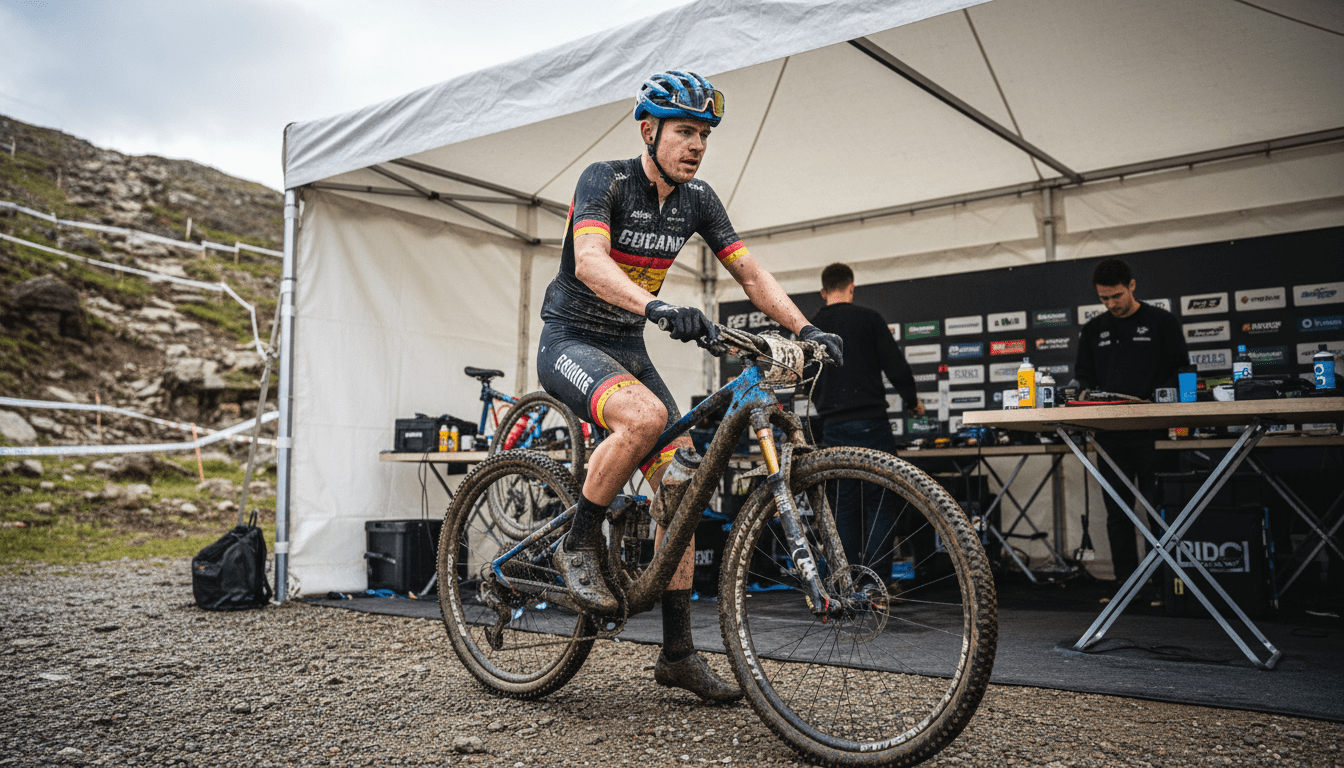
Luca Schwarzbauer Details Training, Toughest Race and Hands-On Bike Setup Advice
Luca Schwarzbauer discusses the sport’s toughest race, training with Florian Lipowitz and practical bike setup tips for riders looking to improve technique and performance.
Germany’s top mountain biker Luca Schwarzbauer has given a wide-ranging interview on April 28, 2026, addressing what he calls the hardest race he has faced, his recent training sessions with teammate Florian Lipowitz, and concrete advice for riders who want to tinker at home. Schwarzbauer framed his comments around the importance of early technical development and steady, methodical preparation for extreme events. He also offered hands-on tips for bike setup that he says can yield immediate improvements for amateur and semi-pro riders.
Schwarzbauer names the race that pushed him to the limit
Schwarzbauer described a recent multi-day endurance event as the toughest test of his career and said the combination of terrain and weather left little margin for error. He emphasized that sustained concentration across successive days, not just peak fitness, determines who finishes at the front. According to him, mechanical resilience and a conservative tactical approach often matter more than raw speed in races that stretch beyond a single stage.
He highlighted how back-to-back fatigue changes decision-making on descents and technical sections, forcing riders to adopt risk management strategies. Schwarzbauer said that riders who underestimate the cumulative effect of small errors pay dearly, particularly when the course features deep sand, loose rock or prolonged climbs that sap energy across long stages.
Training partnership with Florian Lipowitz
Schwarzbauer outlined a training routine that includes frequent sessions with Florian Lipowitz, combining endurance blocks with targeted technical drills. He said Lipowitz pushes the pace in intervals while they alternate leading on varied terrain to simulate race situations. The partnership, he added, helps sharpen both speed and bike-handling under stress.
Beyond intervals, Schwarzbauer said their team approach focuses on scenario planning: practicing puncture management, improving group navigation and rehearsing mechanical fixes. These drills are designed to make responses during a race almost automatic, reducing the risk that fatigue will cause a small issue to become race-ending.
On learning technique: childhood foundation and catch-up limits
Schwarzbauer stressed that core mountain-bike technique is usually absorbed early, often in childhood, and becomes instinctive over years of riding. He cautioned that while adults can make meaningful improvements, they face a steeper learning curve when trying to retrofit fundamental skills. For him, repetitive practice of bike position, line choice and balance are the building blocks that separate elite riders from the recreational field.
He recommended focused repetition rather than random practice for riders wanting to improve. Exercises such as slow-speed balance drills, manual practice and controlled descending runs produce measurable gains when done deliberately and frequently, he said.
Practical bike setup and tinkering tips for riders
Schwarzbauer offered hands-on guidance for riders who maintain their own bikes, emphasizing small adjustments that have outsized effects. He recommended starting with tire pressure tuned to terrain, explaining that a slightly lower pressure can increase traction in sand and loose dirt without sacrificing rolling efficiency on softer sections. He also advised checking suspension sag and rebound settings regularly to match weight and riding style.
Brake checks and a clean, lubricated drivetrain were listed as non-negotiable before multi-stage races. Schwarzbauer encouraged riders to carry a basic repair kit and practice key fixes—changing a tube, adjusting brake pads and reseating a derailleur hanger—so they can act quickly when a problem arises. He warned against overcomplicating setups with marginally useful parts, recommending instead a patient, iterative approach to changes.
Race tactics, pacing and recovery strategies
On race day, Schwarzbauer said pacing and small tactical decisions matter more in extended events than one-off bursts of speed. He underlined the importance of conserving glycogen through steady power output on long climbs and using short, controlled surges to pass or defend positions. Strategic drafting on flatter sections and choosing the right moment to expend energy in technical passes often decide final standings.
Recovery, he noted, is integral to multi-day performance. Schwarzbauer described routines that include immediate nutrition after stages, active recovery spins and prioritised sleep. He advised riders to treat recovery as part of race strategy rather than an afterthought, saying that even modest gains in nightly recovery compound across multi-day events.
Equipment restraint and data-driven adjustments
Schwarzbauer advocated a pragmatic equipment philosophy: reduce complexity and focus on reliability, then use data to guide fine-tuning. He said telemetry from training rides—power, heart rate and GPS—lets riders identify where they lose time and what technical skills need reinforcement. Small, data-driven adjustments to saddle position, handlebar width or suspension setup can improve comfort and efficiency without wholesale equipment changes.
He also urged riders to document modifications and evaluate them over several rides before declaring a change successful. That discipline, according to Schwarzbauer, prevents chasing marginal gains that offer little real-world benefit while complicating maintenance and increasing the risk of mechanical failure in long races.
Schwarzbauer concluded the interview by urging aspiring riders to balance ambition with patience and to treat both skill development and bike maintenance as long-term projects rather than quick fixes. He framed success in endurance mountain biking as the product of steady technique work, disciplined preparation and thoughtful equipment choices.
