
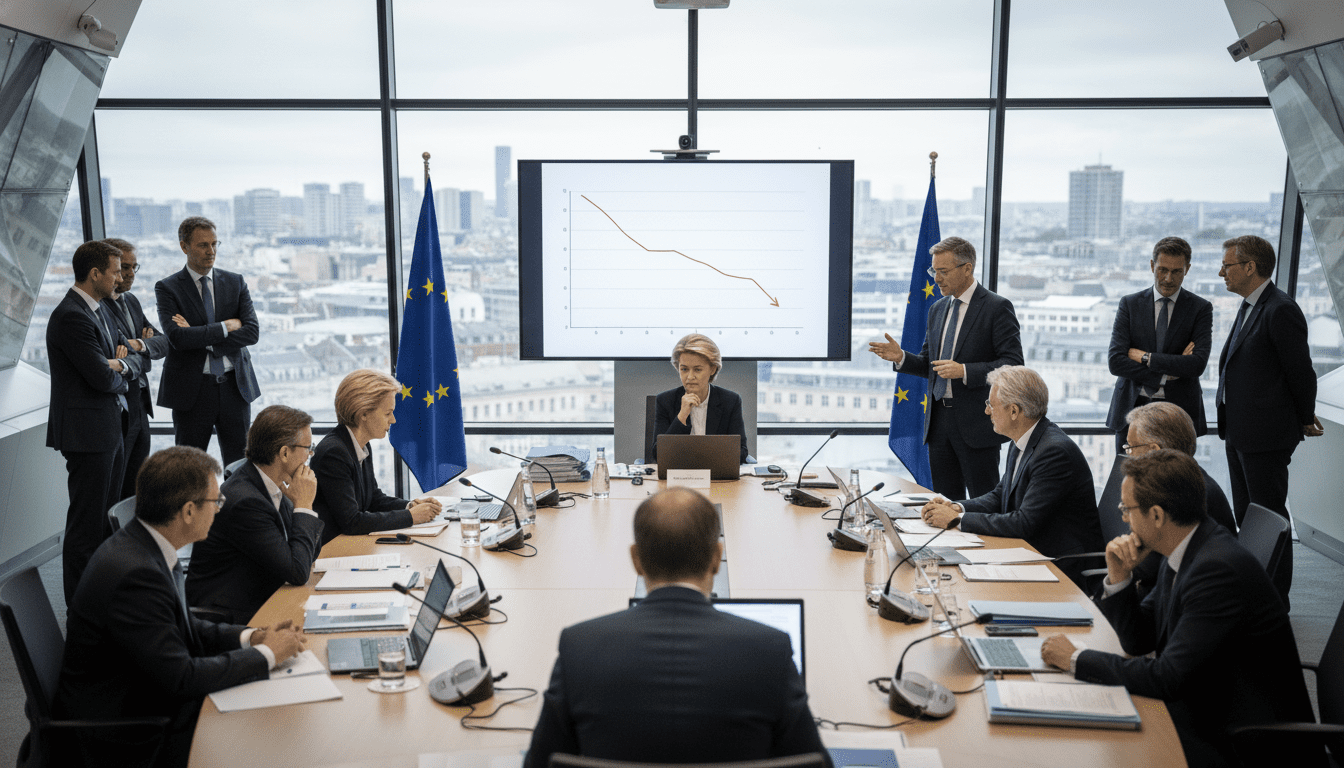
EU to unveil May 2026 energy efficiency proposals as experts warn of growth trade-offs
EU readies May 2026 energy efficiency proposals as experts debate if targets can align with growth; Germany needs steep efficiency gains to hit 2030 goals.
Energy efficiency will be at the center of a new European Commission package due in May 2026 as Brussels seeks immediate savings and long-term demand reductions to bolster energy security and accelerate the green transition. The Commission’s initiative aims to cut consumption sharply before 2030, but economists and industry groups are divided over whether the targets can coexist with economic growth. Germany, in particular, faces a demanding path to meet national reduction commitments while preserving competitiveness.
Commission sets short-term action and long-term ambition
The European Commission has signalled a two-track approach: immediate measures to curb consumption and a longer-term push to electrify the economy while improving efficiency. Officials say the May 2026 proposals will include options for member states to reduce energy use quickly and to incentivize more efficient deployment of electricity as renewables expand. The intent is to lower reliance on imported oil and gas and to make progress toward the EU’s climate objectives.
2030 targets and the math behind them
Under the EU’s revised framework, final energy consumption is to fall by 38 percent relative to a baseline scenario, targeting a ceiling of about 763 million tonnes of oil equivalent by 2030. That measure of consumption is central to Brussels’ plans and will guide national policymaking and reporting. Member states that have already transposed EU goals into domestic law face differing national reductions; Germany’s law requires a 22 percent cut in consumption by 2030 from the national baseline.
Economists calculate steep required efficiency gains
Several economists have quantified the gap between current trends and needed improvements. Clemens Fuest of the Ifo Institute has modelled a pathway in which Germany would need energy efficiency gains of roughly four percent per year to reconcile the EU’s consumption ceiling with a modest annual GDP growth of 1.2 percent. By contrast, historical efficiency improvements averaged about 1.4 percent annually, a pace that would force difficult trade-offs and could imply significant industrial contraction if sustained to 2030.
Policy experts caution on zero-growth implications
Marc Oliver Bettzüge, director of the Energy Economics Institute (EWI) in Cologne, warns that the combined assumptions in Germany’s efficiency law — a mandated annual consumption reduction of 2.2 percent alongside projected energy productivity growth of about 2.1 percent — amount to a scenario of near-zero output growth. Analysts point out that exceptional years during the 2022 energy shock produced stronger productivity gains, but those were driven by production slowdowns rather than structural efficiency improvements, and productivity rebounded negatively after the crisis eased.
Industry groups and climate institutes push for continued targets
Advocates for maintaining efficiency objectives argue that abandoning them would undermine both energy security and climate commitments. Christian Noll of the German Business Initiative for Energy Efficiency (DENEFF) says many firms still have untapped potential to cut energy intensity, and without binding goals the EU risks falling short on import reduction and emissions targets. Researchers at the Wuppertal Institute also stress that renewables alone cannot deliver the required emissions reductions cost-effectively; efficiency measures remain a cheaper and necessary complement to scaling wind and solar.
Debate over green power, allocation and industrial strategy
A central point of contention is how efficiency caps interact with an increasingly renewable electricity system. Critics note that rules limiting total consumption do not distinguish between fossil and low-carbon power, potentially constraining productive use of renewable surpluses when wind or solar output is abundant. Proponents counter that targeted efficiency, coupled with a strategic industrial shift toward less energy‑intensive, higher-value production, can preserve competitiveness without returning to fossil dependency. Some analysts suggest that where abundant green power exists globally, production of energy-intensive basic materials may shift geographically unless domestic policy fosters structural transformation.
The European Commission’s May 2026 proposals will therefore have to balance immediate demand-reduction measures, incentives for electrification, and signals for industrial policy to manage competitiveness risks. Member states and industry will watch closely whether Brussels opts for flexible instruments, binding limits, or a mix of regulatory and market-based tools.
The months ahead will test whether policymakers can design energy efficiency measures that secure supply and cut emissions without imposing untenable constraints on growth, and whether national strategies can steer industry toward less energy-intensive, higher-value activities while expanding renewable capacity.
