
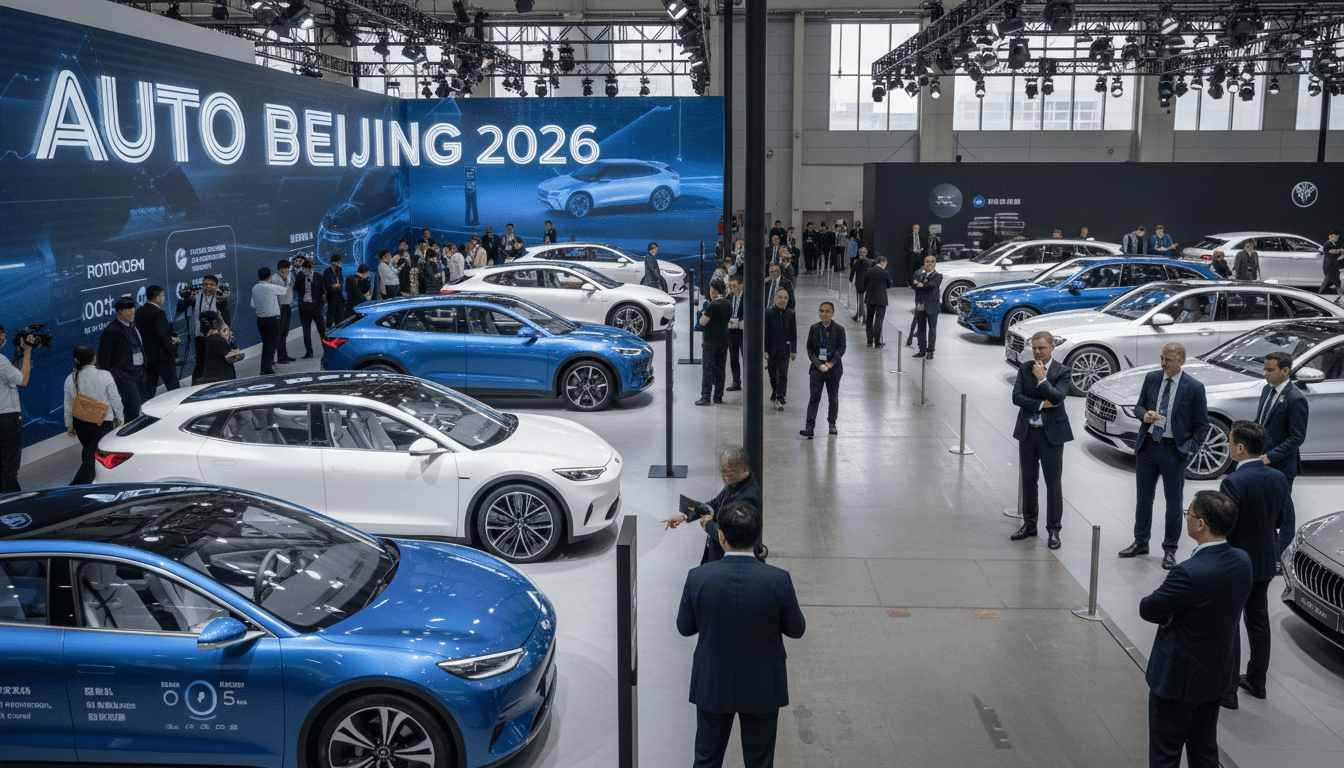
Auto Beijing 2026: China Puts EV Revolution on Display as Global Makers, Including German Brands, Shift Strategy
Auto Beijing 2026 enshrined China’s EV push at the National Museum, as German automakers and rivals race to win market share through localization and tech.
China’s flagship auto exhibition, Auto Beijing, opened this spring with an unmistakable message: electric vehicles are now part of the country’s national narrative. At the National Museum in central Beijing a special exhibit framed the e-mobility transition as an achievement of state policy, while the trade fair on the city’s outskirts hosted global manufacturers seeking a foothold in the world’s largest car market. The tone set at the museum and on the show floor underscored how closely industry, politics and national ambition have become intertwined.
National Museum Frames China’s EV Drive
A curated display at the National Museum placed electric models and industry milestones alongside artifacts of modern manufacturing, signaling official endorsement of the EV transition. State media and senior leaders were quoted in the exhibit, and the presence of a flagship Aito M9 SUV underscored the elevation of domestic brands. Organizers used the venue to link the recently completed Five-Year Plan to industrial achievements, framing EV development as a strategic success.
The museum presentation extended beyond symbolism and into messaging about sovereignty and technological self-reliance. By situating e-mobility in a national-history context, authorities sought to normalize rapid market shifts and to encourage public pride in Chinese manufacturing. The exhibition sent a clear signal to foreign automakers that the Chinese market is both a commercial battleground and a stage for state-directed narratives.
Aito M9 Presented as a Showcase Example
Among the works on display, the M9 from Aito — finished in a deep red — was highlighted as a modern exemplar of domestic luxury electric vehicles. Officials pointed to the model as evidence that Chinese firms can now produce vehicles that compete on design and technological content with foreign rivals. The placement of a single model in a state museum amplified its symbolic value beyond typical showroom promotion.
This positioning also underlined Beijing’s willingness to celebrate homegrown champions as part of broader industrial policy goals. For market observers, the M9’s prominence illustrated the political capital available to companies that align with national priorities in areas such as battery supply chains and software integration.
German Automakers Reassert Presence at Auto Beijing
Several major German manufacturers used Auto Beijing to signal that they remain relevant to Chinese consumers and policymakers. Displays and product launches emphasized electrified variants, updated software features and locally tailored designs intended to appeal to Chinese tastes. Company executives present at the fair stressed partnership and adaptation rather than confrontation as the path to growth in China.
At the same time, German brands face a balancing act: defending their premium positioning while accelerating localization to meet cost and feature expectations set by domestic competitors. The tone among visiting managers suggested cautious optimism, combined with recognition that market leadership will require deeper integration with local supply chains and digital ecosystems.
Localization and Partnerships Drive Strategy
A recurring theme across exhibits and executive statements was localization — from manufacturing and procurement to software and marketing. Joint ventures, technical collaborations and localized R&D centers were emphasized as essential tools for foreign brands to remain competitive. Automakers are increasingly investing in China-specific platforms and user interfaces that reflect local consumer behavior and regulatory requirements.
Beyond hardware, electrification has made software stewardship central to market strategy, prompting foreign firms to negotiate data arrangements and develop local talent pools. The shift toward China-centric development cycles reflects the scale and speed of demand, and it has prompted new forms of cooperation between international brands and Chinese tech and OEM partners.
Domestic Rivals Intensify Competitive Pressure
Chinese manufacturers entered Auto Beijing with an array of new models and technological claims, reinforcing their position as pace-setters in areas such as battery innovation and price-performance. Aggressive product rollouts and fast iteration cycles have compressed development timelines and altered consumer expectations. For foreign competitors, this intensifying rivalry raises the bar on cost, feature sets and the speed of introducing updates.
Market observers noted that many domestic brands now combine attractive pricing with advanced features that were once the preserve of established foreign manufacturers. The result is a more complex competitive landscape in which scale, software competence and supply-chain control often outweigh legacy brand equity.
Outlook for Global Automakers After Auto Beijing
Auto Beijing 2026 made clear that the Chinese market will be decisive for the global auto industry’s electric future. For German and other international manufacturers, the immediate challenge is to accelerate localization while protecting brand identity and margins. Strategic partnerships, greater local decision-making and investments in China-focused design and software will shape who wins the next phase of the market.
The political framing of e-mobility adds another layer of complexity, as state backing for domestic champions can alter competitive dynamics overnight. Global automakers must now calibrate commercial strategy to a market where industrial policy and consumer demand move in tandem.
The displays at Auto Beijing and the state-sponsored museum exhibit together underscore a critical fact: China’s electric-vehicle transition is no longer solely a market phenomenon but a declared element of national progress, and foreign firms will need to adapt rapidly if they are to remain influential in shaping automotive futures.
