
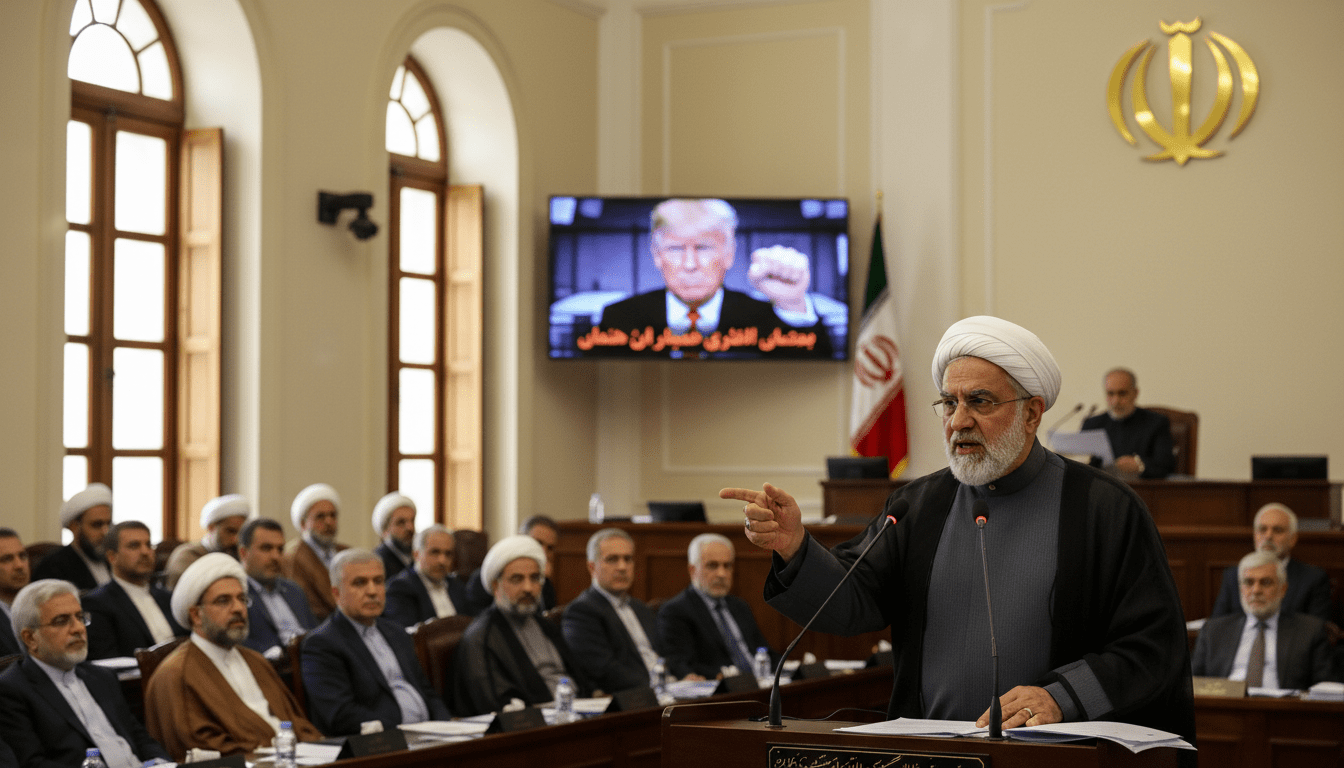
Tehran rejects US negotiations under threats, Qalibaf says Trump seeks “table of surrender”
Tehran rejects US negotiations under threats, Iran’s parliament speaker Mohammad Baqer Qalibaf said on X, accusing Trump of seeking a “table of surrender”.
Qalibaf rejects talks framed by coercion
Iran’s top negotiator and parliament speaker Mohammad Baqer Qalibaf said on Monday that Tehran rejects negotiations with the United States under threats.
He framed the U.S. approach as an attempt to force Iran into concessions, saying President Donald Trump sought to turn the negotiating table into a “table of surrender.”
Qalibaf made the remarks in a post on the social platform X, underscoring Tehran’s stance that diplomacy must proceed without coercive pressure.
The statement was presented by Iranian officials as a clear red line for any future direct or indirect talks with Washington.
Language posted on X underscores hardline posture
The use of the phrase “table of surrender” in Qalibaf’s post signaled a strongly worded rejection rather than a calibrated diplomatic response.
By publishing the warning on X, Qalibaf addressed both domestic audiences and international observers, using a rapid public channel to set Iran’s negotiating terms.
The choice of platform and pointed language reflects a broader pattern in recent years where Iranian leaders publicly clarify limits before entering any back-channel discussions.
That approach aims to shape expectations and constrain negotiators who might otherwise pursue compromises seen as politically risky at home.
Immediate implications for US-Iran diplomacy
Qalibaf’s remarks raise the prospect of higher barriers to restarting formal talks between Tehran and Washington.
By rejecting negotiations “under threats,” Iran signals it will demand substantive guarantees about the nature and sequence of any concessions.
The statement could complicate efforts by third-party mediators or European intermediaries that have sought to bridge differences.
It may also harden U.S. calculations about how to combine pressure with offers to secure Iranian concessions on nuclear and regional issues.
Political calculus within Tehran
As both parliament speaker and a lead negotiator, Qalibaf occupies a role that blends domestic politics with foreign policy signaling.
His comments are likely aimed at consolidating support among conservative factions that oppose concessions perceived as capitulation.
Public declarations of resolve can strengthen negotiating leverage at home by limiting rivals’ ability to advocate compromise.
At the same time, a firm line risks narrowing tactical flexibility for Iran’s diplomatic corps in international talks.
Potential reactions from Washington and partners
The statement is likely to be received in Washington as a clear rebuke to any U.S. tactic that pairs pressure with conditional talks.
U.S. officials have in the past used sanctions and maximum-pressure campaigns alongside offers of negotiation, and Tehran’s rejection complicates that mix.
European and regional partners that have acted as intermediaries may now find it harder to propose sequencing that satisfies both capitals.
Diplomatic channels that rely on ambiguity and private exchanges could face increased public scrutiny as a result.
Wider regional and strategic consequences
A refusal to engage under perceived threats could prolong standoffs over Iran’s nuclear program and its regional activities.
Prolonged diplomatic impasses increase the chance that tensions will be managed through deterrence rather than negotiated settlement.
That dynamic can lead to episodic escalations, with implications for energy markets, regional security, and the calculations of neighboring states.
Foreign ministries and international organizations monitoring the situation will likely intensify calls for de-escalatory measures to preserve space for diplomacy.
Qalibaf’s public dismissal of negotiations conducted under pressure sets a firm rhetorical boundary in an already fraught relationship between Tehran and Washington, and it will shape how mediators and capitals approach any future attempts to reopen dialogue.
