
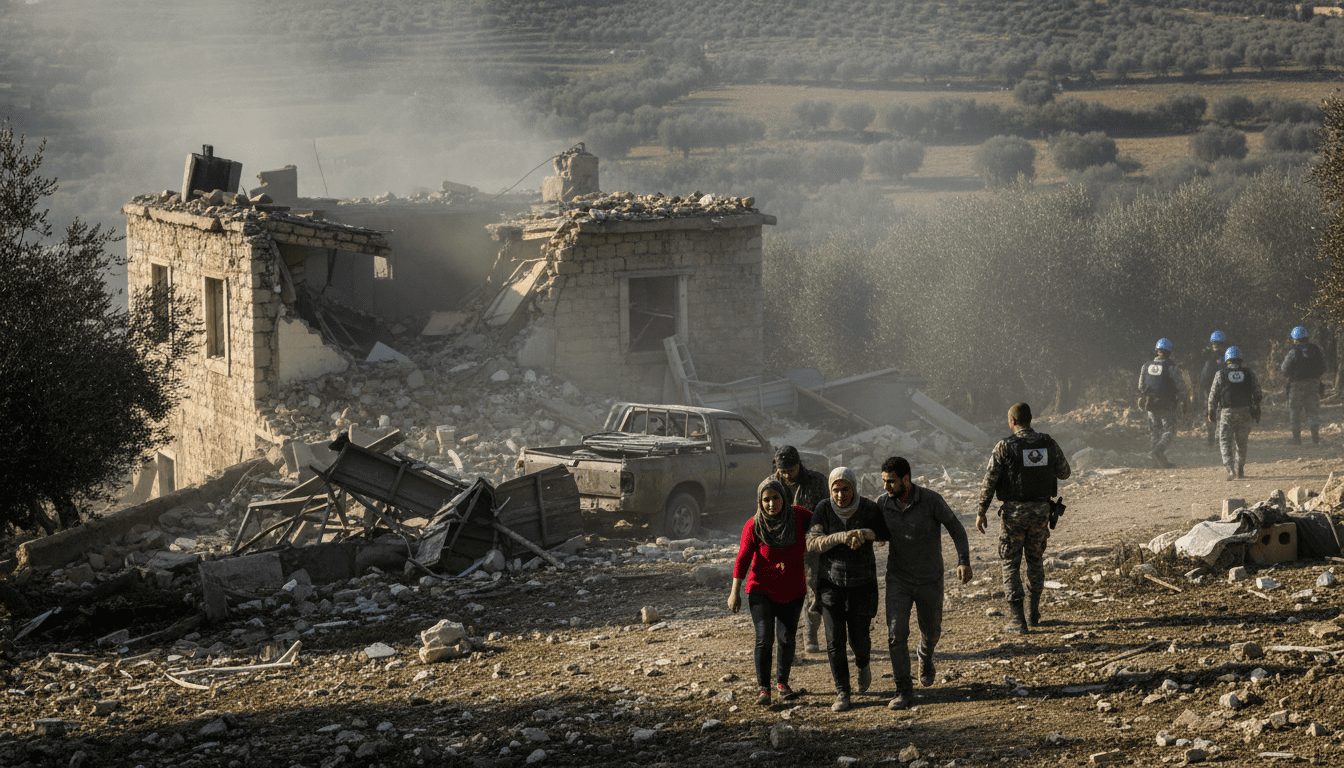
Israeli attacks on southern Lebanon continue despite US ceasefire; hospital strike wounds 12
Israeli attacks on southern Lebanon continued after a US ceasefire; shelling struck Nabatieh and Tyre and an air strike near Jabal Amel Hospital wounded 12.
Israeli attacks on southern Lebanon resumed on Friday morning despite a US-led ceasefire agreed late on Wednesday, according to local reports. The National News Agency reported shelling near Nabatieh’s Burj Qalaouiyah and strikes around Deir Kifa in the Tyre district. An air strike in the vicinity of Jabal Amel Hospital wounded at least 12 civilians, hospital officials and local sources said. The incidents highlight continued volatility in the south even as diplomats pushed for a pause in hostilities.
Ceasefire agreement and its immediate aftermath
The ceasefire, brokered by international mediators and described by officials as US-led, was announced late on Wednesday in an effort to halt cross-border exchanges. Despite the announcement, witnesses and local media reported renewed rounds of shelling and at least one air strike in southern Lebanon on Friday morning. Military spokespeople for the parties involved have so far provided limited public comment on the breaches reported by local agencies. The gap between diplomatic statements and activity on the ground has raised questions about enforcement and verification mechanisms.
Reported strikes near Nabatieh and Tyre
Local outlets said rounds landed in areas around Nabatieh’s Burj Qalaouiyah and near Deir Kifa in the Tyre governorate, damaging properties and disrupting civilian movement. Residents described scenes of panic as families sought shelter and emergency services responded to the impacted neighborhoods. No independent verification of the precise targets was immediately available, and relief groups cautioned that access to some locations remains restricted. The proximity of populated villages to the reported impacts underscores the danger posed to non-combatants living along the border.
Hospital strike and civilian casualties
An air strike struck the vicinity of Jabal Amel Hospital, wounding at least 12 civilians, the National News Agency reported, citing medical staff and local sources. Hospital officials said some of the wounded were treated on site while others were transferred to nearby facilities, and that the facility itself did not sustain catastrophic structural damage. Humanitarian groups noted that strikes near medical centers risk violating protections established under international humanitarian law. Medical staff called for immediate assurances that hospitals and ambulances would be respected as neutral, protected sites.
Humanitarian response and access challenges
Local health authorities and aid organizations mobilized to tend to the wounded and to assess damage to civilian infrastructure, but responders described significant logistical challenges. Roads intermittently closed by ongoing shelling and shortages of fuel and medical supplies complicated emergency evacuations. Aid agencies urged corridors for safe passage and swift authorization for relief convoys to reach affected communities. The disruption of services compounded worries about longer-term access to critical care for the displaced and injured.
Diplomatic appeals and international concern
Diplomats and international organizations called for strict adherence to the ceasefire terms and for investigations into reports of strikes on civilian areas and health facilities. The US and other mediators stressed the importance of de-escalation in statements linked to the ceasefire, while humanitarian actors emphasized the urgent need to protect civilians. Observers warned that violations could further destabilize the region and hinder ongoing diplomatic efforts. International monitors, where present, said they were seeking to document incidents and verify compliance with the agreement.
Uncertainty over implementation and potential next steps
Observers on the ground said the pattern of intermittent cessation and renewed strikes has complicated efforts to establish a durable calm. Verification mechanisms, including the presence of independent monitors or agreed reporting channels, will be critical to reduce misunderstandings and to hold parties accountable for breaches. Humanitarian leaders urged immediate measures to secure safe access to hospitals and relief supplies, and diplomatic envoys indicated talks would continue to shore up the ceasefire’s terms. Without clear enforcement, communities along the border face the prospect of repeated exposure to violence.
The reported strikes and the wounding of civilians near Jabal Amel Hospital reflect persistent risks to non-combatants in southern Lebanon even as negotiators attempt to put a halt to hostilities. Continued monitoring by local media and humanitarian organizations, and pressure from international actors, will influence whether the ceasefire can be translated into a sustained reduction in violence.
