
French business leaders begin meeting Marine Le Pen as media ties tighten
French business leaders engage with Marine Le Pen as media moguls reshape outlets, signaling convergence of corporate power and the far right before 2027.
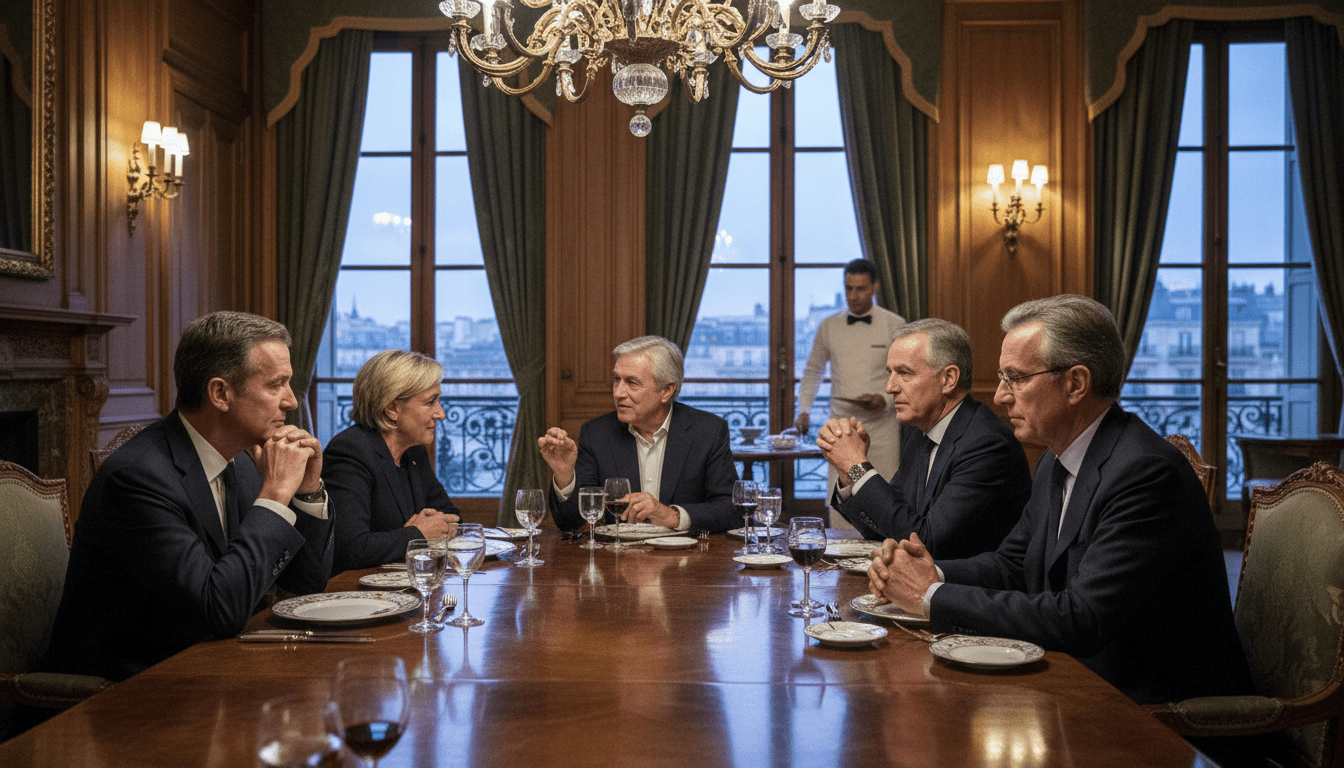
When France’s leading entrepreneurs who once kept their distance from Marine Le Pen now accept invitations to dine and talk, the move marks a striking shift in the country’s political landscape. Business figures who historically backed centrist candidates are reassessing alliances as influential media owners consolidate outlets and amplify partisan messaging. The growing overlap between corporate circles and right‑wing politics is reshaping both electoral dynamics and media influence ahead of the 2027 presidential vote.
Major French entrepreneurs open talks with Marine Le Pen
Several prominent business leaders have begun private meetings with Marine Le Pen, according to multiple accounts from Paris social and corporate circles. These gatherings range from dinners to informal briefings, reflecting a pragmatic recalculation by executives weighing political risks and opportunities. The shift follows changes in France’s economic and political environment, where concerns over regulation, immigration and domestic stability are driving new conversations.
Journal du Dimanche and Sunday media reposition
One visible sign of the change is the editorial trajectory of once-centrist outlets such as the Journal du Dimanche (JDD). Long regarded as a moderate Sunday paper, the title’s coverage has moved toward a more politically charged line in recent months. Observers say that this editorial repositioning coincides with ownership interests and broader strategic uses of media platforms in advance of national elections.
Vincent Bolloré’s expanding footprint in publishing and news
Vincent Bolloré, a veteran media investor with longstanding business interests in France and abroad, has played a central role in several recent media transactions that critics say favor partisan agendas. Beyond broadcast and distribution assets, Bolloré’s influence extends into book publishing houses such as Grasset, altering messaging channels that reach policymakers and voters. Media analysts caution that concentrated ownership gives individual tycoons leverage to shape public debate at scale.
Business calculations ahead of the 2027 presidential contest
For many executives, outreach to Marine Le Pen is framed as risk management ahead of the 2027 presidential campaign season. Companies evaluate regulatory proposals, trade policies and labor reforms that could change under different administrations, and that calculus drives meetings with candidates across the spectrum. At the same time, some business leaders view cultivated ties to a potential future government as simply part of normal political engagement in a highly polarized environment.
Reactions from political parties and journalists
Mainstream political parties and independent journalists have responded with alarm to the evolving alignment between certain business interests and the far right. Opposition voices argue that sustained media backing coupled with corporate legitimization could narrow the space for unbiased reporting and weaken democratic scrutiny. Media organizations and press freedom advocates have called for transparency around ownership and editorial control to preserve pluralism ahead of the election.
Implications for media independence and public discourse
The confluence of concentrated media ownership and high‑profile business engagement with political figures risks blurring the line between commerce and civic debate. When outlets that once acted as moderating institutions adopt partisan tones, public confidence in the news ecosystem can erode. Analysts warn that such trends may accelerate information silos and make it harder for voters to access balanced perspectives during a critical electoral cycle.
The unfolding realignment between parts of France’s corporate elite and Marine Le Pen reflects broader questions about power, influence and accountability in contemporary democracies. As media owners and entrepreneurs pursue strategic relationships in the run‑up to 2027, regulators, journalists and civil society will face renewed pressure to monitor the intersections of wealth, information and politics. Ultimately, the decisions of business leaders and media proprietors this year are likely to reverberate through France’s public debate and its next national vote.
