
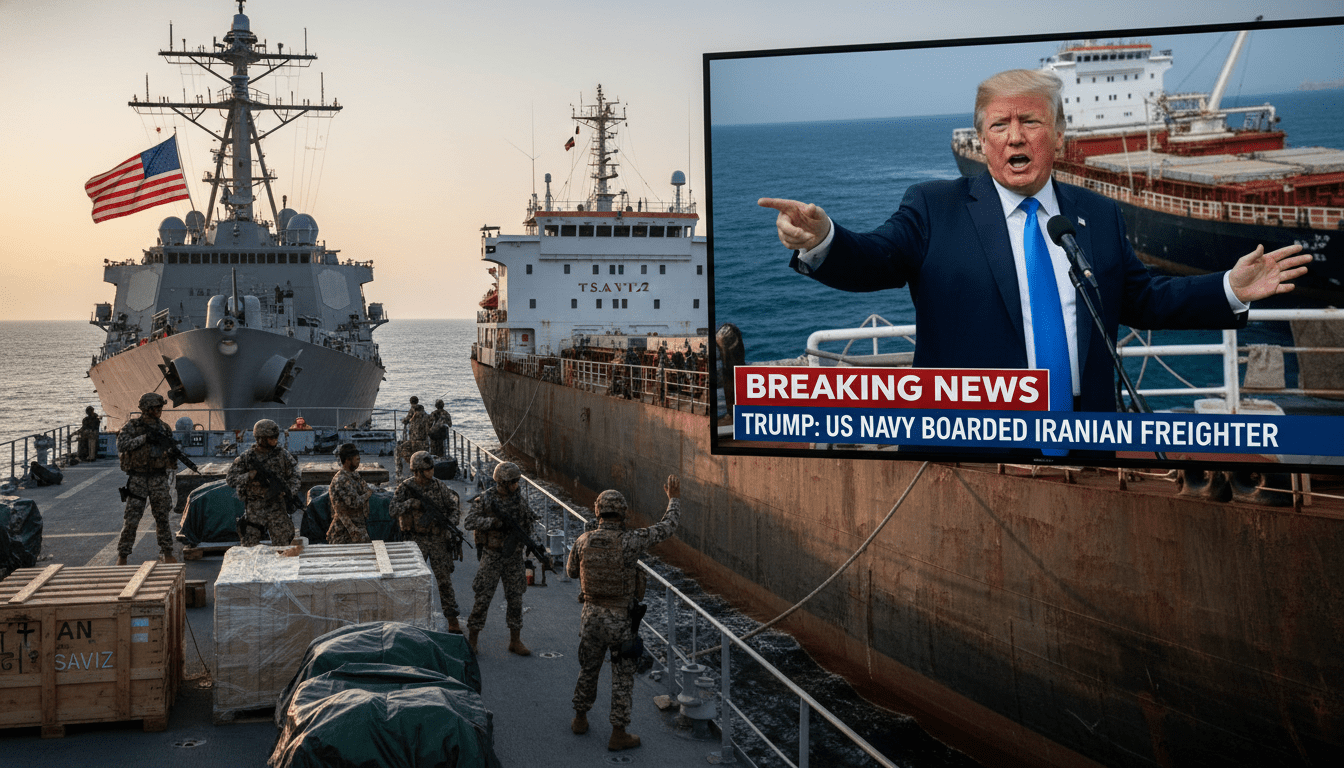
Strait of Hormuz tanker damaged after vessel ignored orders, U.S. president says
U.S. president: vessel ignored orders and “a hole in the engine room was blown” on a Strait of Hormuz tanker; Witkoff and Kushner travel to Islamabad as Iran says talks are far from final.
A U.S. president announced that a vessel anchored in the Strait of Hormuz ignored orders to stop before “a hole in the engine room was blown,” raising fresh concerns about maritime security in the strategic waterway. The incident, captured in images of a boat passing a tanker at anchor, led Washington to describe a deliberate action that inflicted significant damage to the vessel. At the same time, private and diplomatic movements sharpened regional attention: investors and negotiators including Witkoff and Kushner traveled to Islamabad for talks, while Iranian officials said they remained far from a final agreement with the United States.
Incident reported by U.S. president
The U.S. president said the vessel did not comply with repeated orders to halt, and that forces subsequently observed an explosion that created “a hole in the engine room.”
U.S. officials framed the damage as deliberate and pointed to the risk posed to commercial shipping and crew safety in the Strait of Hormuz. The president’s account immediately set a tone of urgency and prompted calls for further investigation into who carried out the attack and why the orders were ignored.
Damage assessment and immediate response
Maritime authorities and on-scene observers reported that the tanker remained at anchor after suffering damage to its propulsion compartment.
Crew safety measures were prioritized, and emergency teams inspected the engine room and surrounding compartments to assess flooding and mechanical failures. Officials said preliminary assessments would be followed by a formal inquiry to determine the cause and the responsible party.
Diplomatic and private delegations head to Islamabad
Separately, developers and advisers including Witkoff and Kushner traveled to Islamabad for negotiations, a movement that intersected with the unfolding maritime incident.
Organizers described the trip as part of broader discussions that include security, investment, and regional coordination, though details of the talks were not immediately disclosed. The timing of the delegation’s travel coincided with heightened attention to Gulf security and added a diplomatic dimension to a day already marked by crisis management.
Iran’s stance on negotiations with the United States
Tehran said it remained “far from” reaching a final agreement with the United States, signaling continued gaps on critical issues even as tensions at sea escalated.
Iranian officials emphasized that substantive differences persisted and cautioned against premature expectations of resolution. The comment underscored a broader diplomatic impasse that has implications for regional stability and for efforts to de-escalate maritime confrontations.
Regional security implications for shipping lanes
The Strait of Hormuz is a vital conduit for global oil and cargo shipments, and any attack on a tanker there immediately ripples through international trade and insurance markets.
Shippers and maritime insurers will likely reassess risk and transit patterns, and naval contingents in the region may step up patrols and escort operations to protect commercial traffic. Analysts say sustained pressure on the shipping lane could raise costs and complicate already fragile supply chains.
International reactions and investigations under way
Allied governments called for a thorough, transparent investigation into the damage, and maritime organizations urged restraint and verification of facts before apportioning blame.
Diplomatic channels were activated to gather information from the ship’s operators, satellite imagery providers and regional authorities, while military and civilian maritime agencies coordinated to document the scene. Officials emphasized the need for verified evidence to support any further diplomatic or military response.
The incident in the Strait of Hormuz and the parallel diplomatic movements to Islamabad add a complex layer to an already tense regional picture. International stakeholders will be watching the formal inquiry’s findings, the progress of negotiations involving private and public actors, and Tehran’s statements on future talks. The immediate priorities remain crew safety, a transparent investigation, and steps to prevent further escalation that could endanger commercial traffic through one of the world’s most important maritime chokepoints.
