
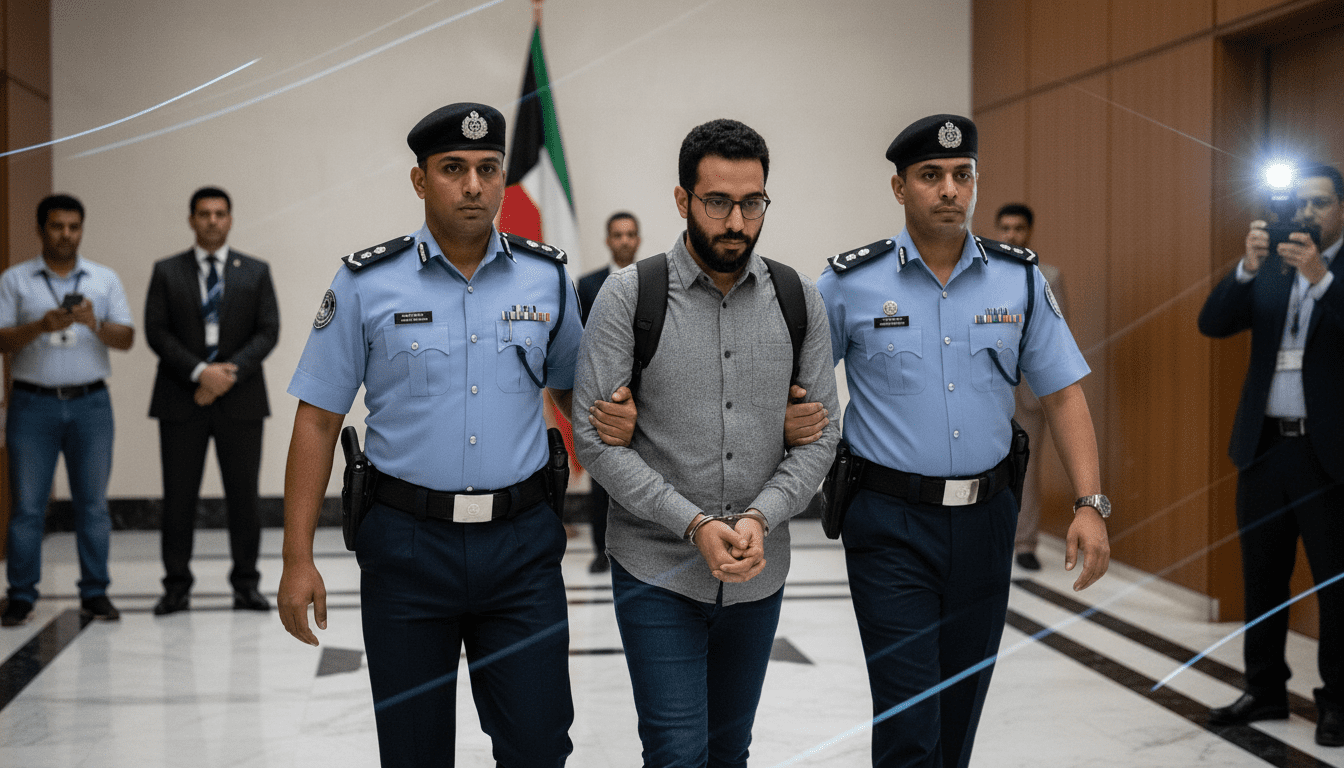
Kuwait detains US-Kuwaiti journalist Ahmed Shihab-Eldin amid tightened Gulf reporting limits
US-Kuwaiti journalist Ahmed Shihab-Eldin has been detained in Kuwait after disappearing on March 2 while visiting family, charged with spreading false information and harming national security.
Ahmed Shihab-Eldin disappeared on March 2 while visiting family in Kuwait and has not been seen in public or posted online since, his advocates say. The Committee to Protect Journalists reported his detention and says Kuwaiti authorities have brought charges that include spreading false information, harming national security and misusing a mobile phone. The case comes as Kuwait and other Gulf states tighten rules and enforcement around reporting tied to the war involving Iran.
Disappearance and confirmed detention
The Committee to Protect Journalists said Shihab-Eldin, 41, vanished from public view on March 2 during a family visit to Kuwait. He had been active online prior to that date, but his public accounts went silent after his disappearance.
According to the watchdog, Kuwaiti authorities later detained him and formally charged him with offenses related to information dissemination and national security. Kuwaiti officials have not publicly responded to requests for comment on the case.
Official charges and legal basis
Sources close to the case cited by press freedom groups say Shihab-Eldin faces accusations of spreading false information, harming national security and misusing his mobile phone. Those charges carry significant penalties under Kuwait’s criminal code and recent amendments to security-related statutes.
On March 15, Kuwait adopted new legislation that expands penalties for publishing material deemed to undermine confidence in military institutions, allowing prison sentences of up to 10 years. Rights groups warn the law broadens the scope for prosecuting journalists and citizens who share material tied to security incidents.
Context: new law and enforcement
The March 15 law tightened offenses related to military confidence at a sensitive moment for regional security. Officials framed the measures as aimed at safeguarding institutions and public order, while civic groups and journalists’ organizations expressed concern about chilling effects on reporting.
Legal experts say the formulation of offences such as “undermining confidence” can be broad, creating uncertainty for journalists who publish or repost footage that is publicly available. The new penalties have already been cited in media coverage of arrests and prosecutions in Kuwait.
Regional crackdown on conflict-related reporting
Shihab-Eldin’s detention fits a wider pattern across Gulf states where authorities have detained people for filming or sharing footage connected to the conflict involving Iran. Human rights monitors report that hundreds across the region have faced detention, prosecution or other penalties for distributing images or videos of incidents tied to the war.
Governments in the Gulf have argued that controlling the flow of graphic or sensitive material is necessary to protect public safety and operational security. Rights advocates counter that broad enforcement has targeted routine reporting and citizen journalism, restricting public scrutiny of events with legitimate journalistic value.
Shihab-Eldin’s prior reporting on military incident
Before his detention, Shihab-Eldin had posted publicly available material about the ongoing conflict, including footage of a US fighter jet crashing near a base in Kuwait. The footage was circulated widely on social media and formed part of broader online documentation of military incidents in the region.
Journalists and press advocacy groups note that sharing publicly sourced footage—even when it depicts sensitive events—has been central to modern reporting and verification practices. That approach appears to have placed Shihab-Eldin at the center of legal scrutiny under newly expanded rules.
Calls for transparency and due process
The Committee to Protect Journalists has called attention to Shihab-Eldin’s case and urged Kuwaiti authorities to provide clarity about his status and the evidence supporting the charges. Press freedom organisations routinely demand timely access, clear charges and fair legal proceedings in detentions of journalists.
So far, Kuwaiti officials have not issued public statements addressing the specific allegations or the circumstances of the detention. The absence of official comment has heightened concerns among rights monitors about legal transparency and the protection of journalistic freedoms in the region.
Reports of detentions across the Gulf have prompted international observers to reiterate the need for restraint in using security laws to limit reporting. Advocates emphasize that even if governments cite national security, prosecutions should meet strict standards of necessity and proportionality and respect basic due process safeguards.
The detention of Ahmed Shihab-Eldin, coming shortly after legislation increasing penalties for perceived harms to military confidence, has underscored tensions between state security priorities and the rights of journalists to document and inform the public about incidents of public interest.
