
Strait of Hormuz Blockade Stalls Tankers and Tests U.S. Economic Leverage
Iran’s renewed blockade of the Strait of Hormuz has trapped tankers and strained global energy routes, forcing U.S. policymakers to weigh a risky response.
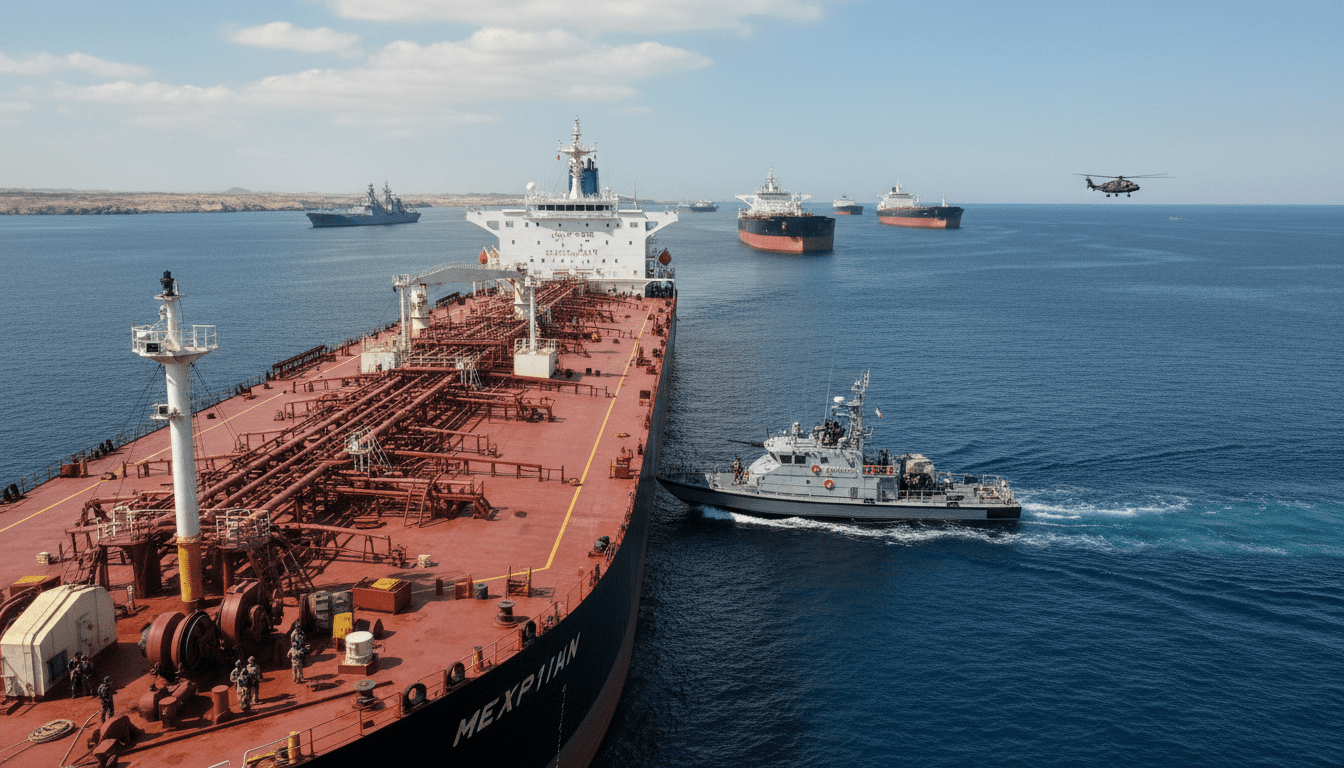
The Strait of Hormuz has been effectively closed to normal commercial traffic since the Iranian regime moved to block the waterway on Saturday, leaving thousands of oil tankers and cargo ships unable to transit the chokepoint. The interruption in the narrow, roughly 30-kilometre maritime corridor has crystallized into a broader economic and strategic confrontation between Tehran and Washington. U.S. officials have signalled that they will not rule out reciprocal measures, deepening concerns that the dispute could spill over into wider disruptions of global trade and energy markets.
Iran enforces renewed restriction on transit
Iranian naval and coast guard units implemented restrictions in the strait in response to what Tehran described as hostile U.S. conduct, officials said, closing off customary lanes used by commercial vessels. The move has left a backlog of tankers and freighters in the northern reaches of the Persian Gulf and at nearby anchorages. Shipping companies report delays and uncertainty about safe passage through the waterway, which normally handles a significant share of the world’s seaborne oil.
The blockade is not total in all reports, but the effect on scheduling and insurance premiums has been immediate. Vessel operators are coordinating with flag states and private insurers to reassess transit plans, and several ship managers have diverted to ports to await further instruction.
Shipping logjam and alternative routes
Ports along the Persian Gulf have seen congestion as ships queue for clearance or reroute to await safer conditions, according to maritime sources. The logjam has stretched pilot and bunkering services and complicated already fragile supply chains for refined products. Crew changes and maintenance cycles are being postponed, increasing operational risk and costs for shipping firms.
Longer detours around the Cape of Good Hope would add weeks to voyages and substantially raise freight costs, particularly for shipments of crude and refined fuels. Analysts warn that extended diversions would also strain tanker availability and could tighten markets for refined products in Europe and Asia.
U.S. response raises domestic economic stakes
The prospect that Washington might respond with restrictions of its own—potentially targeting Iranian ports—has heightened political and economic stakes for the United States. Administration advisers argue that asserts of control over the Strait of Hormuz are not merely about energy shipments, but about preserving leverage in a broader conflict over Iran’s nuclear and regional activities. Any American action that further constrains oil flows risks lifting pump prices and tightening household budgets, a sensitive domestic political cost.
Policymakers face the dilemma of deterring Tehran while avoiding measures that would directly amplify consumer pain at the gas pump. The calculus is complicated by the U.S. reliance on global oil market stability as a pillar of economic power and by the short-term visibility of price moves on voters’ pocketbooks.
Market reactions and currency implications
Traders reacted quickly to the closure, with benchmark prices for crude sensitive to news of chokepoint disruptions. The supply uncertainty also reverberated through derivatives markets and shipping futures, pushing up costs for hedging and insurance. Economists caution that sustained interruptions could feed into inflationary pressures, testing central bank responses in multiple economies.
Beyond commodity markets, analysts are watching potential ramifications for the U.S. dollar. The strait’s closure undermines a key element of seamless global trade that has long supported the dollar’s centrality, and prolonged instability could accelerate shifts in energy contract arrangements and reserve holdings over time. Market participants say the immediate impact on the dollar would likely be driven by risk sentiment and capital flows tied to broader geopolitical concern rather than a single event, but the strategic symbolism is nevertheless significant.
Diplomatic channels and regional tensions
Diplomatic efforts are underway to defuse the standoff, with regional intermediaries and international bodies reportedly offering mediation. Washington has maintained that any safe, lasting reopening of the strait requires concrete guarantees that Iranian measures will be reversed and that hostilities will not resume. Tehran, for its part, has tied the blockade to wider security and sanction disputes, framing the restriction as leverage in broader negotiations.
Outside powers with commercial and security interests in the Gulf have urged restraint and called for immediate, negotiated solutions to reestablish freedom of navigation. The efficacy of back-channel diplomacy will be tested as military and commercial timelines compress.
Operational and humanitarian consequences at sea
Beyond commercial metrics, the impasse at Hormuz raises immediate safety concerns for seafarers and coastal communities. Prolonged anchorage increases the risk of onboard accidents and complicates medical evacuations and crew changes. Port authorities and humanitarian agencies are alerting operators to the need for contingency plans to protect vulnerable crews and maintain essential maritime services.
Maritime law experts note that extended restrictions in a chokepoint can create a patchwork of legal and insurance disputes over charter parties, cargo claims, and force majeure declarations. Shipowners and cargo interests are preparing for a surge in legal and contractual wrangling should the closure continue.
The Strait of Hormuz has long been the focal point of strategic competition, but the recent blockade marks an escalation that combines military signalling with economic consequence. How quickly diplomatic channels can reduce tensions will determine whether the disruption becomes a short shock or a sustained challenge to global energy logistics and to the strategic instruments that underpin U.S. economic influence.
