
Yemeni riyal liquidity crisis deepens as Aden measures stabilise currency but drain cash
Yemen’s central bank actions have steadied the Yemeni riyal, but a resulting liquidity crunch is leaving businesses and households without local cash and fuelling informal markets.
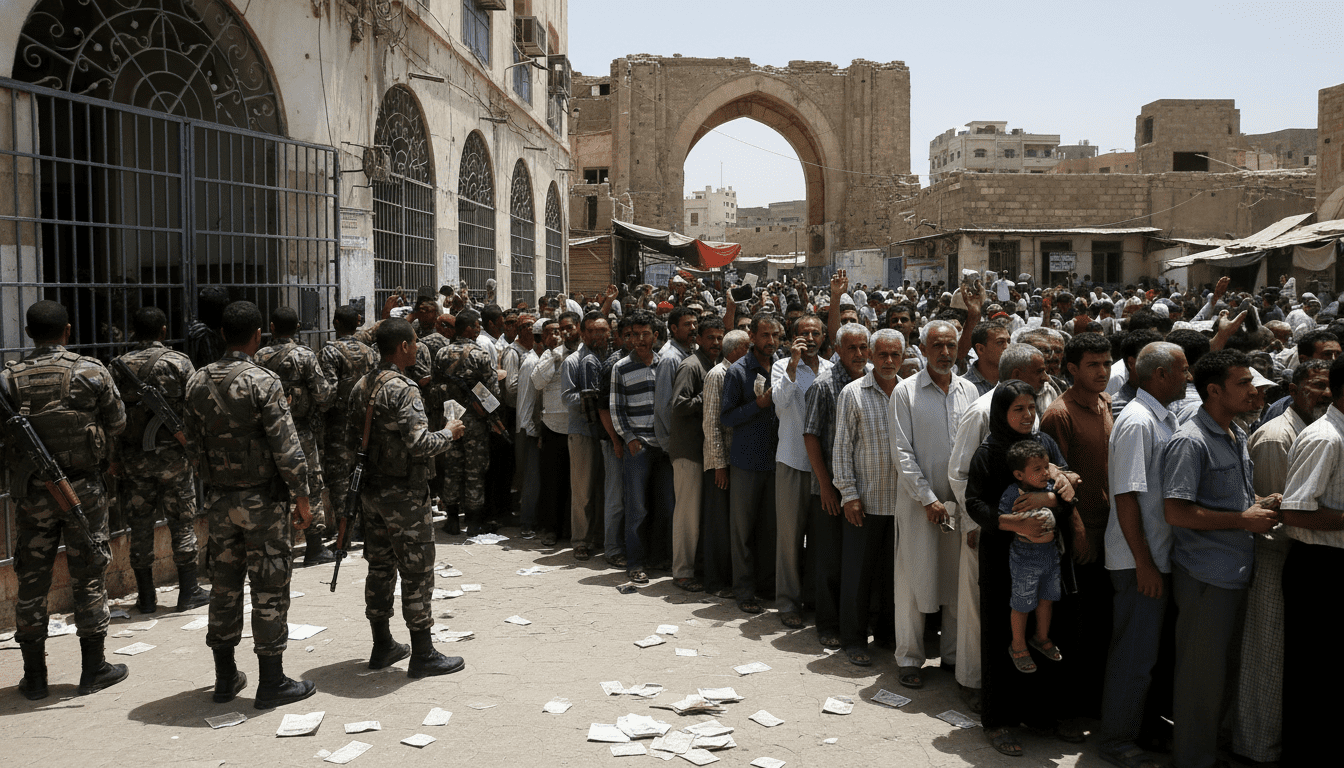
The Yemeni riyal liquidity crisis has intensified after a series of central bank interventions in Aden halted the currency’s rapid devaluation but created a severe shortage of physical riyals across government-controlled areas. The bank closed unauthorised exchange houses, centralised remittance flows and set up a committee to manage imports and allocate hard currency to traders. What began as a welcome halt to the riyal’s freefall has quickly turned into a cash crisis that is disrupting daily commerce and public services.
Central bank measures and the riyal rebound
The Central Bank of Yemen in Aden implemented strict controls to curb speculative trading and stabilise the exchange rate, actions that helped push the riyal back from months of steep declines. Officials closed informal exchange firms they accused of driving volatility and introduced tighter oversight of foreign-currency flows to preserve reserves.
Those policies helped the currency appreciate from several thousand riyals to the dollar to roughly half that level in recent months, providing an initial reprieve from runaway inflation. Yet the deliberate tightening of currency availability has also drained physical riyals from market circulation, exacerbating cash scarcity at the ground level.
Businesses grind to a halt across cities
Retailers and small businesses from Aden to Mukalla report that they cannot obtain enough local cash to operate, forcing some shops to close intermittently. Shopkeepers say exchange firms and banks are limiting conversions of Saudi riyals and US dollars, often allowing only token daily exchanges that do not meet payroll or supply needs.
Grocery owners and traders describe long days spent moving between exchange points seeking small sums of riyals, a process that has eaten into working hours and reduced trade volume. The lack of readily available local currency is compressing liquidity for suppliers and halting transactions that normally run on narrow margins.
Public wages, low-denomination notes and mounting frustration
Government employees are receiving salaries in low-denomination banknotes, mainly 100- and 200-riyal notes, which has created practical and commercial problems. Many recipients say merchants are reluctant to accept large bundles of small notes, complicating everyday purchases and raising calls for authorities to intervene.
Social media and videos circulating in local networks show workers carrying bulky sacks of notes to pay for basic goods, and some have demanded legal action against merchants who refuse those banknotes. The payment format is intensifying public anger at a time when household budgets are already squeezed.
Remittances and conversion limits hit households hardest
Remittances in Saudi riyals and dollars have long been a financial lifeline for families in government-held areas, but conversion limits are now preventing recipients from accessing value sent by relatives abroad. Exchange firms frequently decline to convert hard currency into riyals or offer only partial conversions at unfavorable rates, leaving many unable to meet immediate needs.
In rural districts with sparse banking infrastructure, the problem is even more acute, forcing recipients to accept lower rates at local shops or travel long distances to find an exchange. While some banks and firms have rolled out online transfer options that ease the burden for those with internet access, the digital workaround does not reach everyone and can carry additional fees.
Informal markets, connections and unequal access
The cash shortage is reshaping market behavior: a black market for currency conversion has expanded, and well-connected individuals are often the first to secure scarce riyals. Traders with personal contacts inside exchange houses or banks report they can obtain local currency when needed, while ordinary citizens queue for hours with little success.
At the same time, some importers and businesses are finding opportunities amid the squeeze by acquiring Saudi riyals at discounted rates and using them to settle cross-border purchases. Health facilities and other service providers, however, are sometimes refusing payment in foreign currency, forcing patients and families to scramble for riyals to pay for essential treatment.
Policy responses and risks ahead
The central bank acknowledged the liquidity shortfall at a board meeting in March and said it had approved short- and long-term measures aimed at stabilising the currency and easing cash constraints. Officials framed their approach as a series of cautious steps to limit inflationary pressures while restoring orderly markets.
Economists and traders warn that without targeted liquidity injections or the distribution of higher-denomination banknotes, the shortage could persist and deepen. Continued limits on currency conversion risk undermining confidence in formal channels and driving more transactions into informal, often predatory, markets.
The cash squeeze that followed the riyal’s technical stabilisation has placed households, small businesses and public services in a precarious position, and the outlook depends on how quickly authorities can reconcile currency stability with the need for accessible liquidity.
