
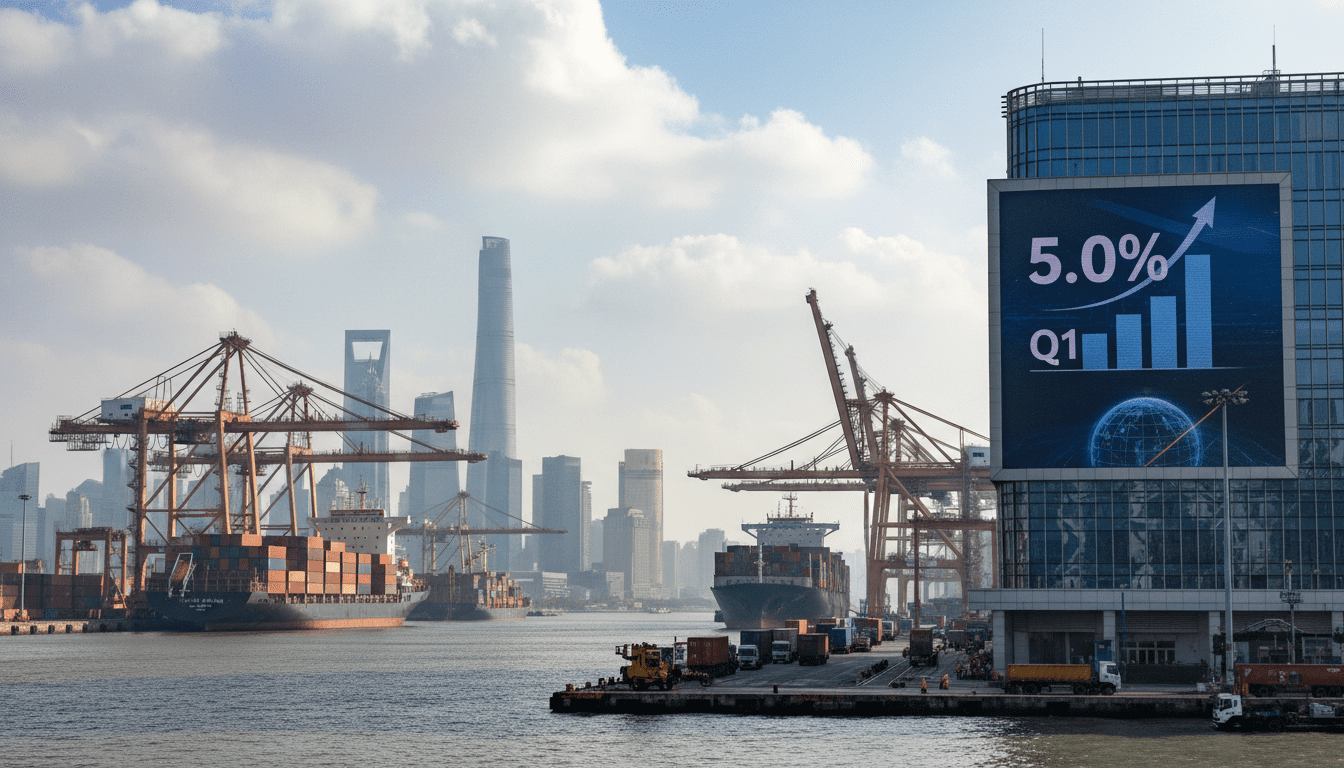
China GDP growth beats forecasts with 5.0% rise in Q1 2026 amid oil shock
China GDP growth surprised markets with a 5.0% year-on-year increase in Q1 2026, exceeding analyst forecasts and signaling a rebound from late-2025 weakness. Preliminary data released by Beijing showed the economy accelerated at the start of the year even as global energy prices and geopolitical tensions put pressure on external demand. Policymakers face a balancing act between supporting domestic consumption and cushioning export-dependent sectors from rising input costs.
Preliminary figures show stronger-than-expected expansion
The National Bureau of Statistics in Beijing reported a 5.0% year-on-year rise in gross domestic product for the first quarter, topping consensus forecasts around 4.8%. The reading marks an improvement from a 4.5% gain in the fourth quarter of 2025, which had been the slowest quarterly pace since the end of strict COVID lockdowns. Officials described the figures as preliminary, noting that detailed sectoral breakdowns will follow with later revisions.
Domestic demand and production underpinned growth
Household consumption and industrial output contributed to the pickup, with authorities continuing measures to stimulate spending across cities and rural areas. Manufacturing activity proved relatively resilient, supported by state-led infrastructure projects and targeted incentives for consumer sectors. Still, analysts warn that structural problems—such as overcapacity in several industries and uneven wage growth—remain constraints on sustained demand.
Exports still a key engine, but vulnerabilities are rising
Exports continue to play a central role in the recovery, but the outlook has become more uncertain as external conditions deteriorate. China sends a large share of its shipments to emerging markets with limited fiscal space, leaving those trade partners exposed to higher import bills and weakening demand. Goldman Sachs economist Xinquan Chen has flagged growing stagflation risks in lower-income destinations, noting that export-led growth may be less stable if external consumption softens.
Energy price spike intensifies cost pressures for factories
A recent surge in oil prices tied to geopolitical conflict has translated into higher production costs for Chinese exporters, who import the bulk of their energy needs. Rising fuel and shipping expenses have narrowed profit margins for labour-intensive manufacturers and complicated pricing strategies for exporters. The energy shock has therefore not only slowed trade volumes but also raised concerns about the sustainability of margin recovery across key industrial clusters.
Spillover risks for trading partners and global supply chains
Countries that rely on Chinese imports for input goods or re-export markets are registering increased vulnerability to both higher costs and demand shortfalls. Analysts point to a dual effect: larger energy bills squeeze consumers and producers in these markets, while slower Chinese orders reduce revenue for exporters elsewhere. Some advanced economies are also feeling the strain indirectly, as multinational supply chains absorb the shock through delayed shipments and cost pass-through.
Policy options and the path ahead for 2026
Beijing is expected to maintain measures aimed at boosting domestic consumption and shoring up confidence in fragile sectors, while avoiding abrupt shifts that could unsettle markets. Fiscal support, credit easing for small and medium enterprises, and targeted relief for energy-intensive industries are among the tools policymakers could deploy. However, officials face limited room to manoeuvre if global energy prices remain elevated or if geopolitical tensions persist.
Despite the optimistic headline, economists caution that the Q1 read is provisional and that several downside risks could alter the trajectory in coming quarters. Continued monitoring of export volumes, commodity prices, and household spending will be critical to judge whether the recovery can gain durable momentum.
