
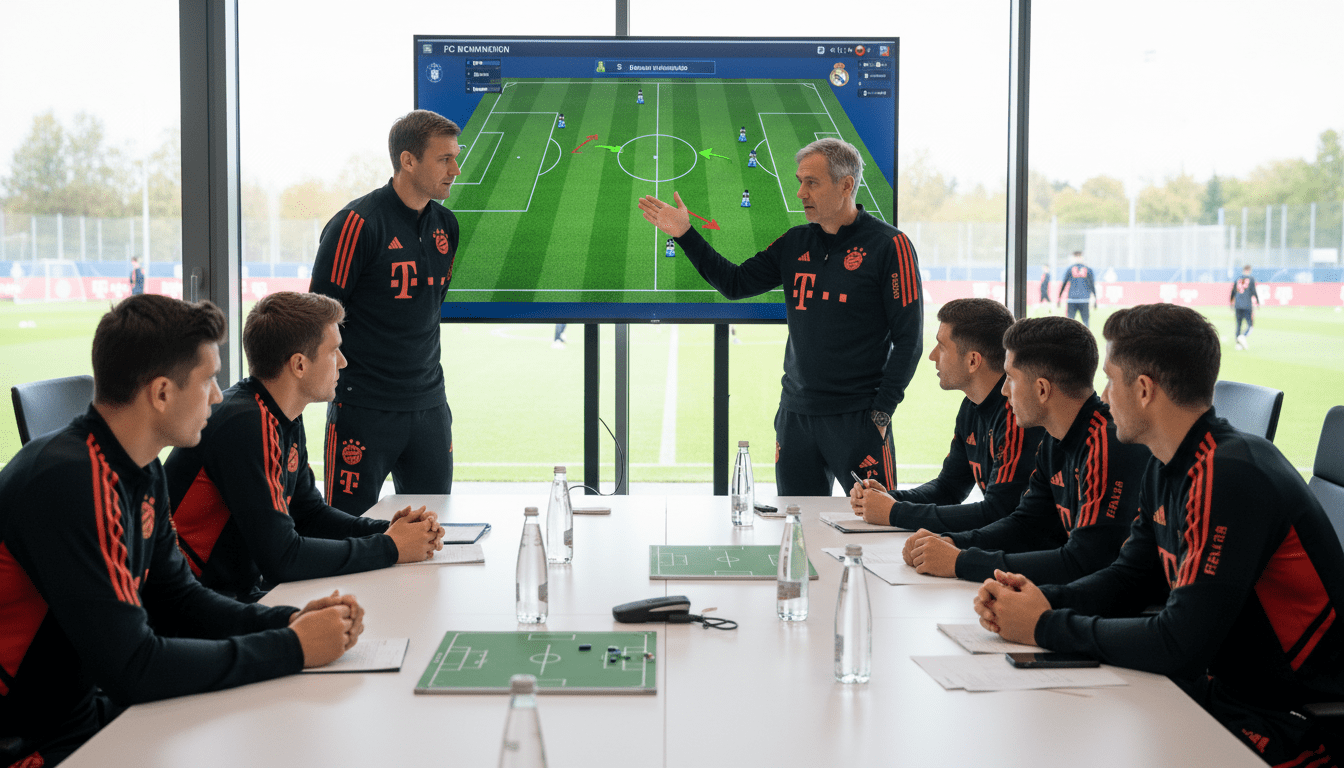
FC Bayern vs Real Madrid: Three tactical fixes Bayern must make ahead of the return leg
Bayern must sharpen tactics in defense, transitions and attacking depth to overturn the first-leg position and advance in the Champions League.
Opening summary
Ahead of the Champions League return leg on April 15, 2026, FC Bayern vs Real Madrid is set as a tactical test for the Bavarians. The first match exposed specific weaknesses in Bayern’s defensive spacing, risk management in transition, and the lack of consistent attacking depth. This preview outlines three concrete lessons from the opening game and the adjustments Bayern will need to pursue a positive result.
Match context and urgency
The tie remains finely balanced and demands immediate tactical clarity from Bayern’s coaching staff. Real Madrid’s structure in the first leg capitalized on moments where Bayern were vulnerable; those episodes defined the match more than possession statistics. With the return leg looming, the margin for error is small and the required changes must be both practical and measurable.
Vulnerabilities in wide defensive areas
Bayern’s defensive shape was repeatedly tested down the flanks during the first encounter. Opponents found space behind full-backs and between full-backs and midfielders, creating overloads that pulled central defenders out of position. To mitigate that, Bayern must compact laterally without surrendering width to their forwards, using staggered positioning from full-backs and deliberate midfield cover.
A tighter defensive compactness would also reduce dangerous crosses and runs into the box. Organised channel marking and clearer responsibilities for tracking runners at the second phase of attack can blunt Real Madrid’s most threatening sequences. Practically, that means one of the central midfielders dropping slightly when the full-back advances to maintain a two-line defensive balance.
Transition moments and risky forward passes
Several of Bayern’s most dangerous moments came from risky, high-reward passing that left them exposed on the break. Long progressive passes that bypassed the midfield created space for counterattacks, which Real Madrid exploited through quick vertical transitions. Bayern need to reassess when to attempt high-risk passes and when to recycle possession to control tempo.
Reducing these costly turnovers requires better situational discipline in midfield and clearer passing lanes for the build-up. Coaches should emphasise quicker recognition of transition triggers and instruct players to opt for safer lateral or backward options when forward outlets are insufficiently supported. Those small tactical restraints will significantly reduce the number of counter-opportunities presented to the opponent.
Offensive depth and creating consistent outlets
The first leg showed Bayern struggling to consistently generate vertical depth that stretches a disciplined defensive block. When Bayern lacked runners beyond the ball, their attacks became predictable and easier to defend. Introducing more purposeful off-the-ball movement and staggered runs can open channels behind the defensive line and give playmakers clearer options.
Rotation within the front line and purposeful third-man runs from midfielders can supply the required depth without sacrificing positional discipline. Bayern should prioritise timed sprints into space and overloads in central corridors to disrupt defensive compactness. This approach requires coordinated training on timing and chemistry rather than wholesale personnel changes.
Set pieces and situational planning
Set pieces and planned situational plays could be decisive given the narrow margins in European knockout football. The first leg contained several dead-ball situations where marking and delivery were inconsistent, offering avoidable chances to the opponent. Bayern can gain a measurable edge by improving set-piece routines—both in delivery accuracy and in defensive alignment.
Focused rehearsal of zonal and man-marking hybrid systems, alongside clearer communication on second-phase responsibilities, will reduce the concession of high-quality chances from dead-ball sequences. Small improvements in these rehearsed moments often translate into decisive margins in two-legged ties.
Bayern will also need contingency plans for late-game scenarios and substitutions that can shift momentum without disrupting structure. Defined roles for late attacking changes and plans for protecting leads or chasing goals should be rehearsed in training.
The return leg represents a tactical reset as much as a physical contest. Bayern must combine tightened defensive spacing, smarter risk-taking in transitions, and increased attacking depth to overturn the tie. Coaches and players will have little time, but targeted adjustments on the themes identified here offer the clearest path to a different result in the second match.
